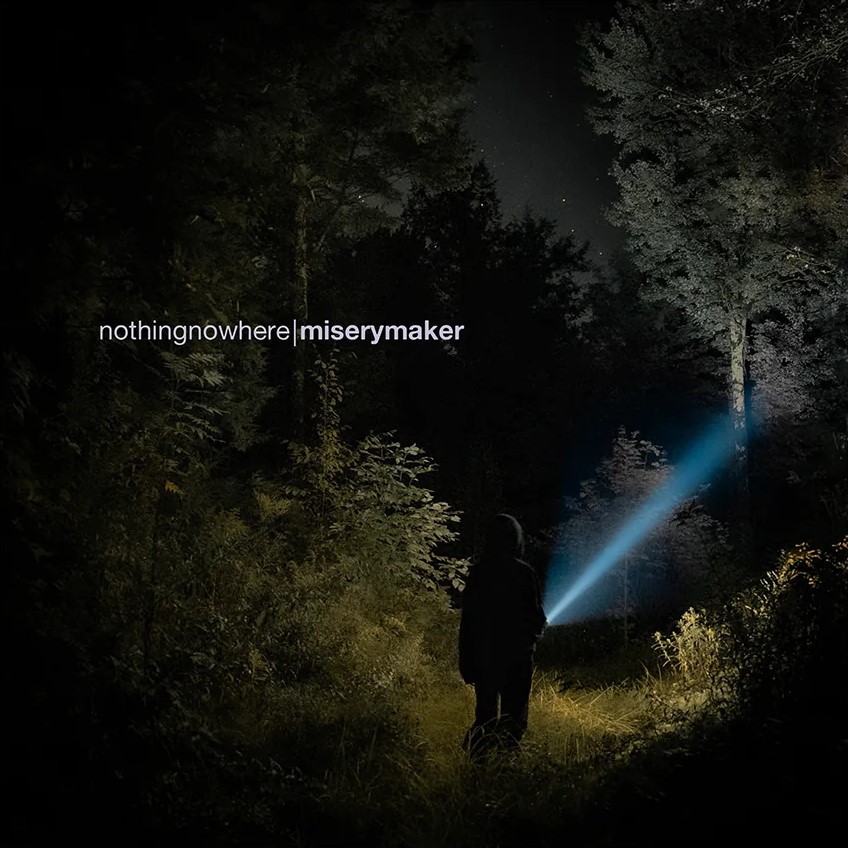
If any one of your favourite artists told you they were going to release four albums in one year, you would probably be met with at least a little bit of apprehension. It’s not rocket surgery, ideas simply need time to marinate, and the quantity over quality approach doesn’t usually go over well (Lil B’s catalog comes to mind). Well, Mulherin’s first two projects of 2024 quickly set that apprehension at ease. Both Dark Magic and Hell or Highwater were executed with a decent degree of polish, but moreover, they had thematic clarity and felt fully realized. When Mulherin announced his third album, I had no reason to expect anything less than another knock out, but alas, every boxer needs a minute to rest in the corner, and miserymaker is just that.
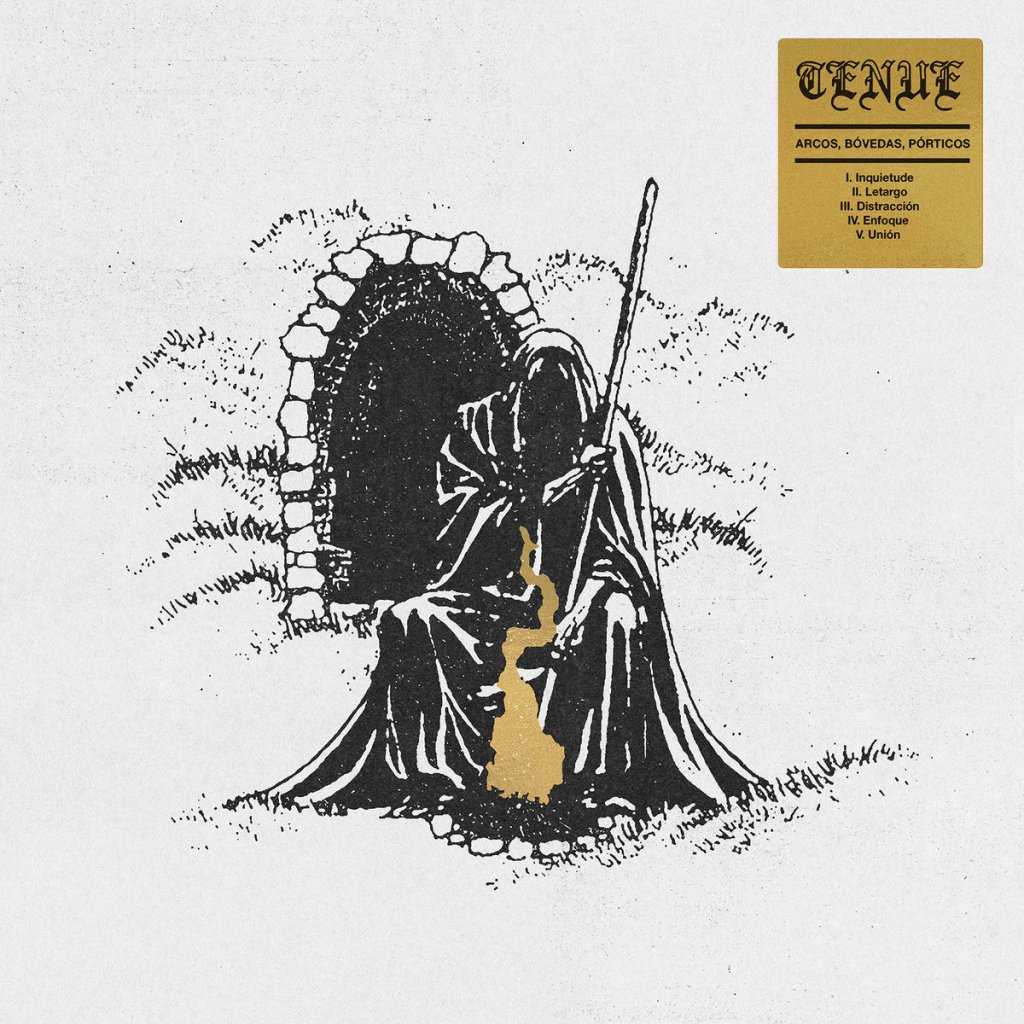
Tenue’s progression over the span of seven years has been immense. Each release since their scrappy and raw demo has been a very clear step up from the last as the band continues to approach heavier and darker territory. Aside from the pure visceral weight that they’ve put on, the band has also been expanding upon their ideas, fine tuning the atmosphere, and gradually producing longer and more progressive song structures. This ethos met it’s logical conclusion in 2021 with the release of Territorios, a single twenty-nine minute long neocrust epic, and now, instead of continuing to push the time envelope, Arcos, bóvedas, pórticos finds the band whittling their grand ideas down to what feels like only the best parts.
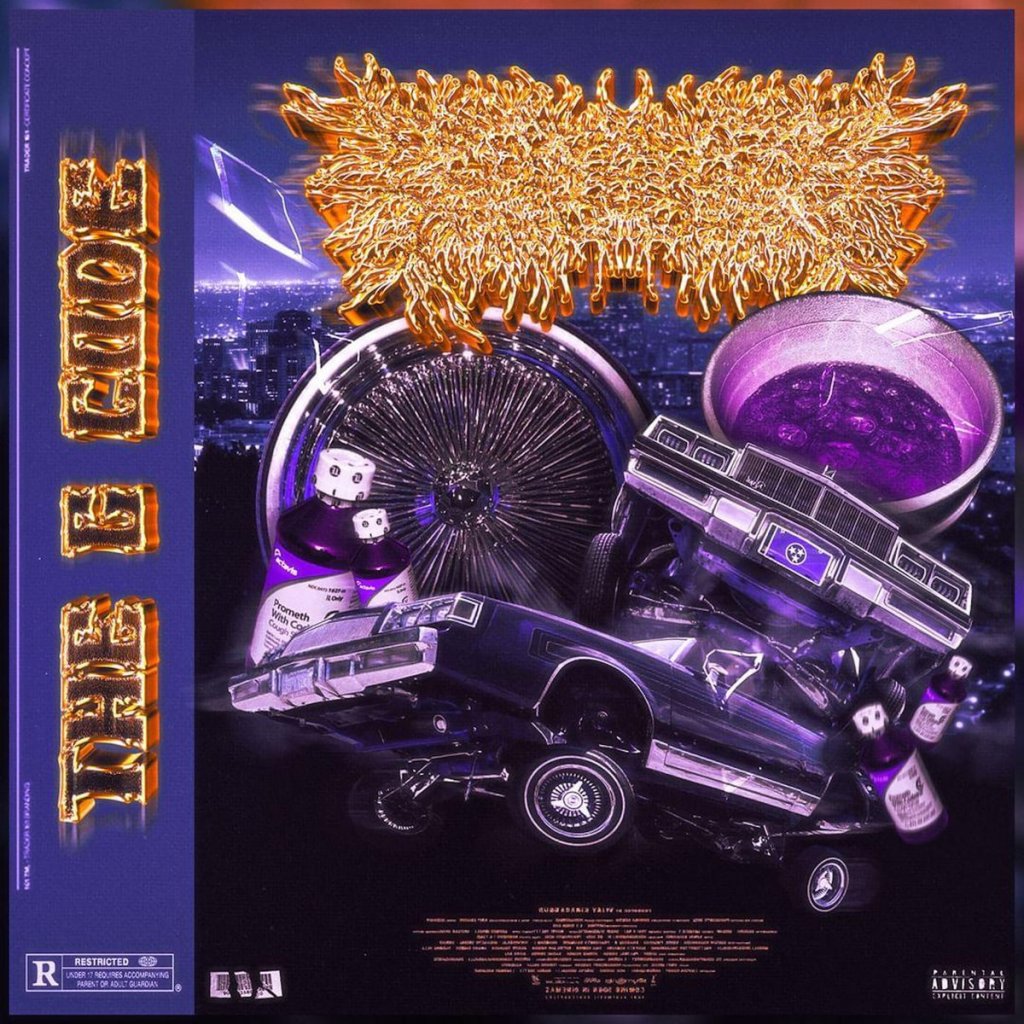
The Mona Lisa. The ceiling of the Sistine Chapel. Einstein’s theory of relativity. The creation of life itself. What do these things have in common, you ask? Well, for starters, they all pale in comparison to The G Code. To let this beautiful monstrosity gather dust in the MOMA or a science textbook would be a waste of potential though. No, this bad boy belongs aboard a NASA funded time capsule spacecraft to hopefully one day be intercepted by aliens. It would be the perfect work of art to represent our species and intimidate any potential interstellar adversaries.
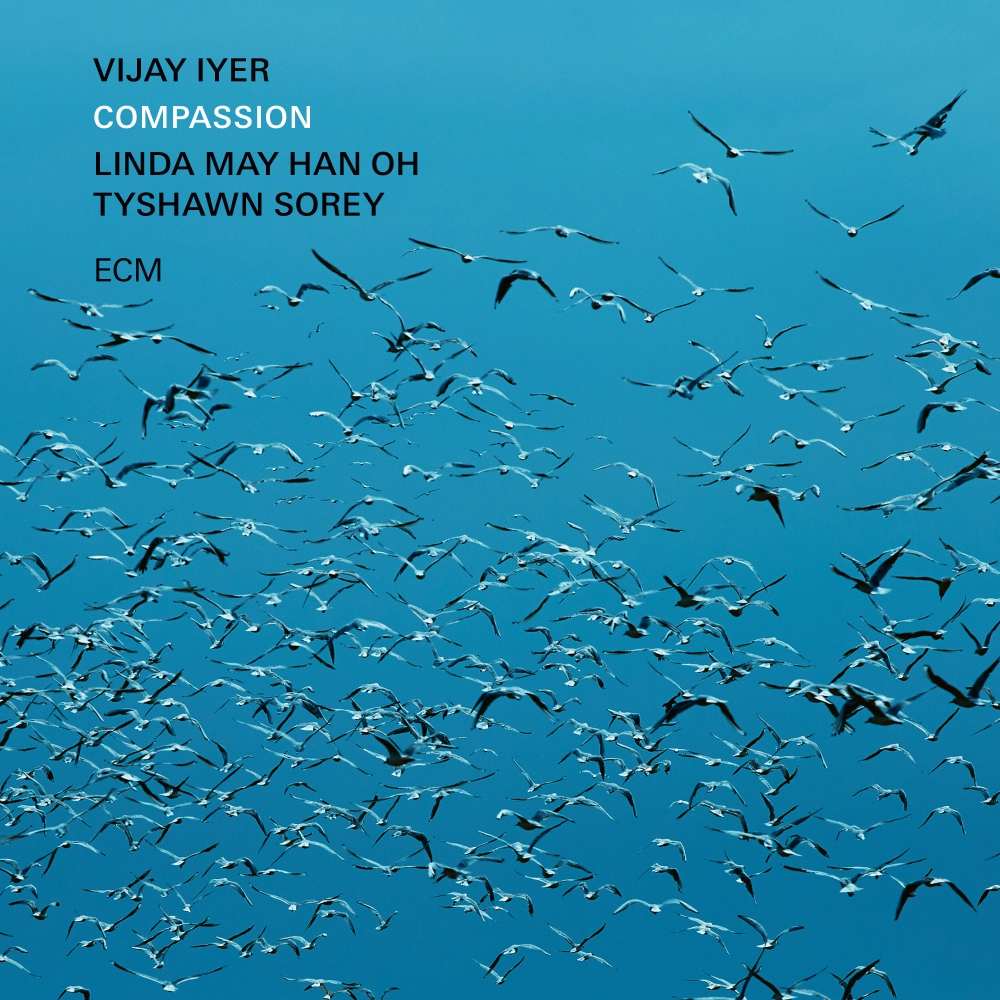
For some people, music is not a variable. It is interwoven into the very fabric of their being, and present in every aspect of their life, however subconsciously. These people have a unique gift to translate their internal world into a tapestry of sound, and music simply becomes an extension of every triumph and struggle they endure. Vijay Iyer’s personal journey with music began at three years of age with classical violin training, but when it comes to the piano, he is largely self taught, often referring to his own progress as a “series of happy accidents”. Perhaps this gives credence to the wild, free-flowing and rebellious nature of his playing that canvases this album. There are no rules for Iyer to be governed by, only emotion, and a master of emotion he is. Now with nearly half a century (!!) of musical application under his belt, Vijay Iyer has returned with Compassion, a second offering of jazz compositions from his trio, featuring Linda May Han Oh on bass, and Tyshawn Sorey on drums—both with impressive credentials and experiences of their own.
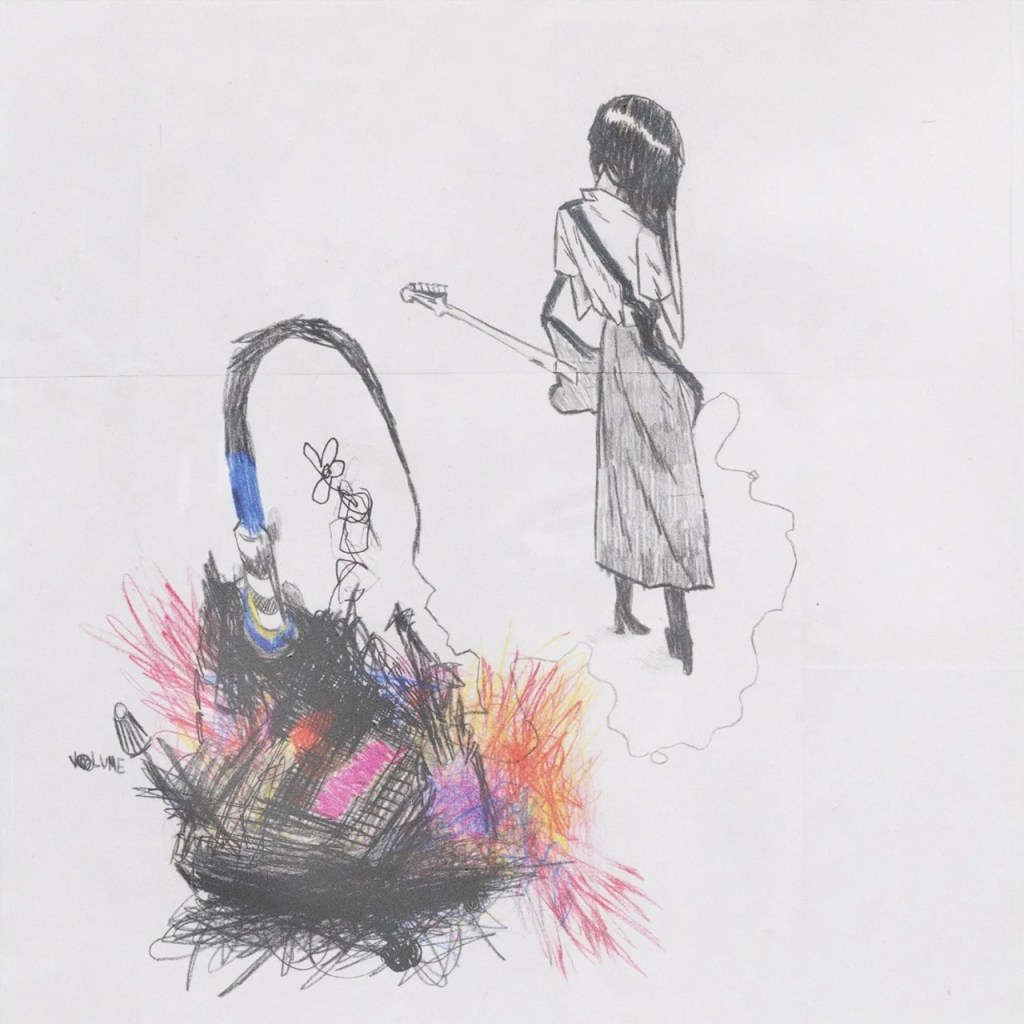
Somewhere, a solitary angel clangs a scuffed up fender jazzmaster against the gates of heaven. Upon hearing no response, the angel stomps on a fuzz box and clangs again, sparking circuit boards into a shower of technicolor crayon scrawls. Her name is julie, and she likes to watch things explode.
Thrown’s entire existence feels like it’s been algorithmically generated for two words: gym playlist. Just look at any “metal gym” or “extreme workout” playlist on spotify for proof. Millions of angry guys across the globe smashed a new bench PR when Thrown released their first single back in 2021, and the pure cosmic energy caused by so many gargantuan lifts turned Thrown into one of the fastest rising bands in the heavy music scene, garnering even more monthly listeners than some bands with six LP’s under their belt. And hell, what can I say? It is pretty angry and energetic music. I’d probably work out to it too, but is that all it’s good for?
Killing Of A Sacred Deer are a powerhouse of Western Canadian hardcore. Born as the niche passion project of Serration drummer Colter James, and joined by members of World of Pleasure, Mortality Rate, and—most surprisingly—Jordan Chase of Secret & Whisper, the band have quietly cooked up an impressive debut offering of spilled guts and metallurgic torture. Killing Of A Sacred Deer draw from the well of 2000s and early aughts death and metallic hardcore, but the decidedly crisp and modern production upscales their onslaught of drop tuned riffage and meathead breakdowns into stunning 4K resolution.
FFO: POST PUNK, MECHANICAL SHOEGAZE, AMBIENT/ LISTEN
New Orleans duo Belong don’t like to do the same thing twice. Turk Dietrich and Michael Jones have always made the music that they wanted to hear, regardless of their audience, but now I’m starting to think that they also just enjoy alienating people. They put their name on the map in 2006 with October Language; a gorgeous ambient record that was bathed in waves of distorted euphoria. Then in 2011, Common Era saw the duo implement drums, rhythmic bass, and a higher focus on structure and vocals into the mix, all while retaining those ethereal washed out textures that their debut was known for. The move toward a more driven post-punk sound was surely a disappointment to some, but I have always regarded it as a masterclass in mood and atmosphere.
“In came a boy with mid-length greasy hair, he had lots of songs that he wanted to share.”
And so he did. Through a stoned haze of squelching guitars and distorted synths, Rick White introduces himself with a parable of being attacked by a misanthropic bird named Roger. Roger hates the way that humans stare at him so unfriendly, so he decides to attack the boy. A barrage of panicked limbs erupts, and Roger is knocked to the ground, stunned with the taste of greasy hair in his mouth. It’s hard to tell who the narrator actually is in this story.
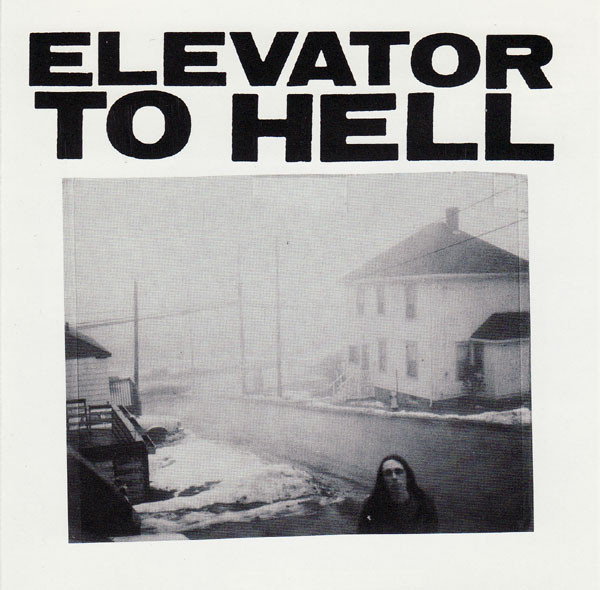
1993 was a big year for Rick White. With nothing more than a couple demo tapes under their belt, his band Eric’s Trip became the first group of Canadians to sign a record deal with Sub Pop, and their debut album was released to critical acclaim, but his personal life was a mess. Love Tara (somewhat humorously named after his new girlfriend, who would play bass for Elevator) was a concept album/musical therapy session dedicated to the break up of his relationship with fellow bandmate and collaborator Julie Doiron. It was a superbly intimate record—equal parts sad and awkward—but it was surprisingly mature for a couple of twenty year old’s to hash things out like that for the world to hear, and the people loved it. Despite the bands sudden success, and the fact that he and Julie managed to stay cordial enough to tour and release two more albums together, it’s safe to say that Rick needed a secondary outlet to express himself. Thus, in 1994, Elevator To Hell was born.
Parts 1-3 plays out like a collage of hazy, drug induced scrap book musings. It’s a compilation of twenty-seven lo-fi and experimental pop, rock and folk songs that were all recorded straight to cassette on the day of their inception, without much of a second thought, and with whatever instruments that Rick could find laying about in his smoke filled bedroom. Rick’s propensity for capturing a moment and translating it to song makes being a musician look easy. He doesn’t need to spend days meticulously crafting a bridge or pre-chorus when hooks and harmonies flow out of him like water, and so he wrote and recorded to his heart’s content. His stories are simple, and brought to life by a rotating cast of drums, bass, electric or acoustic guitar, and synthesizers—all of which are cycled in and out on a whim. The only real sense of cohesion holding this collection of songs together is their eclectic charm, but that’s a huge part of the appeal. It’s a mixed bag of styles and volumes that is sometimes sweet, sometimes spooky, sometimes quiet, and sometimes so loud that every input on the tape recorder must have been clipping and peaking to god knows where (warning: listening to “Boots” may induce bleeding of the ears).
All these pot smoke allegories are not baseless, by the way. Rick states quite plainly on second track “Why I Didn’t Like August 93” that he has a problem with girls, and with drugs, and implies throughout the album that these obsessions are simply fuel for his own self destruction. This problem becomes quite apparent and tangible to our ears over the hour that we spend listening to him fawn and reflect. Catchy love songs like “Three More Weeks” and “Made For You” are contrasted by the totally bizarre percussion soundscape of “Mercyful Fate” (named after, but not sonically inspired by the heavy metal band from Denmark), or the off kilter synth pop of “Killing Myself” and “Train From You”, amongst plenty of other head scratchers. Rick might be playing pinball with his genre exploration, but these songs are held together by a peculiar sense of melody and loneliness. During seventh track “Typical, Boy Loses Girl”, Rick asks why he even bothers writing these songs, and begs to escape from himself altogether. There’s always a hint of hyperbole and dramatization in music, but he was clearly going through it while writing these songs, and I’m just glad that he was able to continue pursuing art and funnel that turmoil into creation.
Not only has Rick White released a gargantuan library of music since this came out in 1996 (his bandcamp page is currently sitting at fifty-three releases, which doesn’t even include everything), but the landscape of music itself has come a long way since lo-fidelity tape recordings infiltrated the subculture markets of the 90s. This album definitely shows it’s age with it’s DIY sound and approach, and it probably wont attract many new ears outside of avid Eric’s Trip fans or CanCon historians, but Parts 1-3 is a special time capsule of ideas that really deserves to be uncovered. It’s the type of album that could only ever be made by a sad twenty-somethings stoner living in Moncton, New Brunswick in the 90s, and that’s why I love it. Rick White proved that you don’t need expensive equipment, or even a band, to create compelling stories, and that continues to inspire me to this day. A catchy hum along tune and a unique voice is all you really need. Oh, and maybe a side of psychoactive substances. Just don’t turn into Roger.
Crack Cloud are quite the enigmatic group. Operating much like the rotating door of a musical chairs Recovery Club, and boasting upward of ten(?) members at a time, it’s no surprise that “expansive” seems to be the most commonly used adjective when describing Crack Cloud’s mixed media approach to experimental art punk. Having so many cooks in the kitchen is typically a recipe for disaster, but the band somehow manages to delegate tasks and maintain harmonic balance like some sort of communist punk pseudo-corporation. There are no overlapping hands or spilled dishes in this kitchen, each member has their own station, works according to their ability and need, and—for a band that once touted “creativity with no rules”—Red Mile somehow emerges as their most focused and fully realized vision to date.
Crack Cloud pulls a lot of inspiration from the era of 70s and 80s art punk, post punk, and new wave, but where the group really excels is with their plodding and methodic use of negative space. Eight songs in forty-five minutes might sound like a test of patience, especially for a record that is undeniably punk rock at it’s core, but Red Mile is an exercise in minimalist song structures with progressive intent—gracefully shifting to make space for new layers of ideas and orchestral instruments without any trace of busyness or clutter.
Third track “Blue Kite” begins with a charming new wave rhythm laden with synths and cowbell as singer Zach Choy recounts personal experiences of addiction and SRO’s (“Striking balance over years of push and pull / Absolved of bedbugs and that dirty fentanyl”) with a snarl to draw up an abstract statement on the breaking-of-self that happens under the pressure of social conformity. The song patiently dances into a crescendo of synthesizers, guitars and violins before falling back to a primitive simplicity. It’s a meditative psychic drawl in perpetual motion, both nihilistically poetic and painfully self aware.
Most of the album occupies this space of self deprecative character studies and bleak statements on culture obscured in referential poetry and delivered with cinematic enthusiasm. It’s inventive and experimental, but the soft punch of the rhythm section and familiar punk rock tropes never fail to keep the narrative grounded. It’s really hard to pick a favourite track here, as they all contribute so much, but some other personal highlights include the snark commentary on punk profiteers during second track “The Medium” (“Who would’ve thought that the socially reclusive could be exploited for industry usage?”), fourth track “Lack of Lack”, which reminds me of some of the more hushed and abstract cuts off of Fugazi’s End Hits, and the drunken piano-saxophone rock opera of seventh track “Ballad of Billy”.
I’ll be honest, I haven’t really followed Crack Cloud’s career up until this point, so I can’t speak in depth about the evolution between this album and their last two. I will say, however, that this one immediately felt more approachable and consistent. I saw an early iteration of the band live in some tiny sweat box venue back in 2016 and I remember being blown away by their performance, but with Red Mile, I really believe that Crack Cloud have crafted a timeless classic that any fan of rock music—be it The Sex Pistols, Talking Heads, or Pink Floyd—can find a piece of themselves in. Take a sip of something cool and sweet, and dive on in.