
• Book Review: Miss MacIntosh, My Darling by Marguerite Young (1965)

    🌕🌕🌕🌕🌕

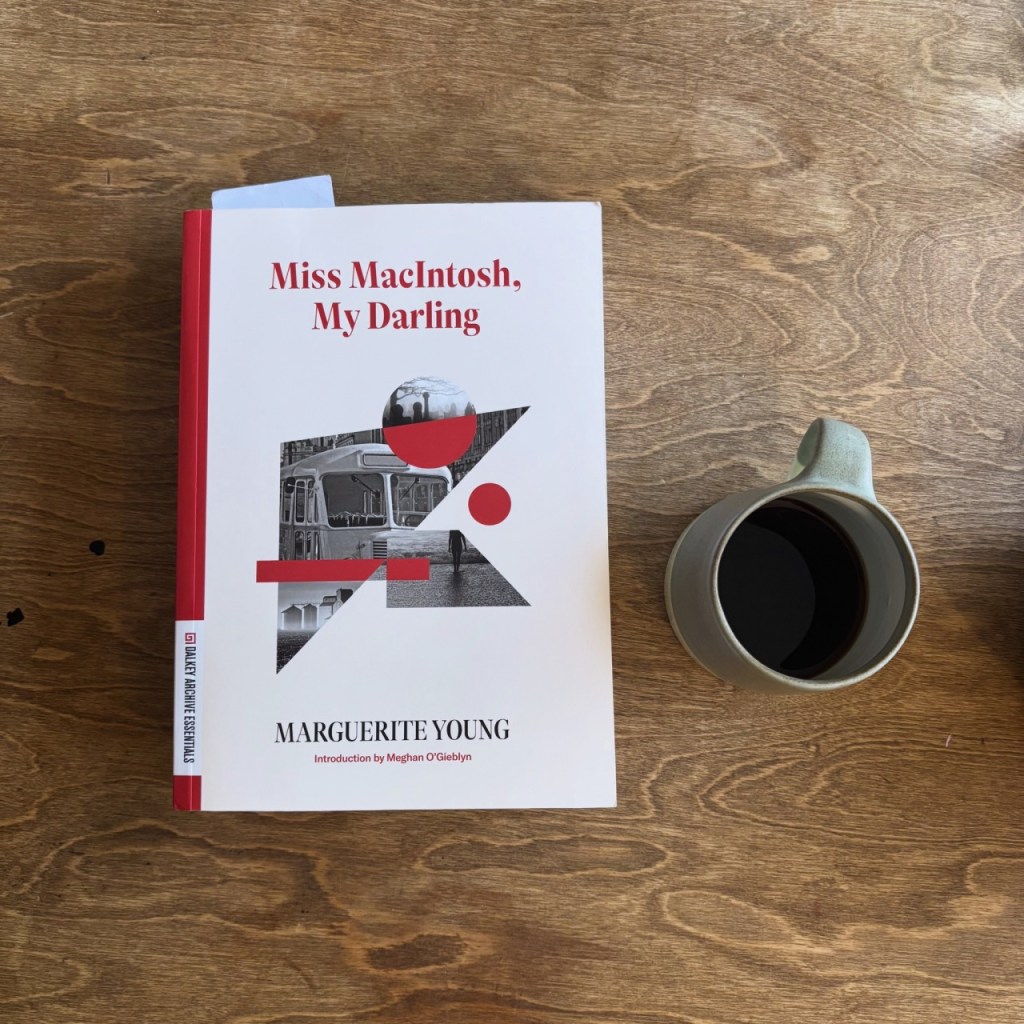
    Allow me to set the stage: Marguerite Young was born in Indianapolis, IN, in 1908, lived through the Great Depression, grew up during an extremely pivotal moment of the women’s suffrage movement, saw the ways in which women of colour were continually barred from political engagement for decades after their male counterparts, saw the manifestation of Roosevelt’s ‘New Deal’ in the 30s, then lived through WWII and saw the post-war economic boom, and noticed the unsubstantiated inflation of speculative value in the stock market, the increasing divide between rich and poor, and the delusion of the ‘American Dream,’ all whilst Jim Crow laws and the lynchings of Black people continued to thrive in the South.

    Are you noticing a pattern here? The inseparable relation between life and death? Progress and regress? Action and reaction? These things existing always in tandem and opposition, creating “these frictions, sobbings, tensions, nervous disorders, flying sparks like stars?”

    (more…)
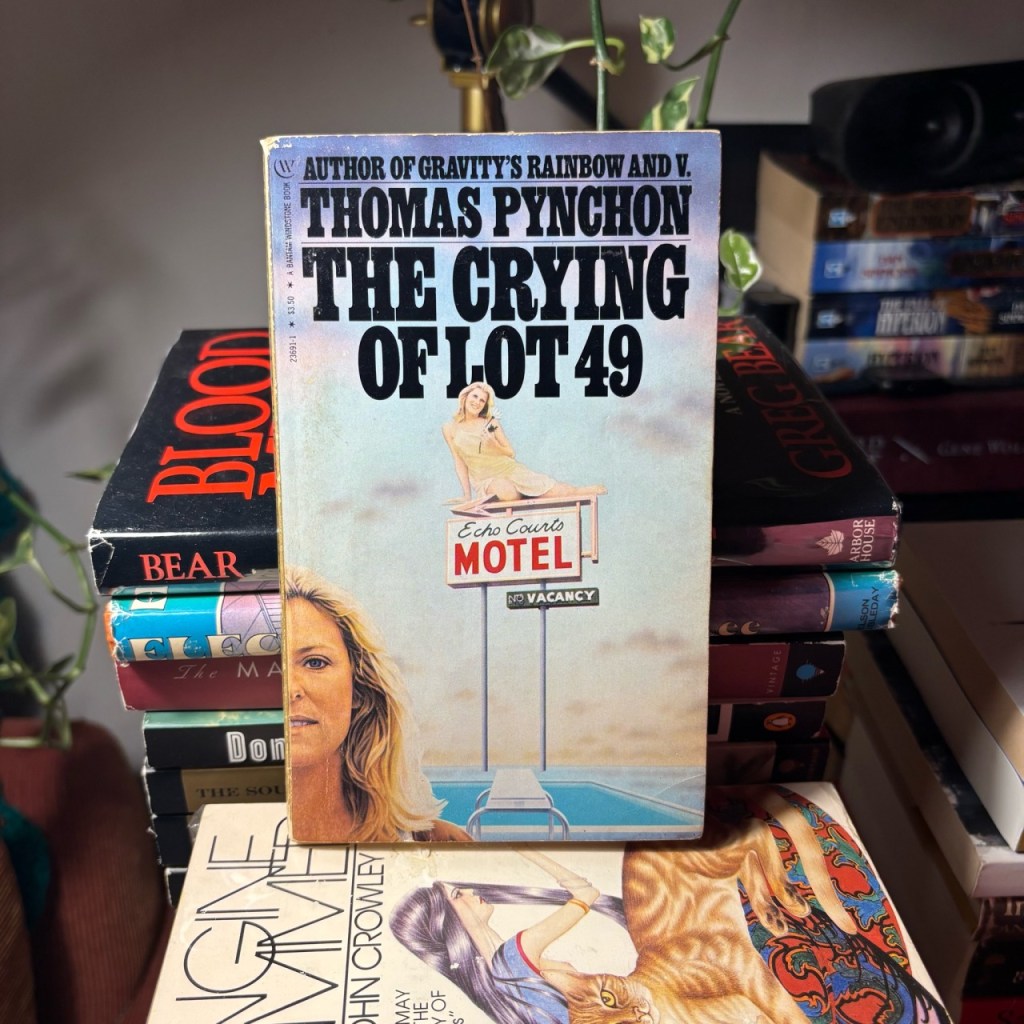
  • Book Review: The Crying of Lot 49 by Thomas Pynchon (1966)

    🌕🌕🌕🌑🌑

    Very strange novel. Pynchon is one of the sacred cows of the lit-fic community, and The Crying of Lot 49 is often cited as the best entryway to his bibliography, so I hesitate to say anything too negative about it, but I’ll be honest: I hardly knew what was happening at any given moment throughout this story. Something about the will of an ex-lover, an estate, and some lady getting wrapped up in a nonsensical conspiracy, blindly following leads and seeing connections in the most bizarre places: a theatrical play, mysterious discrepancies between the publications of old books, strange stamps, divine symbols, an underground postal service, and something about bones at the bottom of a lake. What is happening?

    (more…)
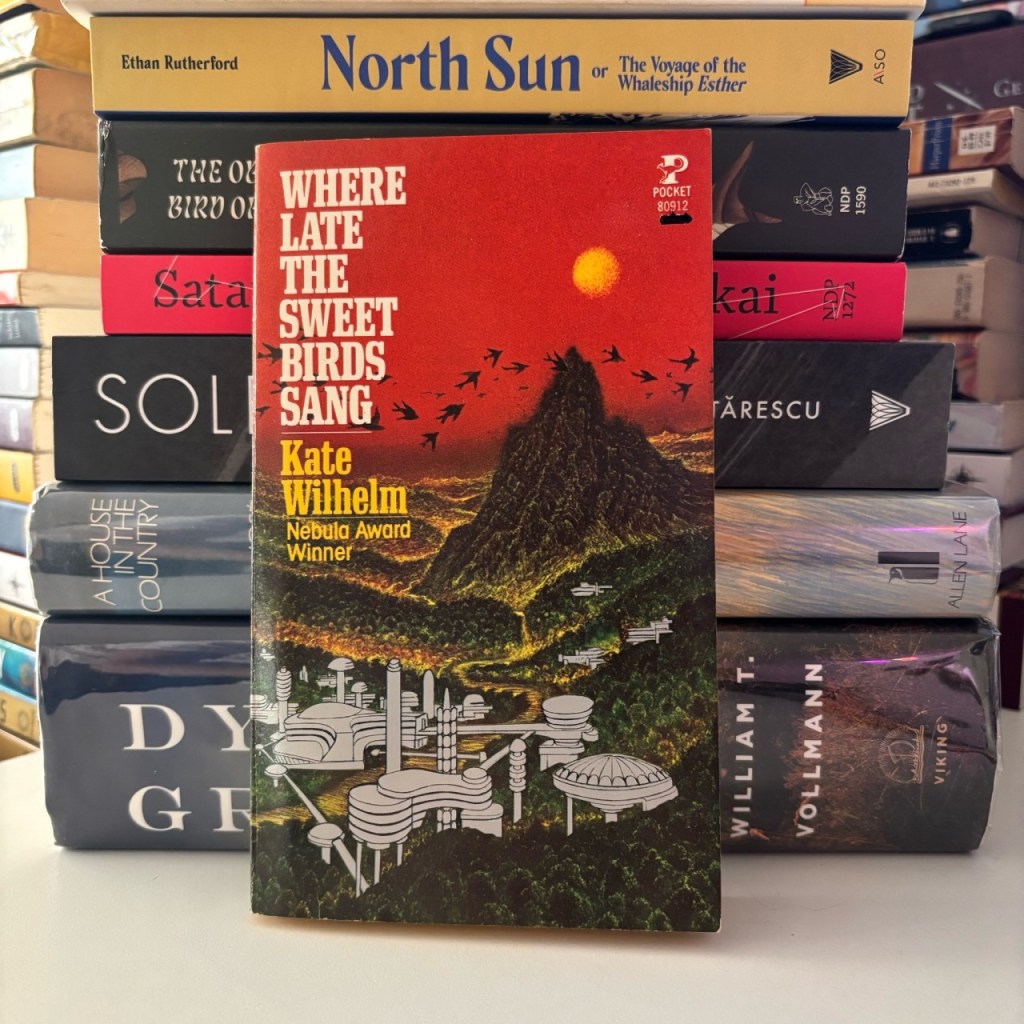
  • Where Late the Sweet Birds Sang by Kate Wilhelm (1976)

    🌕🌕🌕🌗🌑

    Where Late the Sweet Birds Sang caught me off guard in a way I didn’t expect. It is often shipped as an underrated classic, “the best novel written about cloning to date,” but it ended up being much more than that. Where Late the Sweet Birds Sang is very much an idea-focused sci-fi novel, but the experiment it lays out is more sociological than scientific, and it reads more like a generation-spanning Little House on the Prairie. Under its genre-fiction cloak is a slice-of-life family saga that explores themes of individuality and the psychological consequences of genetic uniformity. The world it portrays is one that is hanging on by the thread of biological science rather than thriving under technological capitalism; some of it even seemed very inspired by the “Children of God” cult, which was infamous in the 70s for its incest, pedophilia, and doomsday mind control. All dark themes, but Where Late the Sweet Birds Sang is ultimately a story about the perseverance of the human spirit and critical thought in the face of extinction—a theme I found encouraging, given the times.

    (more…)
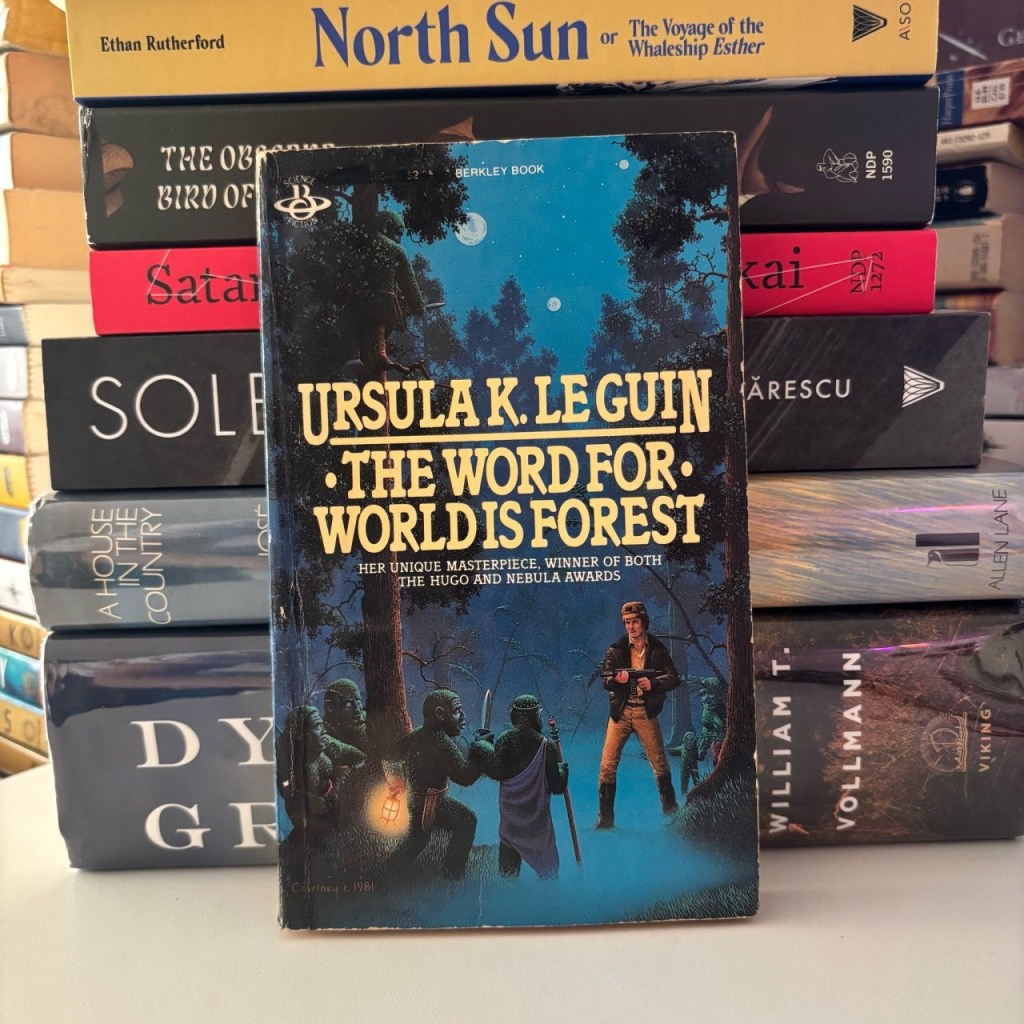
  • Book Review: The Word for World is Forest by Ursula K. Le Guin (1972)

    🌕🌕🌕🌕🌑

    I can’t even begin to describe how refreshing this was after the colossal letdown of Silverberg’s ‘Downward to the Earth.’ Leave it to Le Guin to write a story about colonialism with some real intersectional nuance and critical intellect.

    The World for World is Forest takes place in a far future on the planet of Athshe, where human colonists from Terra have established logging camps to extract the planet of its most valuable resource. The Terrans have subdued groups of surrounding Athsheans (the planet’s native species, who are for the most part just smaller, greener humanoids who have simply adapted to their unique conditions) by way of military dominance and forced labour. The Terrans are outnumbered by the amount of free Athsheans who still occupy the forest, but they don’t attack the Terrans for fear of their weapons and the lives of the hostage slaves held in their camps.

    (more…)
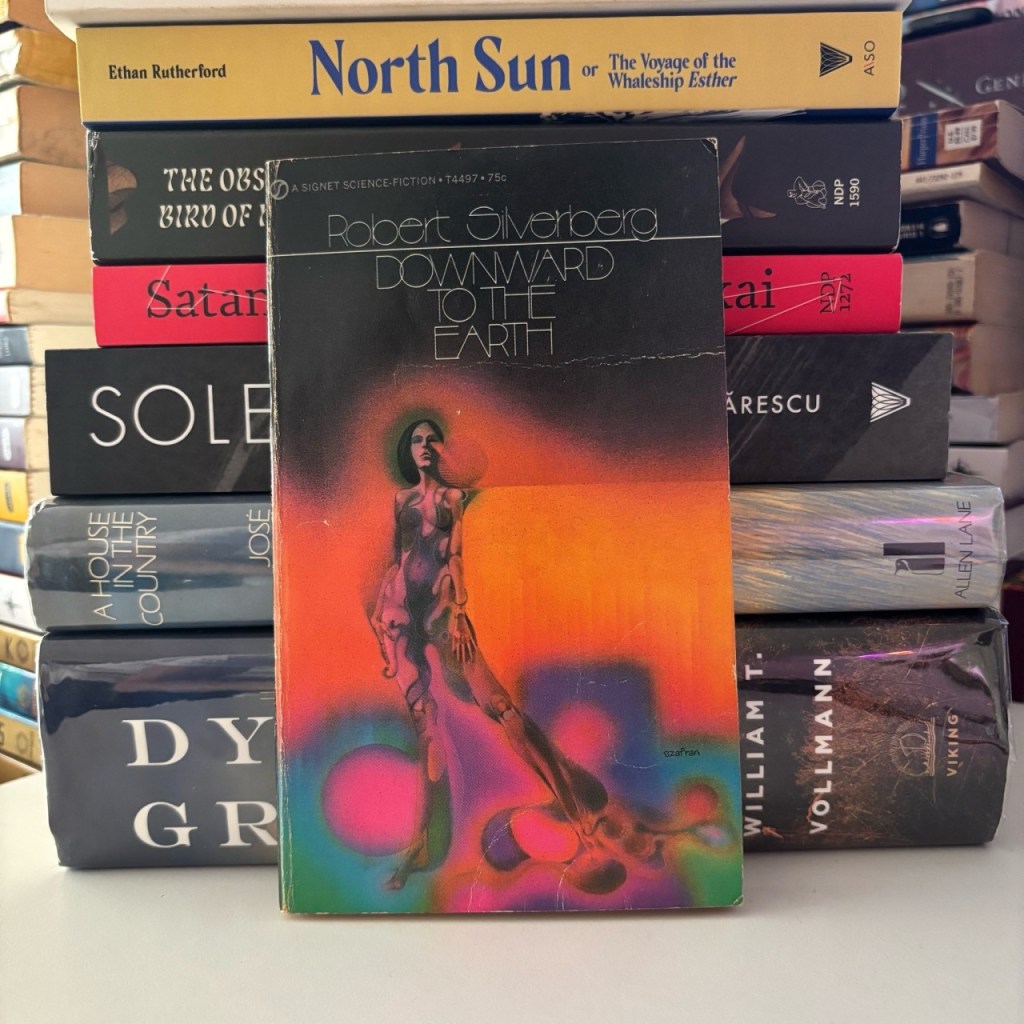
  • Book Review: Downward to the Earth by Robert Silverberg (1970)

    🌕🌗🌑🌑🌑

    Aaaaand drumroll please, for the biggest disappointment of the year. Oh, how this book was hyped up to me for so long. “Silverberg’s best,” they all said in unison. To be fair, I can see how this might’ve been mind-blowing back in 1969, flying off the coattails of the Hippie Revolution when the concept of doing psychedelics and *gasp* having empathy for others was a radical new idea. In 2025, its peace and love kumbaya bullshit is simply outdated and shallow. That isn’t to say that this novel doesn’t have its merits, but before I go there, I just thought it was so funny how the edition of this novel I read included a foreword from Silverberg himself where he writes about how much he hated writing this novel and how he thought it sucked only until it gained a positive critical reception, and then he changed his mind about it. Feelings about your own work can change, I get it, but I think its positive reception had much more to do with its themes being culturally relevant at the time than it actually being like… a well-crafted story. All I’m saying is that perhaps Silverberg’s original intuition about his own work was correct, but I digress.

    (more…)
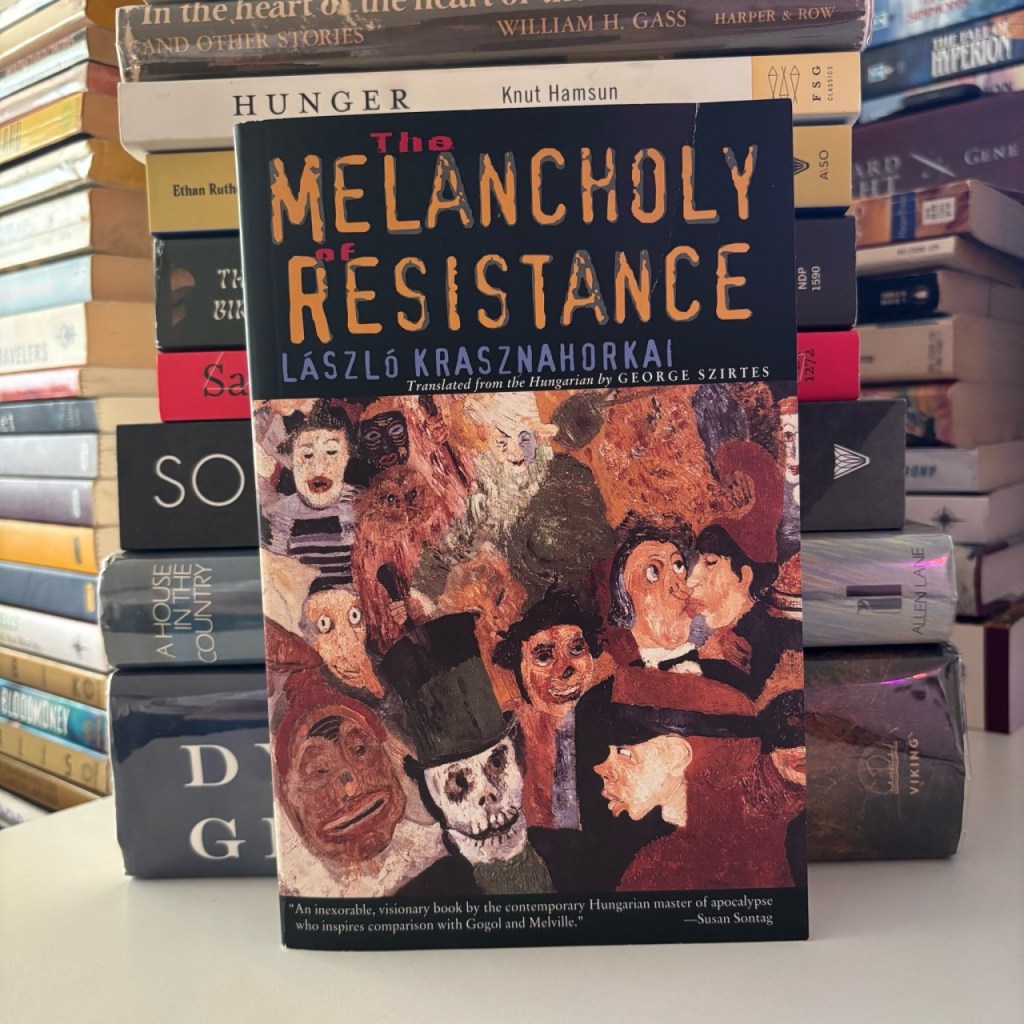
  • Book Review: The Melancholy of Resistance by László Krasznahorkai (1989)

    🌕🌕🌕🌕🌕

    This is up there as one of the most difficult but rewarding books I’ve read all year, probably right below Labyrinths by Borges, which is a convenient coincidence since I find the prose of each author to be similarly as dense. Like Borges, Krasznahorkai’s sentence game can be convoluted, but to my delight I found Krasznahorkai’s many trains of thought to be a tad easier to follow from point A to B because, despite his overwrought tendency to write these endless paragraphs and transpose long-winded acts of divine cosmology onto the mundanity of civil life, Krasznahorkai is ultimately trying to paint a picture here, full of humour and psychologically fleshed-out characters, and not just metaphysical puzzle boxes.

    (more…)
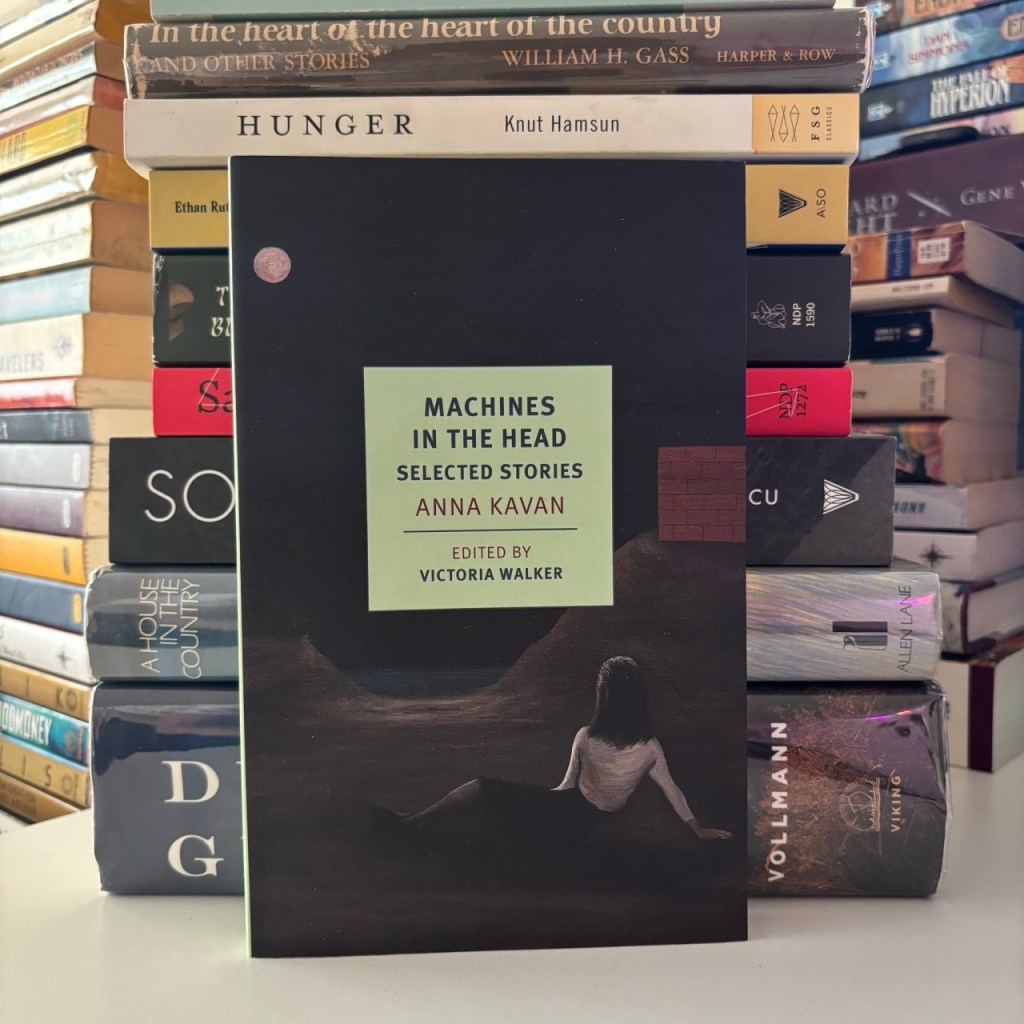
  • Book Review: Machines in the Head: Selected Stories by Anna Kavan

    🌕🌕🌕🌕🌑

    I loved Ice so much that I couldn’t resist picking this up immediately after finishing it. Some of the stories in this collection were written as early as the 1930s, a few decades before Ice was published in 1967, and some of the later stories were published posthumously after her death in the following year, so you get a very good sense of her evolution by reading this. The first collection of stories in here, Asylum Piece, which was (surprise!) written about her time in a psychiatric ward, holds some of her most raw and emotive pieces. By this point she was already a fairly experienced writer, having published a few works under the name Helen Ferguson, and she was extremely clever with her portrayal of her mental illness as this sort of legal sentencing—a condemnation with no fair trial; the shadow of a gavel poised permanently above her head. The way she instills this larger-than-life and oppressive sense of doom in her words is like nothing I’ve ever experienced from another writer. The way she manages to spark the imagination despite her gloom is even more impressive.

    (more…)
  • Book Review: Ice by Anna Kavan (1967)

    🌕🌕🌕🌕🌕

    One of the best feelings as a reader is pulling something out of your pile that has been sitting there almost long enough to lose its luster and being hit with a literary grenade that blows you away. I knew Ice was going to be good, but I didn’t expect it to turn Anna Kavan into one of my favourite authors within the first five pages. I couldn’t believe how long I let this one fester in my pile; what a shame.

    (more…)
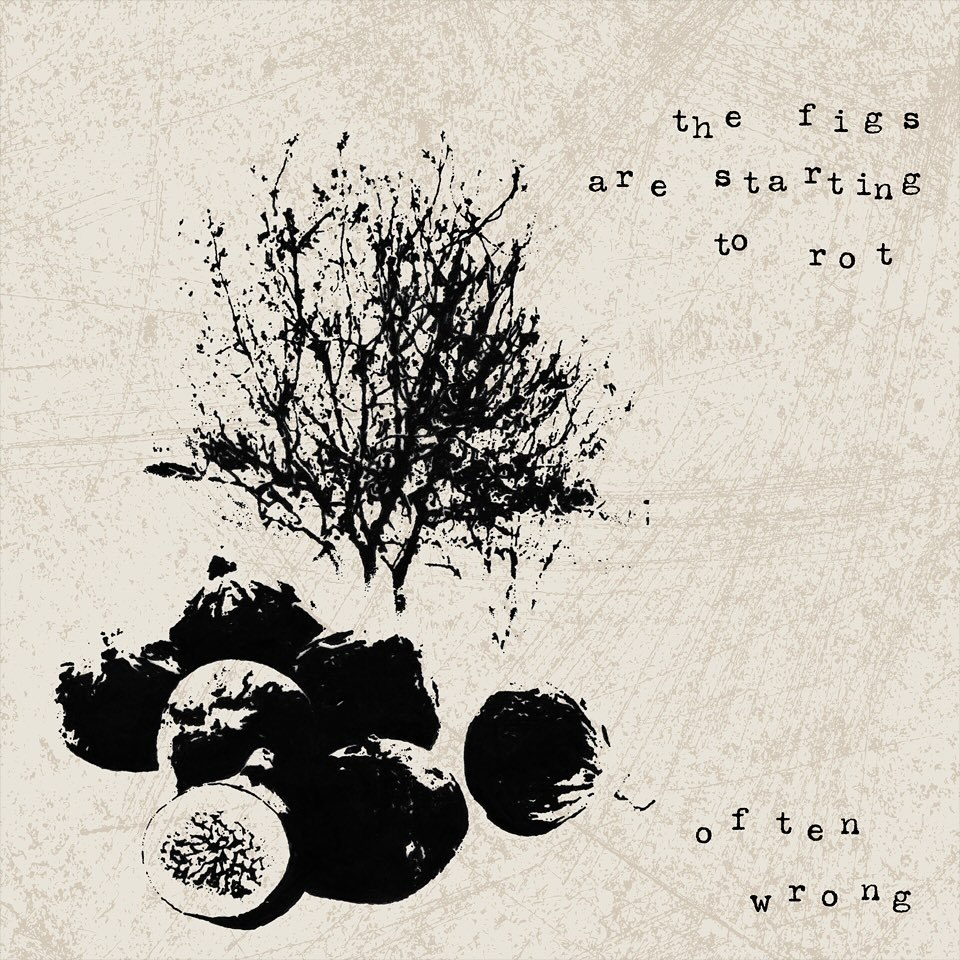
  • EP Review: Often Wrong – The Figs are Starting to Rot

    🌕🌕🌕🌑🌑

    FFO: 90s INFLUENCED EMO & POST-HARDCORE

    The days are getting colder, the trees are losing their leaves, and Often Wrong’s debut EP, the figs are starting to rot, couldn’t have arrived in better fashion, for the group’s stripped-down and raw take on 90s post-hardcore feels fittingly weary for the season. Opening track “Kintsugi” and the closer “Slipping Under” are certainly heartfelt and melodic enough to provide the EP with a warm exterior, but there is a distinct coldness to the production that really brings out the best of songs like “Your Tailor” and “Embrace,” where the group takes a more dissonant and spacious approach to composition, even utilizing detached spoken vocals in a way that evokes the barren solid-state landscape of Slint’s Spiderland. Often Wrong’s songwriting has a simple, rugged charm to it that really allows Oscar McManus’s vocal performance to shine as he adapts well to both moments of tender confession and fits of explosive collapse, and while I would have loved to hear some more dual vocal dynamics as seen on the opening track, this EP is overall a solid foundation for a band that is thanklessly filling the void of melodic emo in Vancouver’s underground scene. The figs may be starting to rot, but from the carcass of fruit springs nutrition to soil, and it will be exciting to see how Often Wrong grows from here.

  • EP Review: A Mourning Star – Necessity Has Clipped My Wings

    🌕🌕🌕🌕🌑

    FFO: 90s & EARLY 2000s METALCORE

    A Mourning Star has been at the forefront of second-wave metalcore revival in B.C. ever since the group’s first EP came out in 2022. Since then the band has rapidly evolved and expanded its lineup, put out a refined statement in 2023 with A Reminder of the Wound Unhealed (which was collected into an LP along with their previous catalog and released through DAZE), played a shit ton of shows across Canada and the USA, and now, with a third (!) guitar player in tow, the group has really settled down to experiment and push the boundaries of their sound. Necessity Has Clipped My Wings not only harbors some of the group’s most ambitious songwriting to date, but it also sees them leaning into new tones and production styles for a sonic palette that more strongly reflects the dichotomy between heavenly symbolism and earthly suffering that lead vocalist Elijah Robinson often imbues into his lyrics.

    (more…)