

Tag: slipstream fiction

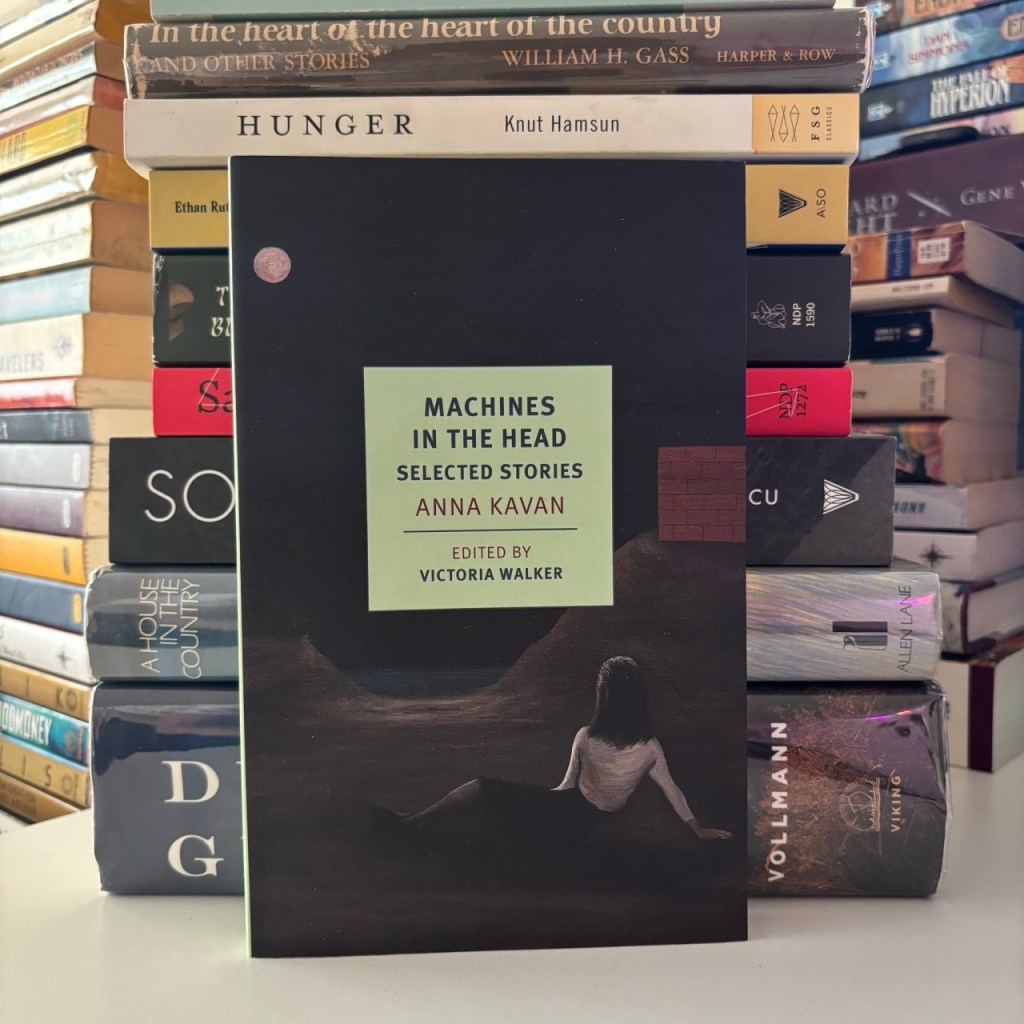
  • Book Review: Machines in the Head: Selected Stories by Anna Kavan

    🌕🌕🌕🌕🌑

    I loved Ice so much that I couldn’t resist picking this up immediately after finishing it. Some of the stories in this collection were written as early as the 1930s, a few decades before Ice was published in 1967, and some of the later stories were published posthumously after her death in the following year, so you get a very good sense of her evolution by reading this. The first collection of stories in here, Asylum Piece, which was (surprise!) written about her time in a psychiatric ward, holds some of her most raw and emotive pieces. By this point she was already a fairly experienced writer, having published a few works under the name Helen Ferguson, and she was extremely clever with her portrayal of her mental illness as this sort of legal sentencing—a condemnation with no fair trial; the shadow of a gavel poised permanently above her head. The way she instills this larger-than-life and oppressive sense of doom in her words is like nothing I’ve ever experienced from another writer. The way she manages to spark the imagination despite her gloom is even more impressive.

    (more…)
  • Book Review: Ice by Anna Kavan (1967)

    🌕🌕🌕🌕🌕

    One of the best feelings as a reader is pulling something out of your pile that has been sitting there almost long enough to lose its luster and being hit with a literary grenade that blows you away. I knew Ice was going to be good, but I didn’t expect it to turn Anna Kavan into one of my favourite authors within the first five pages. I couldn’t believe how long I let this one fester in my pile; what a shame.

    (more…)
  • Book Review: You Bright and Risen Angels by William T. Vollmann (1987)

    🌕🌕🌕🌗🌑

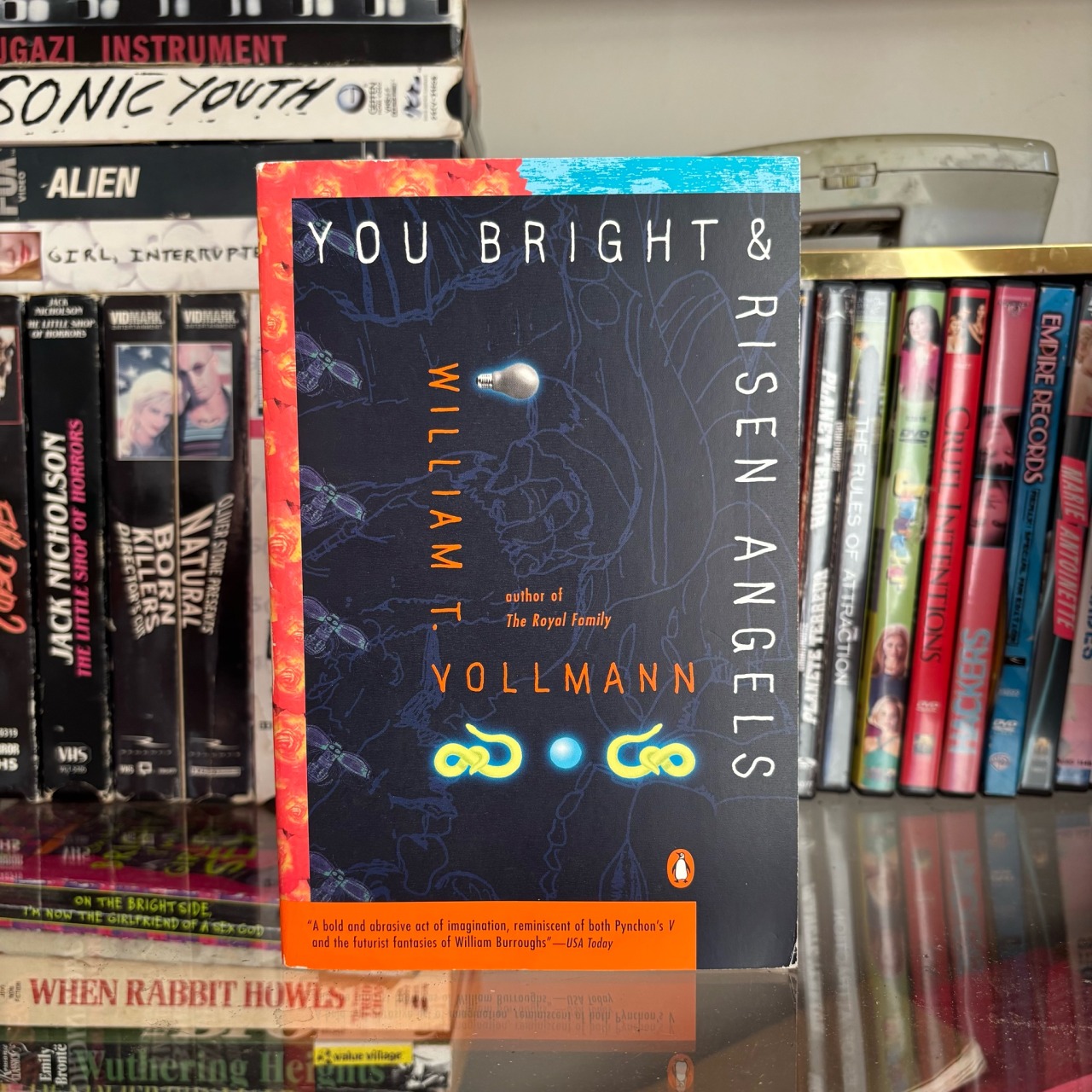
    This is another book that will be difficult to write about, not only because there is just a lot going on in terms of story, character arcs, and meta shenanigans, but also because it is quite a disorderly novel that eschews linearity for a postmodern collage of out-of-sync moments. You Bright & Risen Angels is cunning and unpredictable, especially as Vollmann freely jumps to and fro in the timeline and trails off on endless tangential daydreams, but it is also extremely rich in humanness, where the focus is less on “what is happening right now?” and more on “how do these variable environmental factors make people behave?”

    (more…)
  • Book Review: Never Let Me Go by Kazuo Ishiguro (2005)

    🌕🌕🌕🌗🌑

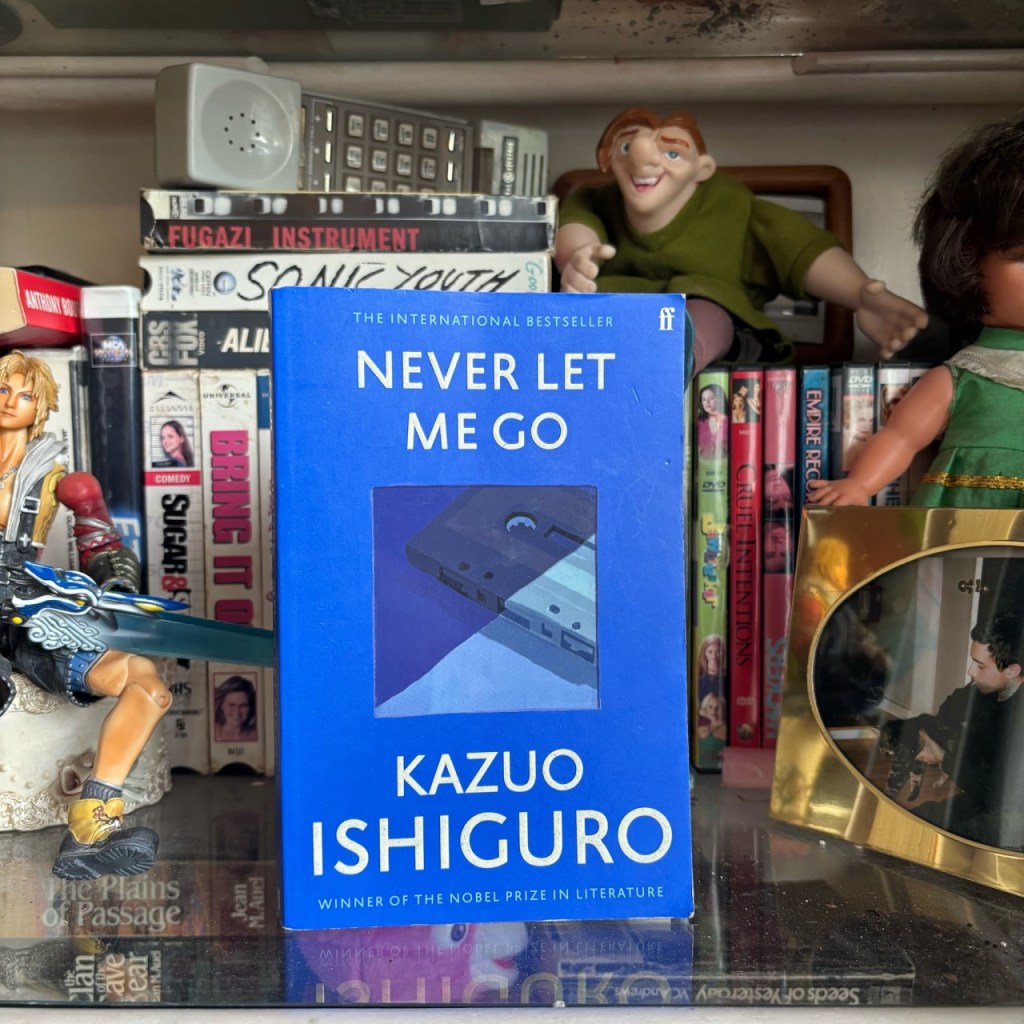
    This was such a nice change of pace and a perfect palate cleanser after reading a bunch of really dense sci-fi over the past few months. I had never read Ishiguro before, and went into this book more or less blind, which is probably the best way you could ever read this. Admittedly, this isn’t my regular style of science fiction, as its scope is very zoomed in to the personal fabric and the actual science element of the book was kept very out of focus despite having a somewhat large implication on the story. Luckily, Ishiguro’s smooth, almost lavender-like prose and meticulous first person narrative managed to draw me in quickly. Ishiguro sticks the landing early and coasts at a consistent, and sometimes tedious pace for most of the book, but it is almost always enjoyable just to bob along inside the head of our first person narrator as she recounts the finest details of her life experiences. Kath takes us through a ton of tangents, never more than a few pages away from a “this happened, but before I can tell you, I have to go back and explain something that happened 10 years ago”, but the slow, journalistic quality of the narrative also gives so much room for depth to really examine the human condition. I don’t want to give away any plot details, because half the joy of this book is watching as Kath gives us new details that slowly reveal the bigger picture, and that unfolding process is super easy to spoil. But I wouldn’t say the plot is the most important part anyway. The heart of the book rests in the moment-to-moment train-of-thought of our narrator as she forces us to confront the meaning of life in all its tragic and beautiful ambiguity. And for that, it does an amazing job.

Something went wrong. Please refresh the page and/or try again.