🌕🌕🌕🌗🌑
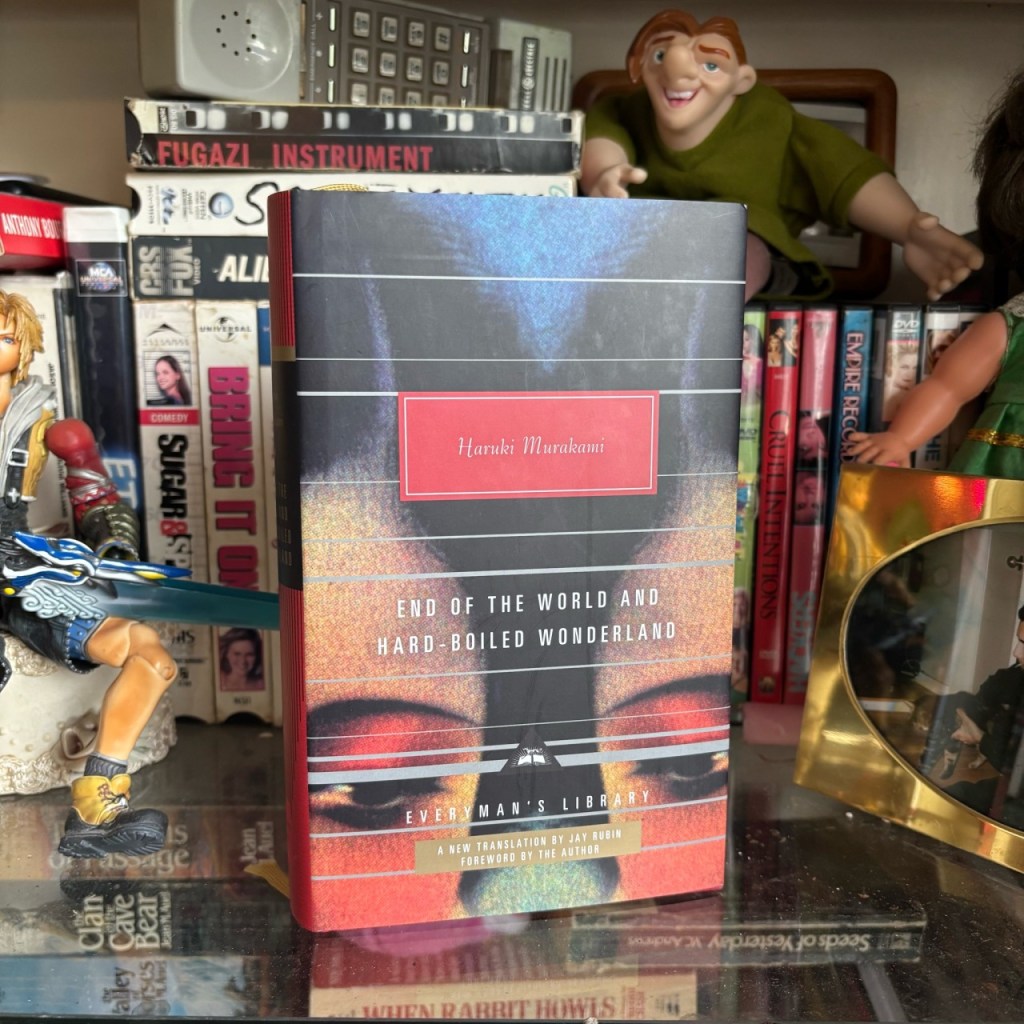
My first Murakami. Was not disappointed. I would consider this to be a peak comfort novel: flowy, colorful, fun—and not challenging in the slightest (which I am discovering is not always a bad thing). The reader is very much put in the passenger seat, and Murakami delivers on providing a vivid wonderland and a fun cast of characters to engage with. The way Murakami describes the world is so vivid, it doesn’t even bother me that the larger political powers at play in this reimagining of Japan are portrayed as these overblown, cartoonish, shadow puppet-type caricatures. It’s very much a “the big scary bad guys” versus “the good guys” type of deal, but it just works for the story, which ends up being far more ambiguous and interesting than you might expect. The tone is kept fairly light and comedic even when the action gets intense, but this doesn’t stop the philosophical nature of the book from losing its impact. Our first-person narrator—the classic “likeable but slightly problematic aloof guy turned hero” who sort of stumbles into importance on accident—thankfully has a good sense of humour and a lot of insightful observations to express.
Yes, Murakami is a freak for writing in a semi-sexual relationship between the 35 year old protagonist and a 17 year old girl who is repeatedly referred to as just “the fat girl” throughout the book. I was unaware of this going in, and it did gross me out. Don’t care whether it’s legal or not. Unfortunately, this type of stuff is incredibly common in so many male authors of his age; trying to avoid it is like walking through a minefield with a blindfold on. It’s a problem that plagues so many of the classics. For extra context, Japan has had one of the lowest ages of consent in the world until just 2023, when they finally raised it from 13 to 16, so I can’t even imagine how normalized these types of relationships were in the 80s when this was written. The protagonist does show a surprising amount of restraint in not allowing the relationship to get too physical, but what does happen is already uncomfortable enough by any reasonable standard.
That in mind, this was still such a well-written story. I was hesitant about the parallel narratives at first, because an approach like this usually ends up with one narrative being far superior to the other, but Murakami kept things so consistently enjoyable between the two, and I loved the way the connections between the two worlds slowly become closer and closer throughout the book. I was always so happy to jump back and forth to check in on what was happening with each perspective, and the climax that really brought everything together was so good. Murakami does sort of hastily dump the plot on the reader in one conversation in a way that felt overly expository, but he followed it up with what I found to be a pretty surprising finale that made me cry like no other book has in a long time. Good book.
Leave a Reply