🌕🌕🌕🌕🌑
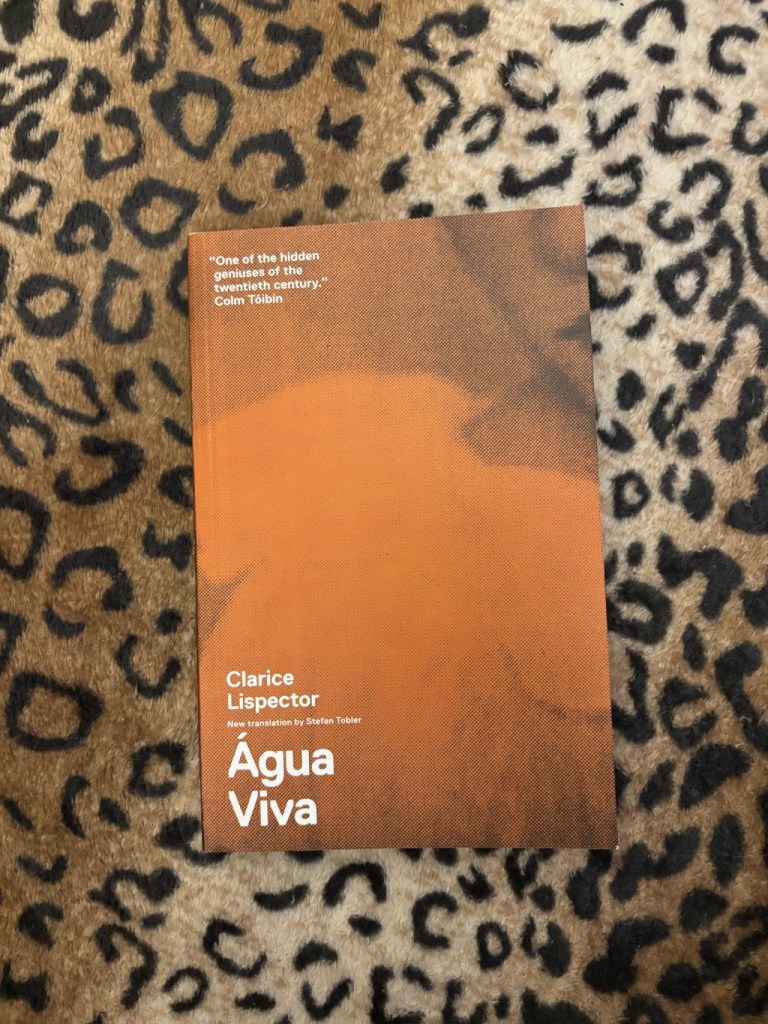
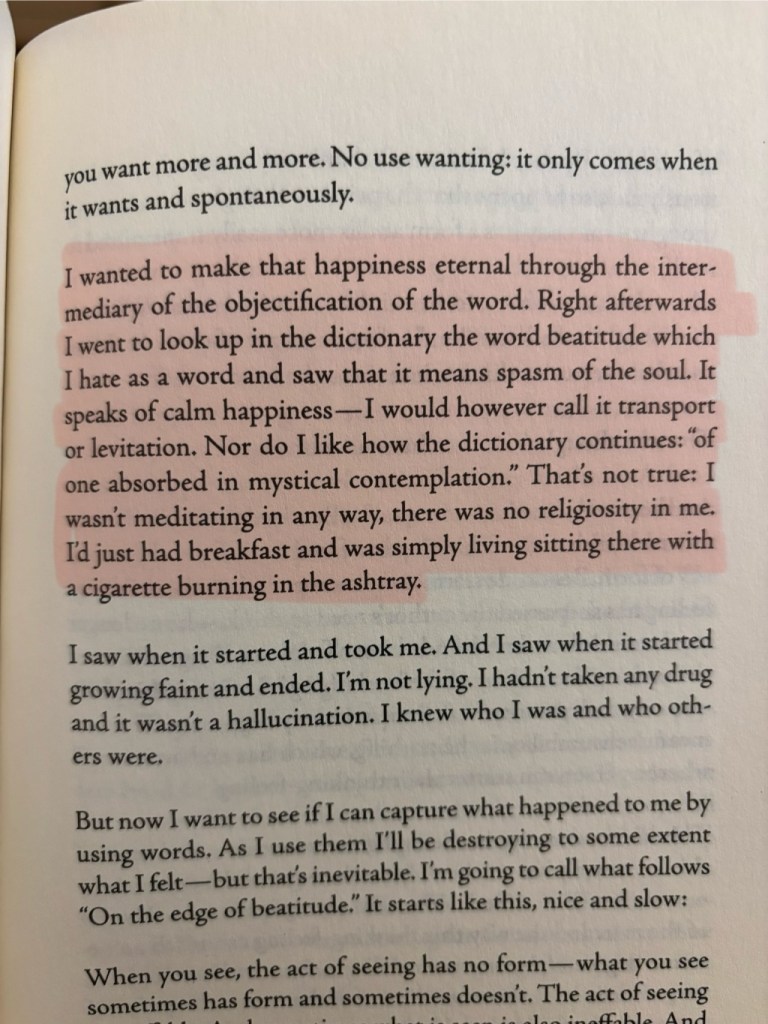
Água Viva is not a novel, and this is not a review—I have no stars to award something that isn’t even playing for the judge’s panel; this is an attempt to contextualize a series of interconnected paragraphs that materialized from the abyss of an unknown consciousness and landed like daggers on the page. You see, Água Viva is not a story; it has no characters and no corporeal realm to occupy; it is concerned purely with being—it’s a literary exorcism, a birth, a violent becoming of life. Lispector taps into the source of untamable spirit and lets Jesus take the wheel, essentially. At times reading Água Viva felt like watching a sentient spark of electricity bounce from corner to corner of each page, searching frantically for a sense of structure, only for it to find none and continue blazing its path with ferocity anyway.
Surely its formlessness and lack of any recognizable construct might immediately alienate some readers, but think of it more like free-form poetry and you might be onto something. I read it twice back-to-back, not because I loved it so much after my first read, but because I was utterly perplexed by it, and I wanted to understand how something so plotless could be so gripping. The text certainly seems directionless, but Lispector has no problem grabbing you by the collar and pulling you along with an incredible sense of urgency as this spark of life she creates stumbles wildly from one eureka to the next, and the experience is exhilarating. It wasn’t until after the second read that I fully appreciated Água Viva as an exercise in subconscious generation.
It helps that Lispector’s use of language is also so brilliant. Of course I can’t speak for the original Portuguese text, but it’s clear Stefan Tobler didn’t cut any corners to compromise Lispector’s vision. Her words are sharp, witty, and confident but also graceful, like the edgeshine of a knife or the wings of a moth flitting against a lampshade. It makes each paragraph such a delight to read even if the ideas themselves are illusive and subvert your understanding at every turn. While it’s hard to recommend this to people who value distinct story arcs and character development above all else, I’d say it’s essential reading for anyone who is concerned with the act of creation itself. I sure as hell felt inspired by Lispector’s fearless grappling with her own unknown.
Leave a Reply