🌕🌕🌕🌕🌕
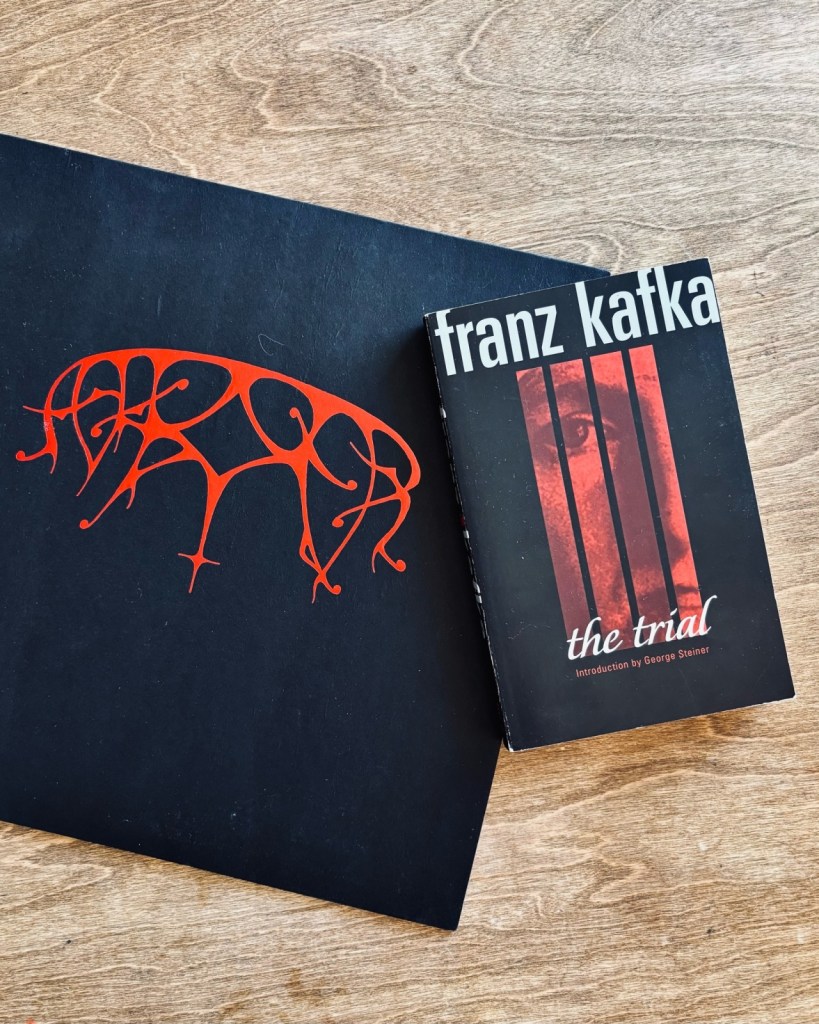
Kafka has lived in the back of my mind for years before I even had the inkling of an intention to read him purely because of how integrated into the cultural vocabulary the term “kafkaesque” has become over the past century. Finally reading him was like unlocking a watershed of new mental pathways. I couldn’t stop thinking about how everything I loved about the show Severance was present in this novel. The very idea of liminal space and uncanny valleys was granted a new dimension in the substrata of my brain, a place haunted by the presence of Lovecraftian horrors and bureaucrats with Cheshire grins.
The Trial by far exceeded my expectations, but it wasn’t an immediate click. As familiar as I was with the concept of kafkaisms, I had no idea what to expect when it came to Kafka’s prose, and I think I spent the first 20 to 40 pages simply adjusting to his surprisingly straightforward style, but the more I read, the more his unique personality began to shine through, and I began to appreciate the bumbling nervousness, the existential dread, and the absurdist humour lurking beneath the well-to-do exterior. As I started to ease into Kafka’s way of writing, and as the story started to become more surreal, I became fully, utterly immersed.
But something else happened too—I began to see myself in Josef K. and his fight for advocacy in a system designed to entrap and misdirect him, a system so riddled with redundancies and locked doors that trying to engage with it feels like making contact with an alien organism, something not made for people. I felt frustrated when he was frustrated. I felt inspired when he refused to give up. It broke my heart to watch the system break him. K. is accused of a crime that no one will even explain to him. He is fully on his own, living with the gavel of divine judgment poised above his head. I felt that sense of helplessness in my gut, and knowing that Kafka was battling a terminal illness while writing this only made it feel more real.
It made me think of my own mortality and of my unconscious desire to live a life full of love and expression despite the crippling knowledge that entropy will destroy everything I love, including my own body. It reminded me of a passage from Voltaire’s 18th-century classic, Candide: “A hundred times I have wanted to kill myself, but I was still in love with life. This absurd weakness is perhaps one of our deadliest attachments: can anything be more foolish than to keep carrying a fardel and yet keep wanting to throw it to the ground? To hold one’s existence in horror, and yet cling to it? In a word, to caress the serpent that devours us, until it has eaten away our heart?”
I knew The Trial was going to be good, but I wasn’t expecting it to hit me like that. The ending scene in particular blew me away, and somehow the incomplete form of the novel only made it better. But most importantly, I can now say “kafkaesque” with a smug look on my face and mean it. Five stars for Kafka.
Leave a Reply