🌕🌕🌕🌕🌕
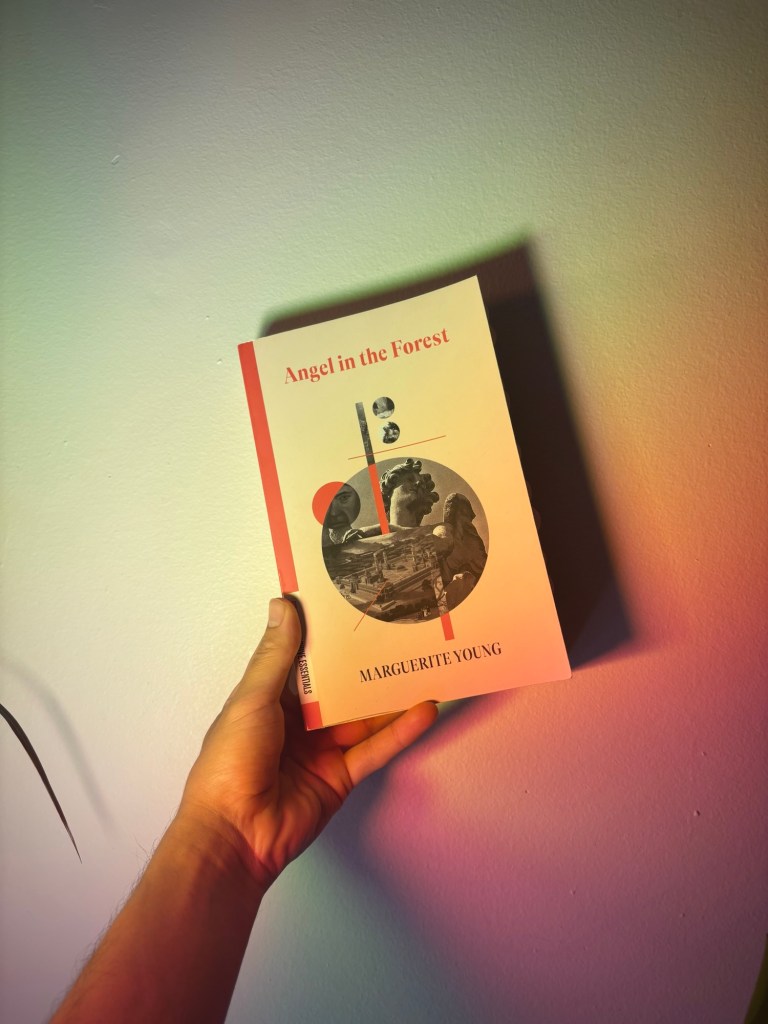
I feel so incredibly stupid trying to write a thoughtful analysis of this book because Marguerite Young is a million times smarter than I will ever be, and her ability to hold basically every facet of the human condition in her palm and roll them together with the same ease that a child plays with a ball of clay leaves me absolutely dumbstruck. So I’m going to take the easy route and opt for a simple questionnaire:
Are you interested in learning about some of the first socialist movements in 1800s America? Does the concept of “scriptural communism” intrigue you? How about celibate cults? Are you brave enough to take a really critical look at how the inextricable force of spirituality shapes and/or resists progressive movements? More so, are you interested in confronting some of your own potential biases toward rationalism and completely recalibrating how you view the function of spirituality in society as it pertains to said movements? Are you ready to recontextualize our current political crisis as a mere extension of time immemorial? Do you enjoy rich, poetic language that weaves history, philosophy, and scripture together into a map of societal consciousness?
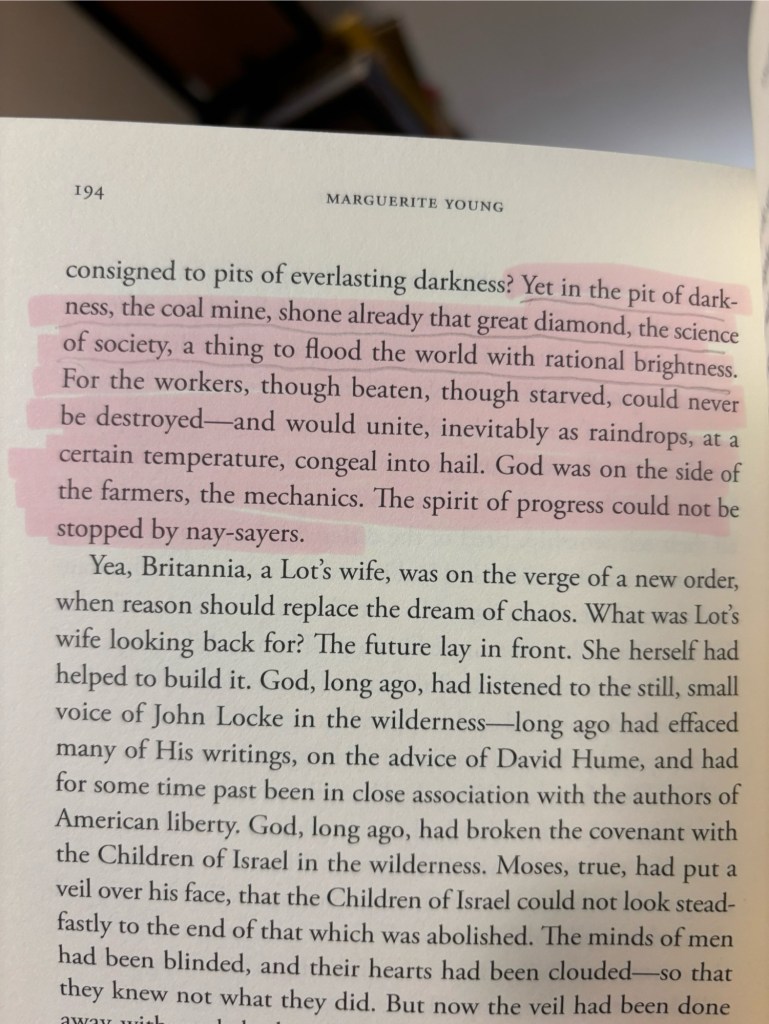
If you answered yes to most of those, you should read this book. I thought it was incredible. I think I underlined something on almost every single page, whether a poignant quote or just something that made me think. This book is only 428 pages, but it felt like 800, and I don’t mean that in a bad way; it is just DENSE with incredible knowledge and ideas about humanity that feel cosmic in scope. Young’s sentences will often have you bending over backwards to follow her logic, but if you put in the work, it will totally rewire your brain.
I only wish that Dalkey didn’t drop the “Fairy Tale of Two Utopias” subtitle from the cover with this reprint, because the fairy tale aspect of that subtitle is crucial to the full scope of Young’s visioin. Despite inarguably being a work of non-fiction, Young definitely takes liberties in expanding upon the inner lives of the characters she studies, often bringing them to life with phantasmagoria, which only makes the facts of their existence more memorable. Someone once wrote about William T. Vollmann that he “resists the flattening of history,” and I think that is equally true about Miss Young. This is history at its most holographic.
Leave a Reply