
🌕🌕🌕🌕🌕
I’m at a loss for words. How do you “review” a human life?
There are a multitude of lives packed inside this book—stories within stories that have been swept under rugs, scattered amongst ephemera, crumpled in the back of desk drawers, scrawled in notebooks and journals, buried in the dust of architecture. Despite the novel’s focus on four individuals, each life becomes a window into a thousand more. Victims of war and genocide do not exist in a vacuum after all; their stories and their pain are passed down through generations.
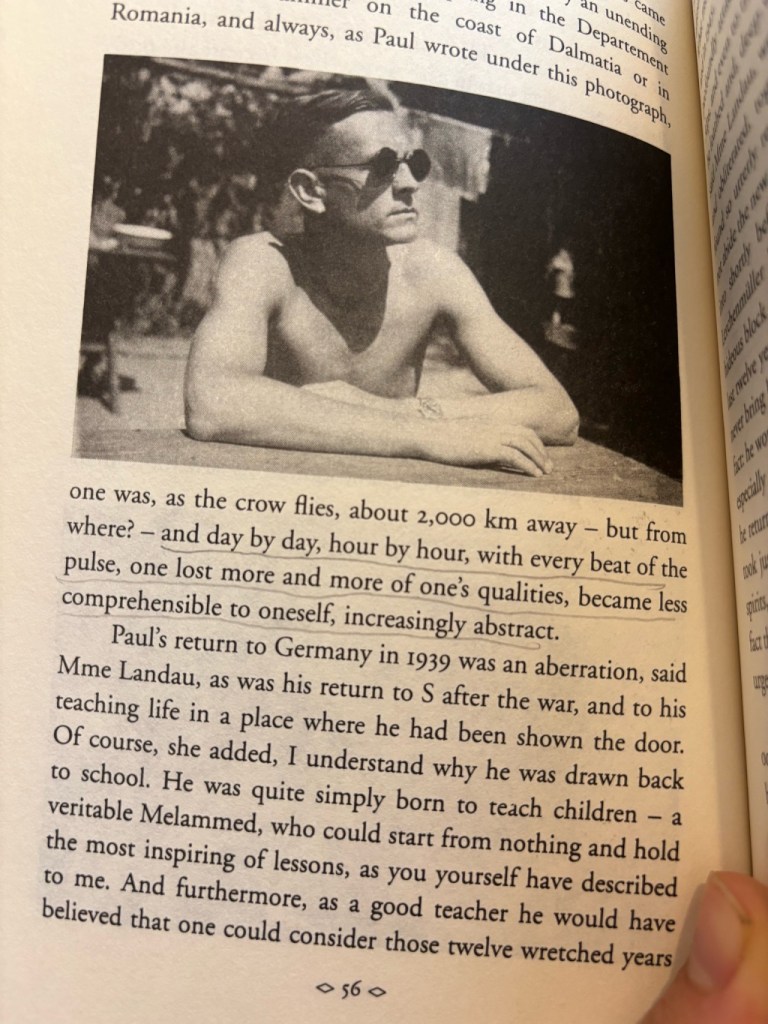
Despite the displaced survivor’s best attempt to compartmentalize the trauma and start fresh in new countries, those painful memories are carried with them, and they seep through the cracks, often resulting in illness and suicide further down the familial chain than you might expect. But these things aren’t talked about within the families experiencing them. Talking about them would make them real, so as with his debut novel, Vertigo, Sebald’s primary objective with The Emigrants seems to be to give shape to those things left unsaid by paying careful attention to the details of what was; he reconstructs the lives of these emigrants by talking to their family members, looking at photographs, reading their journal entries, and tracing their geographical steps. From modern-day America to war-torn Europe, all the way back to Jerusalem, where spirituality and decay coexist in staggering contrast, we follow this river of time, memory, and lineage in an attempt to trace generational trauma back to its root, but as we get closer to penetrating that web of memory, the image often becomes more ambiguous.
The Emigrants is haunting, beautiful, and immensely clever, easily one of the best books I’ve read all year. Sebald does have a way of droning on like a grandparent recounting in meticulous detail the events of their youth, but if you listen closely, you can see a cathedral beginning to take shape; the stories begin to take on a mystical quality, and those memories become real, visceral, and present; we begin to embody them as if they were our own—because they are our own.
Leave a Reply