🌕🌕🌕🌕🌕
In the spirit of trying to break out of being strictly a sci-fi reader, I picked up Pedro Páramo at the recommendation of (ironically) my favourite sci-fi booktuber, Bookpilled. His review of this Mexican classic struck me, and wow, I am so grateful that I stumbled upon that video, because this is now one of my favourite novels.
Pedro Páramo is a complete trip, and I absolutely love the non-linear, hallucinatory way that it builds its narrative. It begins with Juan Preciado returning to the ghost town of Comala to search for his father, but the story very quickly devolves as Juan Preciado is consumed by the land of the dead into what can only be described as an ayahuasca fever dream. You really get this sense that reality is breaking as the voices of ghosts and their memories are swirling around Juan Preciado as he tries to find any trace of humanity left in Comala. It becomes incredibly hard to parse who is actually speaking at any given moment, or whether or not they are even alive, yet every voice remains so distinct, which is a remarkable achievement on Rulfo’s part.
The book goes through a transformation about halfway through where it becomes a little bit more grounded in tangible events, and all of those blurry flashes of memory begin to gain further context. This book is surprisingly layered for being only 128 pages long and definitely requires a reread for the whole picture to reveal itself. The thing that really struck me about Pedro Páramo is just how deeply it explores grief and generational trauma. As the story transforms, it becomes no longer about Juan Preciado’s search for his father, and it becomes a portrait of a town that is in decay—falling apart morally, economically, and politically under the rule of a corrupt hacienda owner during the Mexican Revolution. It’s almost as if the land itself is poisoned, and the restless souls that inhabit the soil are still screaming.
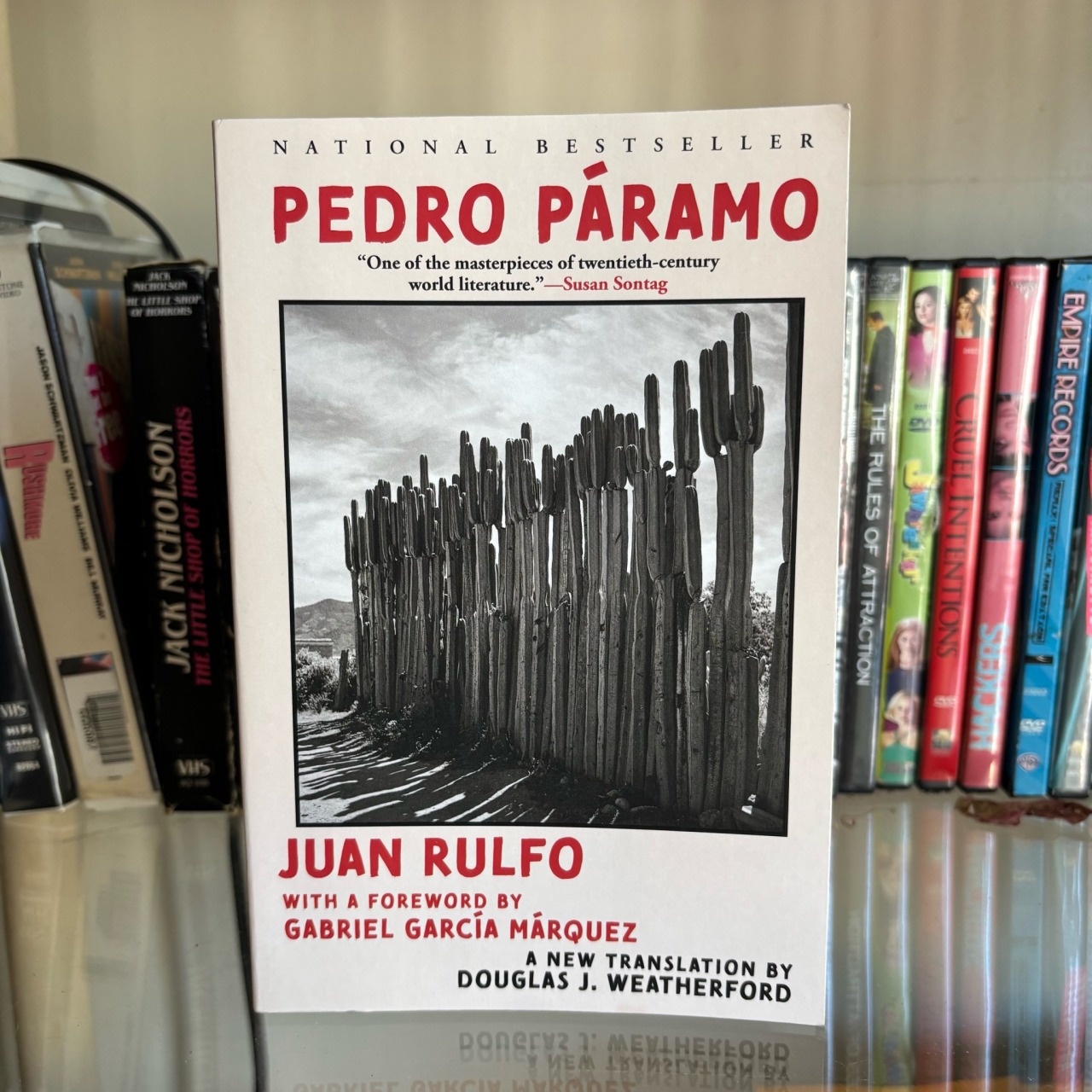
As with any translated work, there is always a debate about which version is the best and the inevitable gatekeeper shouting that no translation is actually worthy and that everyone should just drop everything to learn Spanish so that they can read the original. I think Weatherford did a great job. I had zero complaints about the prose. In fact, there were so many passages that I had to read two or three times over because I was just so wowed by the visceral poetry of Rulfo’s vision. Pedro Páramo is really a masterful novel in every sense of the word, and I cannot wait to read it again, and again, and again.
Leave a Reply