🌕🌕🌕🌕🌕
I was a little hesitant to read Solaris. Based on the synopsis, it just didn’t seem like the type of science fiction novel I was used to. There are no large scale intergalactic battles or worn down cities disintegrating under the weight of hyper-tech and late stage capitalism, Solaris’ scale is much smaller and more personal than that, but the ideas it represents are no less important.
Solaris takes place on the planet of it’s namesake, where a living ocean is believed to be responsible for the planets ability to orbit two suns while maintaining a stable gravity. This has obviously garnered significant interest from the scientific community, to the point where a whole school of Solaristics was invented purely for the study of this anomaly. A research station was established on the planet, the ocean was confirmed to be, infact, not-fucking-normal at all, and thousands upon thousands of research papers were published. This torrent of research ultimately began to divide Solarists into separate schools of thought, which almost transformed the whole ocean into something more resembling a God with many faces. Experiments were carried out, discoveries were made, but not one scientist was ever able to make any real progress in actually understanding the ocean’s existence, and more so, many scientists died in the process. It’s motives and mechanisms remained a frustrating secret.
As the decades passed, interest in Solaristics began to dwindle, and calls to shut the station down entirely gained heavy traction as mankind’s return on investment was essentially a net zero. Humanity slowly began to abandon the study of Solaristics completely, as it was believe to be a lost cause, meanwhile the research station was slowly abandoned as more people were driven mad and suicidal by the ocean itself. Only three committed scientists remained on the station. And here we begin the story.
First off, the beginning of this book was some of the most tense and gripping fiction I’ve ever read. Stanisław Lem drops us right into the hot seat as our new arrival, Dr. Kris Kelvin, arrives at the station to aid his colleagues. The atmosphere is eerie from the second the doors open, and only becomes more unnerving as Kelvin tries to figure out what happened to the rest of the crew. The psychological horror elements of this book landed way harder than I expected. Every sentence felt like a cold sweat dripping in tension. Lem moves things along at a pretty quick pace, but that strong sense of unease doesn’t really go away until around the middle of the book, and naturally so—as our knowledge of the problem increases, we become less afraid.
The second half might not be as scary, but I thoroughly disagree with the notion that it is more boring. The crew relations stay tense and dynamic throughout the whole ride, and what we lose in fear, we gain in a higher focus on philosophy. The final chapter is actually one of my favourite parts of the whole book as Kelvin sits and explains his theory of an imperfect God. It becomes quite obvious what the ocean represents in the grander scheme of things by the last few pages, but Stanisław Lem lays down a genius stroke and reveals this in a way which will force you to connect the dots on your own, and it recontextualizes the entire story. The coolest thing about it, is it seems to be interpreted in a few different ways depending on who you are. Hell, some other reviewers seem to have missed the meaning entirely, which is maybe why they thought the second half of the book was boring. I guess the ocean really is a reflection of ourselves after all. For me, the ocean represents our deepest fears and insecurities. It’s the grief swirling inside of us, of which we obsess but can not cure. The inability to understand. All of the isolation and paranoia aboard the station finally makes sense.
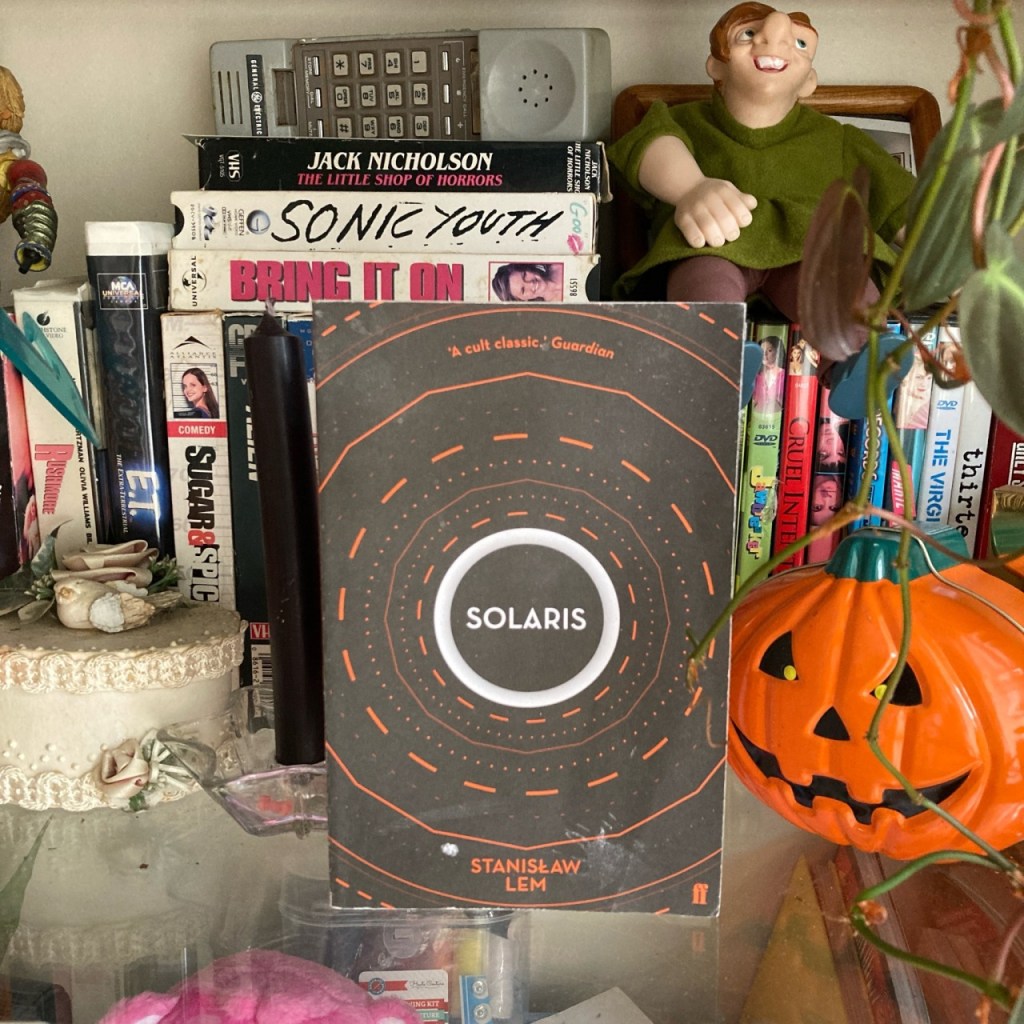
There are a few exposition dumps here and there, but it is what it is. It’s a pretty hard science fiction book after all, so we might as well get our hands dirty. Were they a bit of a slog to get through? Yes. But did I appreciate the effort that the author went through to build such a believable world and problem? One backed by countless research papers sitting conveniently in the station’s library for our protagonist to read at his convenience? Absolutely. The info dumps are there for the people who want to know the gritty details, and they are pretty easy to skim over for those who don’t. My only real complaint with the book is that it wasn’t longer. I felt like so much more could have been expanded upon and explored. The atmosphere was so enthralling that I wanted to stay in it forever, but I also think the quick pace is part of why all the different horror, sci-fi and mystery elements worked so well together. Some of the conversations also seemed a little unreasonably hostile at times, but I wonder how much of that is just a byproduct of translation. Either way, this gets a hard 5/5 from me. Now I wish I didn’t smudge the ink on the cover by reading it in the bath.
Leave a Reply