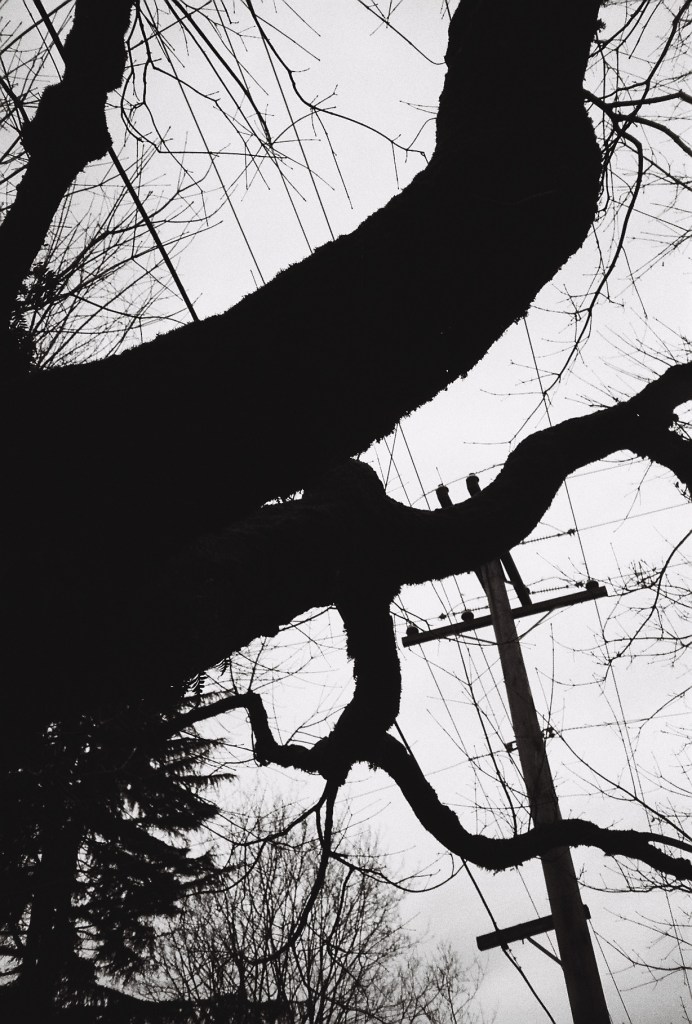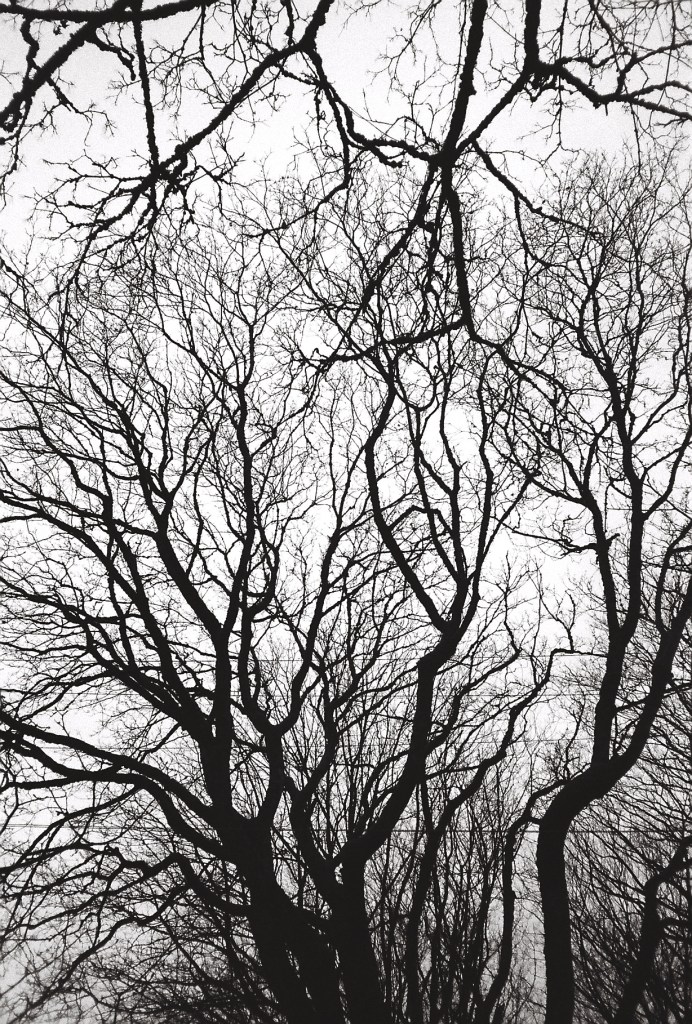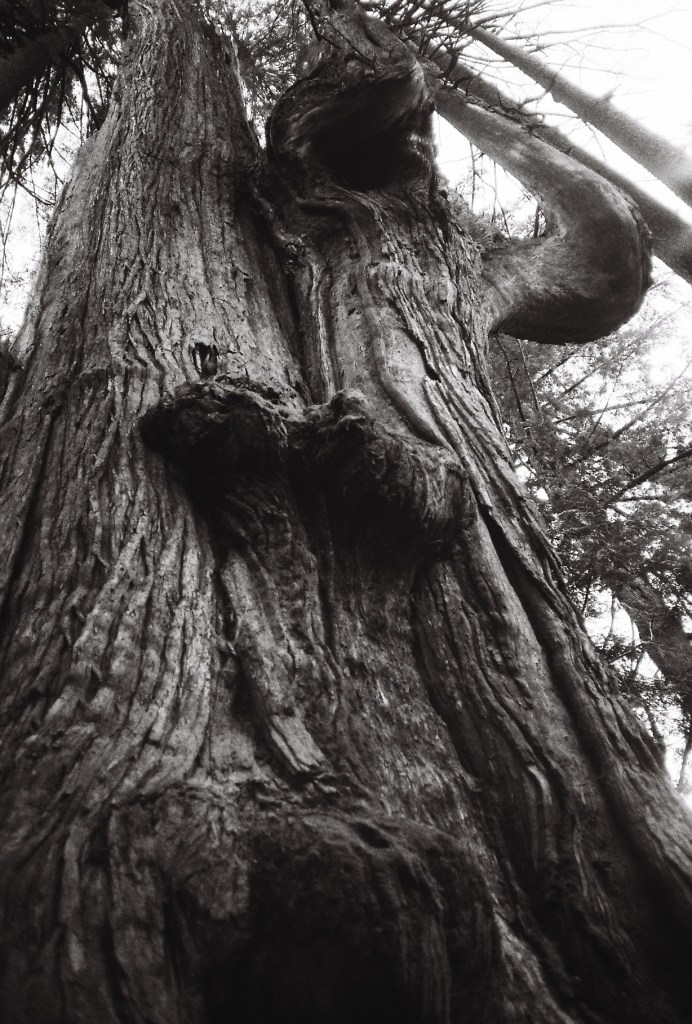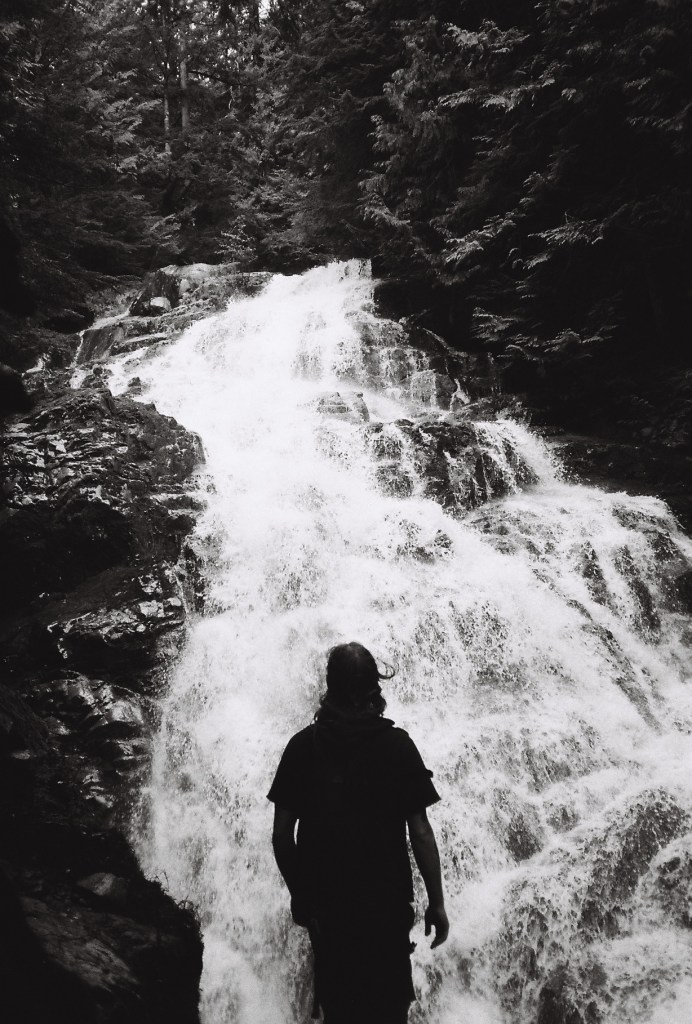



Vancouver, BC
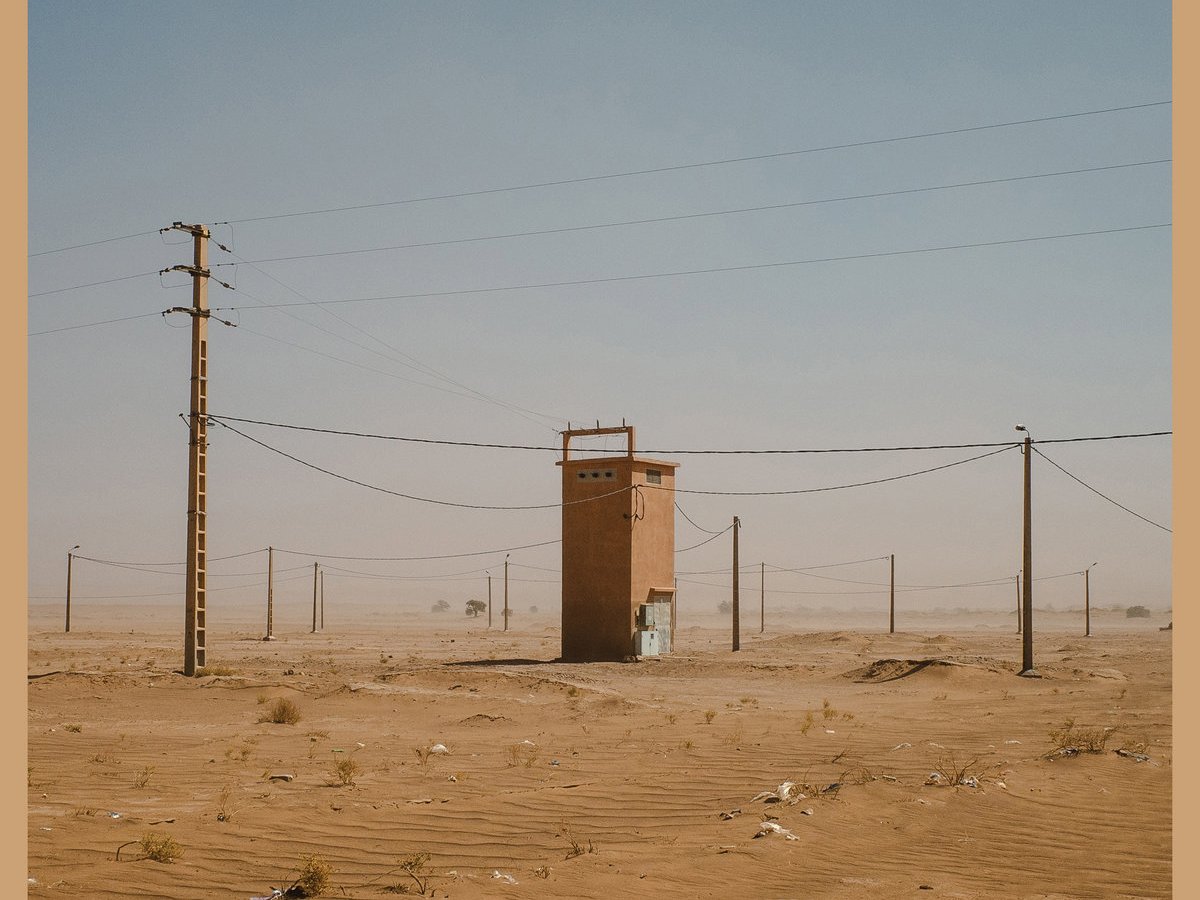
Porta 400 / Yashica T4
Recent book reviews:
Something went wrong. Please refresh the page and/or try again.
Recent album reviews:
Something went wrong. Please refresh the page and/or try again.
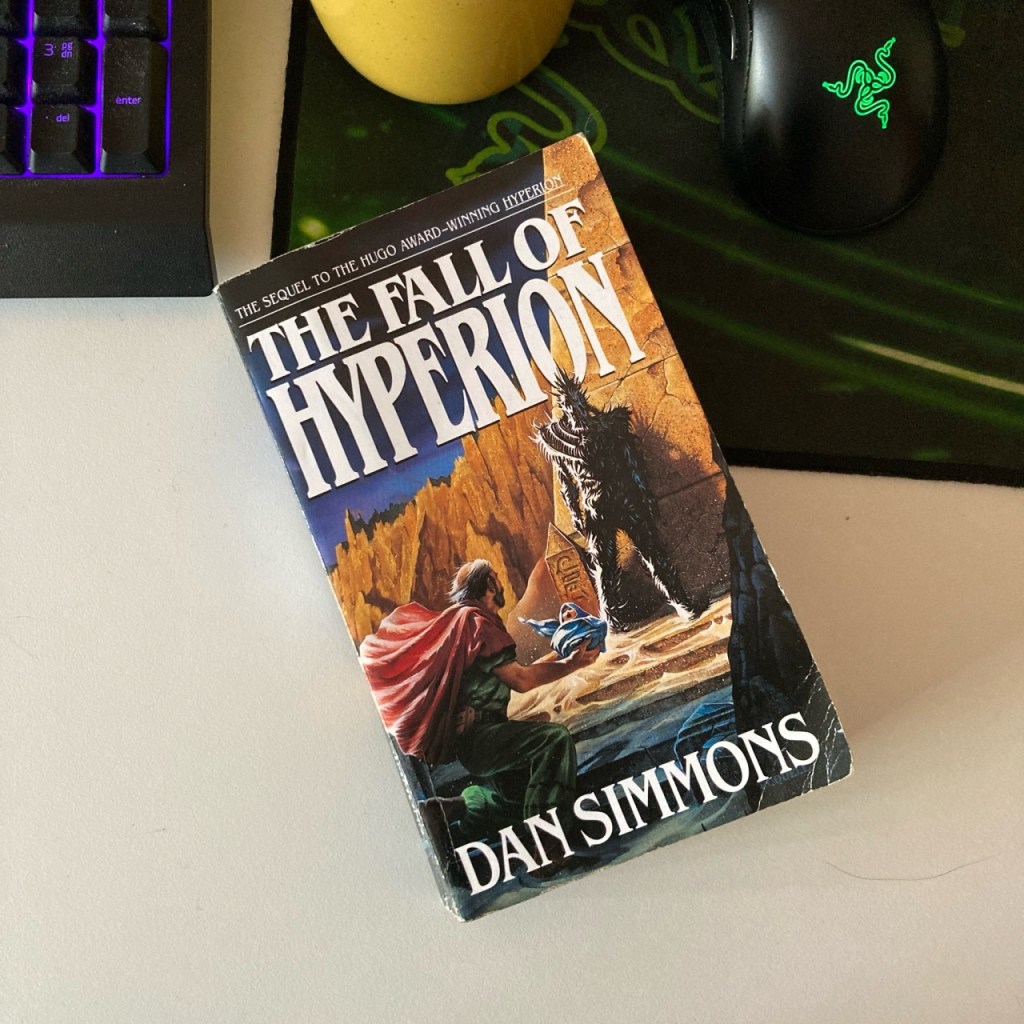
Wow wow wow. Finally finished up The Fall of Hyperion. These books have been taking me a while to get through, but now that I’m done, I almost wish I had read it slower. I straight up didn’t want it to end.
I’m really glad that the first book in this series got all of the world building and character introductions out of the way, because this one was just cooking the entire way through. I was stunned by the amount of insane shit happening before even hitting the half way point of the book. There are just so many different elements at play here; you have the pilgrims on the ground of Hyperion, dealing directly with the trials and terror of the Shrike and his Tree of Thorns, the intergalactic war being waged between the Hegemony and the Ousters, the Keats persona acting as an information relay and flying through the datasphere to communicate directly with AI gods, the Templars and the Shrike Cult with their prophecies, and then the three factions of the TechnoCore being shady and pulling strings in the background the whole time. It’s insane how Simmons’ managed to hold all of these elements and vessels of storytelling together in a cohesive manner that never felt overwhelming or too confusing. The whole concept of timelines intersecting as things pertaining to the tombs ether traveled forward or backward in time kind of went over my head a bit, but it wasn’t too much of an issue.
I’ll admit the ending was a little corny/sloppy, for lack of a better word. It seemed like Simmons’ was grasping at straws a bit in the final chapter just to tie up loose ends, and he also went a little off the rails with the philosophy of “God” and the “Power of Love” and the “Human Spirit” or whatever. I feel like he was trying to add deeper meaning where it wasn’t really necessary, and it came across as a tad pretentious. There are two themes that really stuck out to me while reading this, and neither of them had anything to do with God or love or the human spirit. The first is sacrifice. Without giving away too many spoilers, almost every Pilgrim had their wish granted by the Shrike, albeit in a roundabout way with a caveat that caused them to sacrifice something great, even if that was their own life. The second was the theme of opening our arms to convenience and becoming it’s captive. I think Simmons’ take on how an over reliance on technology can have terrible consequences for the fate of humanity was actually quite nuanced and ahead of it’s time considering this book was published in 1990. There are some very valuable lessons to be gained from this story.
Overall this book really went so far above and beyond the scope of the first, and I’m so glad I decided to take the plunge and see it through. It will probably be hard for any other sci fi novel to beat. I’ve heard that Endymion and The Rise of Endymion are not as good, but I just have to read them now. There were still so many questions left over at the end. Are there still more Shrikes lying in wait? What is really behind the door in the Shrike Palace?? I must know.
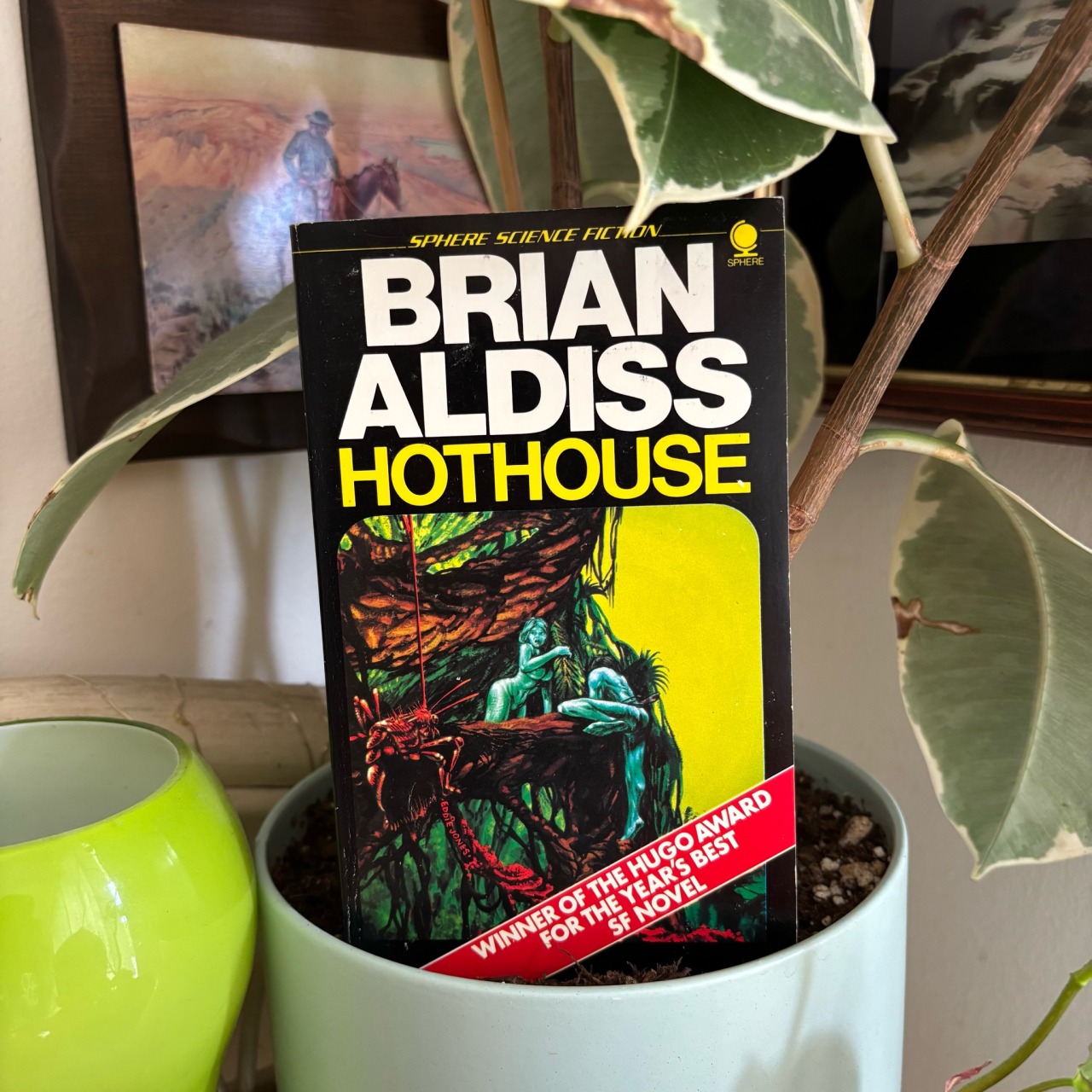
Hothouse is such an awesome, silly book. Seriously. A story about a world that stopped spinning, where one side is bathed in perpetual heat and the other in perpetual dark; where the light side of the globe is covered in dense jungle, brimming with sentient plant life that has evolved to mimic animals in order to better compete for resources; where gigantic spider-like creatures called Traversers have literally spun webs to the moon; where green-skinned humans live in small matriarchal tribes in the branches of a continent-encompassing banyan tree, and those taken to the moon by Traversers grow wings from the space radiation and then fly back to Earth to capture regular human babies in order to bolster their mutated tribe. I have not even begun to scratch the surface of the biodiversity that Hothouse has to offer.
I don’t think I’ve ever read a book that was so purely focused on world-building in the same way that Hothouse is. It almost feels like a diorama: a miniature, self-contained world that is painstakingly detailed and completely unconcerned with any boring sense of reality that lies outside of its bounds, where figurines are frozen in this endless cycle of life and death, caught between sun and shade. The human characters in Hothouse are very simple, but it almost feels like Aldiss crafted these little two-dimensional people on purpose to exaggerate how much bigger and incomprehensible the world is in comparison. The story is a fairly simple adventure as well; we follow Gren as he is rejected by his tribe and infected by an intelligent fungus. The morel then invades his brain and starts to control him for the purpose of further propagating the fungi species. The morel is highly intelligent, but when caught in a struggle of agency, the morel and Gren usually end up making poor decisions that send them both drifting further away from the cradle of life and into the dark side of the globe.
I can’t stress enough how fun and silly this book is. Multiple species are given names like “trappersnappers” and “pluggyrugs.” Gren even encounters a species of humanoid creatures that are attached to trees by green umbilical cords who are referred to frequently as the “tummy-belly men”. Gren, Poyly, and Yatmurr cut the tails connecting these creatures to their mother trees, and they immediately turn into helpless, blabbering babies whose cruel mistreatment at the hands of Gren and the morel is both hilariously comedic and pitifully sad. In many ways, Hothouse reads like a children’s novel, or it at least has a childlike sense of wonder to it, but there is a surprising amount of darkness, violence, and cruelty that makes this world feel dangerously alive, and Aldiss’ prose is surprisingly elegant and sharp, especially as we get into the later chapters and the dichotomy between light and dark becomes more of a central focus. As the story progresses to the end, it even begins to offer an incredibly mature and thoughtful commentary on the nature of intelligence and whether or not intelligence has an inherent propensity for evil.
Hothouse is unlike any book I’ve read so far, and because of that, it was kind of hard to grade. There are so many elements of this book that just wouldn’t work outside of Aldiss’ framework—the simple, dimwitted characters and their silly journey through a world full of carnivorous plants—any lesser author would have completely fumbled the bag with this concept, but that’s what makes it such a special, unique book. If you can engage with this work on the terms of exactly what it is trying to accomplish, it is nothing short of a genius stroke of vivid imagination—a one-of-a-kind experience that I’ll never forget.
Photos:
Something went wrong. Please refresh the page and/or try again.