FFO: POST PUNK, MECHANICAL SHOEGAZE, AMBIENT/ LISTEN
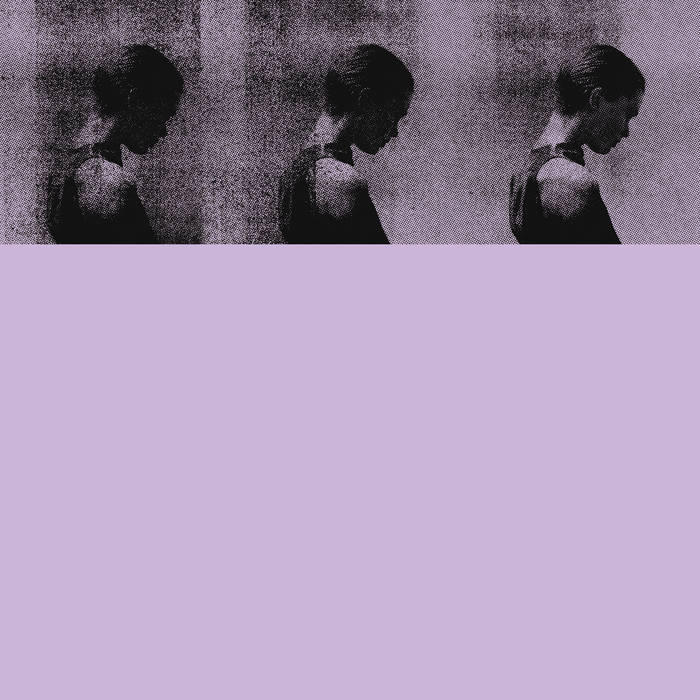
New Orleans duo Belong don’t like to do the same thing twice. Turk Dietrich and Michael Jones have always made the music that they wanted to hear, regardless of their audience, but now I’m starting to think that they also just enjoy alienating people. They put their name on the map in 2006 with October Language; a gorgeous ambient record that was bathed in waves of distorted euphoria. Then in 2011, Common Era saw the duo implement drums, rhythmic bass, and a higher focus on structure and vocals into the mix, all while retaining those ethereal washed out textures that their debut was known for. The move toward a more driven post-punk sound was surely a disappointment to some, but I have always regarded it as a masterclass in mood and atmosphere.
“In came a boy with mid-length greasy hair, he had lots of songs that he wanted to share.”
And so he did. Through a stoned haze of squelching guitars and distorted synths, Rick White introduces himself with a parable of being attacked by a misanthropic bird named Roger. Roger hates the way that humans stare at him so unfriendly, so he decides to attack the boy. A barrage of panicked limbs erupts, and Roger is knocked to the ground, stunned with the taste of greasy hair in his mouth. It’s hard to tell who the narrator actually is in this story.
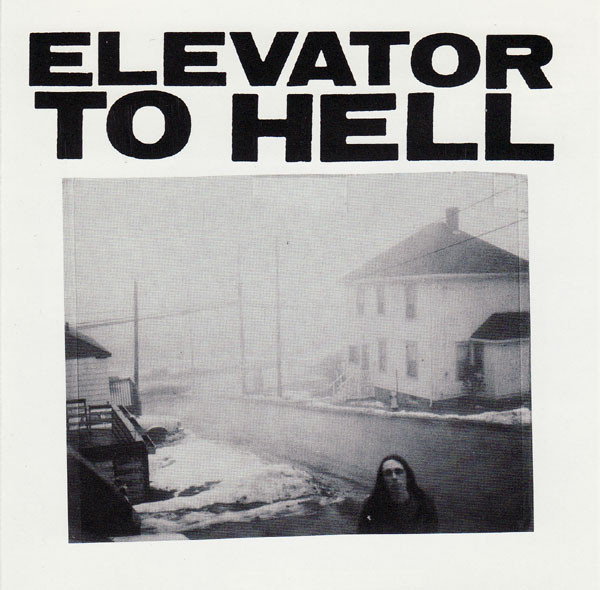
1993 was a big year for Rick White. With nothing more than a couple demo tapes under their belt, his band Eric’s Trip became the first group of Canadians to sign a record deal with Sub Pop, and their debut album was released to critical acclaim, but his personal life was a mess. Love Tara (somewhat humorously named after his new girlfriend, who would play bass for Elevator) was a concept album/musical therapy session dedicated to the break up of his relationship with fellow bandmate and collaborator Julie Doiron. It was a superbly intimate record—equal parts sad and awkward—but it was surprisingly mature for a couple of twenty year old’s to hash things out like that for the world to hear, and the people loved it. Despite the bands sudden success, and the fact that he and Julie managed to stay cordial enough to tour and release two more albums together, it’s safe to say that Rick needed a secondary outlet to express himself. Thus, in 1994, Elevator To Hell was born.
Parts 1-3 plays out like a collage of hazy, drug induced scrap book musings. It’s a compilation of twenty-seven lo-fi and experimental pop, rock and folk songs that were all recorded straight to cassette on the day of their inception, without much of a second thought, and with whatever instruments that Rick could find laying about in his smoke filled bedroom. Rick’s propensity for capturing a moment and translating it to song makes being a musician look easy. He doesn’t need to spend days meticulously crafting a bridge or pre-chorus when hooks and harmonies flow out of him like water, and so he wrote and recorded to his heart’s content. His stories are simple, and brought to life by a rotating cast of drums, bass, electric or acoustic guitar, and synthesizers—all of which are cycled in and out on a whim. The only real sense of cohesion holding this collection of songs together is their eclectic charm, but that’s a huge part of the appeal. It’s a mixed bag of styles and volumes that is sometimes sweet, sometimes spooky, sometimes quiet, and sometimes so loud that every input on the tape recorder must have been clipping and peaking to god knows where (warning: listening to “Boots” may induce bleeding of the ears).
All these pot smoke allegories are not baseless, by the way. Rick states quite plainly on second track “Why I Didn’t Like August 93” that he has a problem with girls, and with drugs, and implies throughout the album that these obsessions are simply fuel for his own self destruction. This problem becomes quite apparent and tangible to our ears over the hour that we spend listening to him fawn and reflect. Catchy love songs like “Three More Weeks” and “Made For You” are contrasted by the totally bizarre percussion soundscape of “Mercyful Fate” (named after, but not sonically inspired by the heavy metal band from Denmark), or the off kilter synth pop of “Killing Myself” and “Train From You”, amongst plenty of other head scratchers. Rick might be playing pinball with his genre exploration, but these songs are held together by a peculiar sense of melody and loneliness. During seventh track “Typical, Boy Loses Girl”, Rick asks why he even bothers writing these songs, and begs to escape from himself altogether. There’s always a hint of hyperbole and dramatization in music, but he was clearly going through it while writing these songs, and I’m just glad that he was able to continue pursuing art and funnel that turmoil into creation.
Not only has Rick White released a gargantuan library of music since this came out in 1996 (his bandcamp page is currently sitting at fifty-three releases, which doesn’t even include everything), but the landscape of music itself has come a long way since lo-fidelity tape recordings infiltrated the subculture markets of the 90s. This album definitely shows it’s age with it’s DIY sound and approach, and it probably wont attract many new ears outside of avid Eric’s Trip fans or CanCon historians, but Parts 1-3 is a special time capsule of ideas that really deserves to be uncovered. It’s the type of album that could only ever be made by a sad twenty-somethings stoner living in Moncton, New Brunswick in the 90s, and that’s why I love it. Rick White proved that you don’t need expensive equipment, or even a band, to create compelling stories, and that continues to inspire me to this day. A catchy hum along tune and a unique voice is all you really need. Oh, and maybe a side of psychoactive substances. Just don’t turn into Roger.
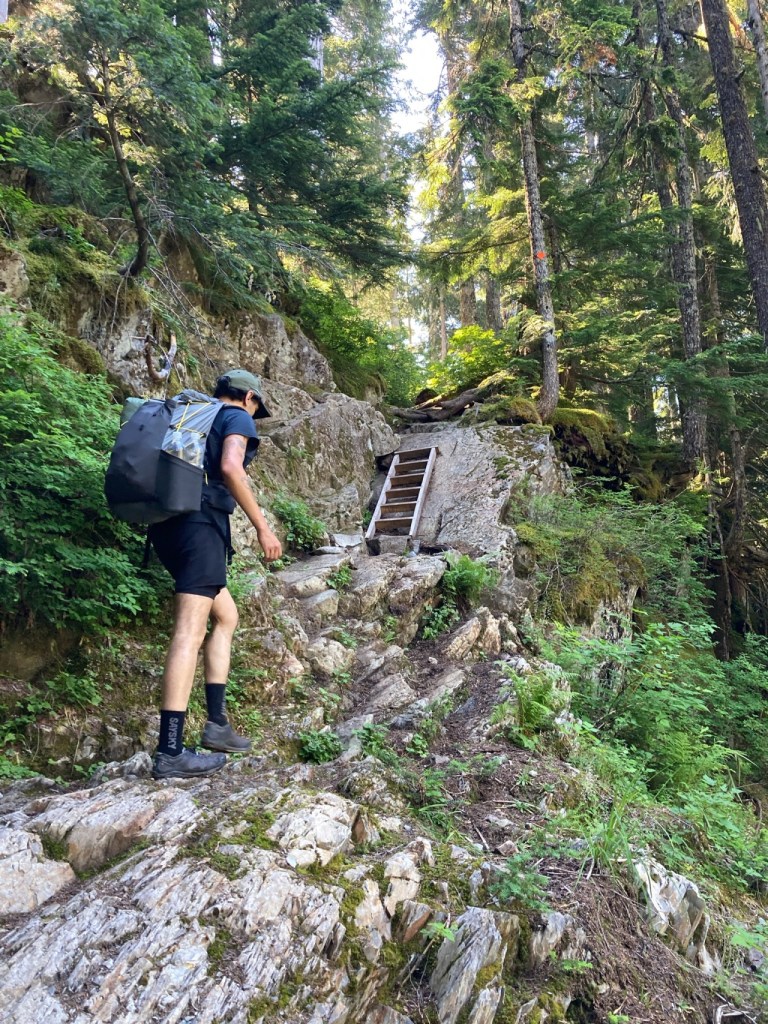
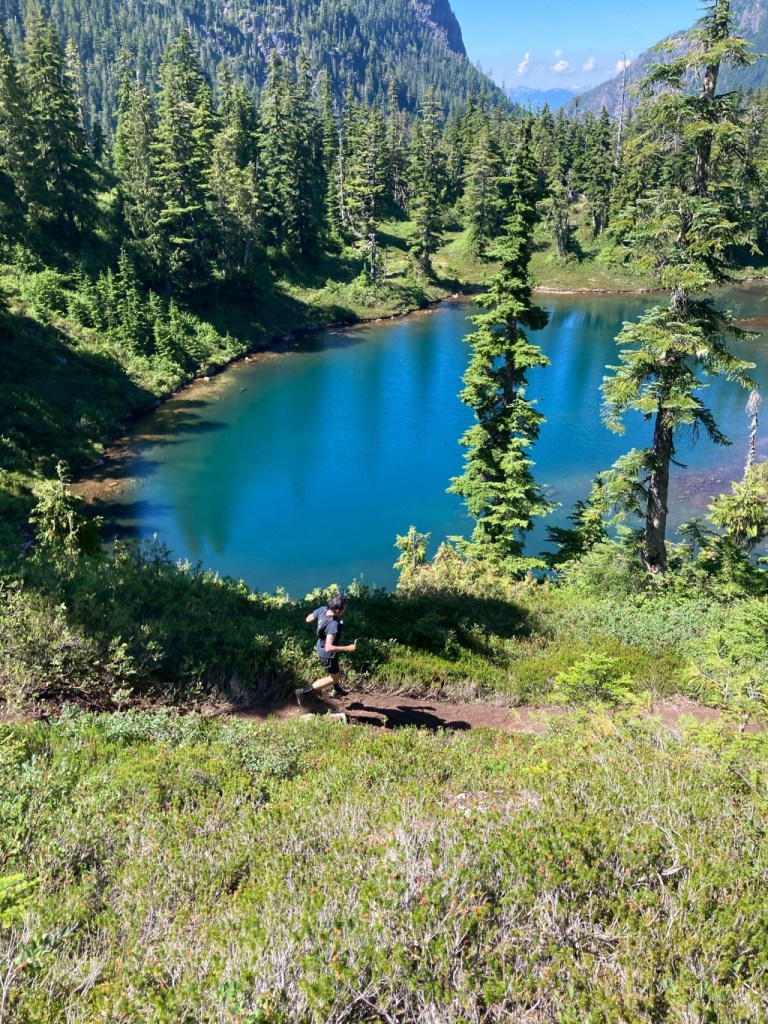
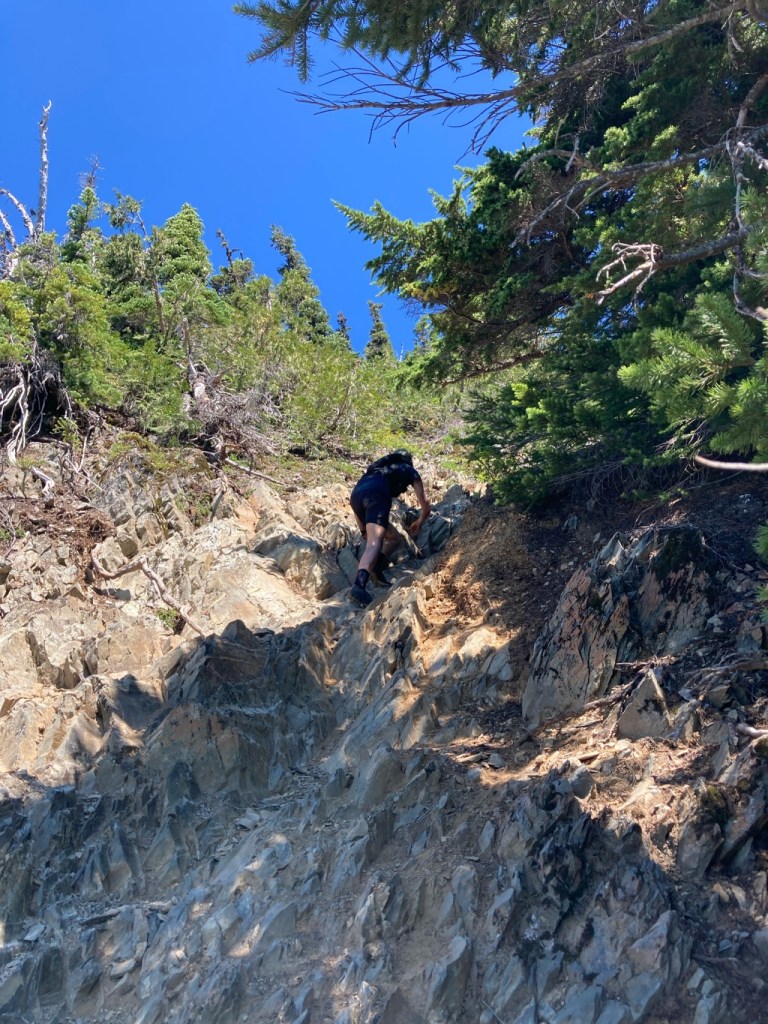
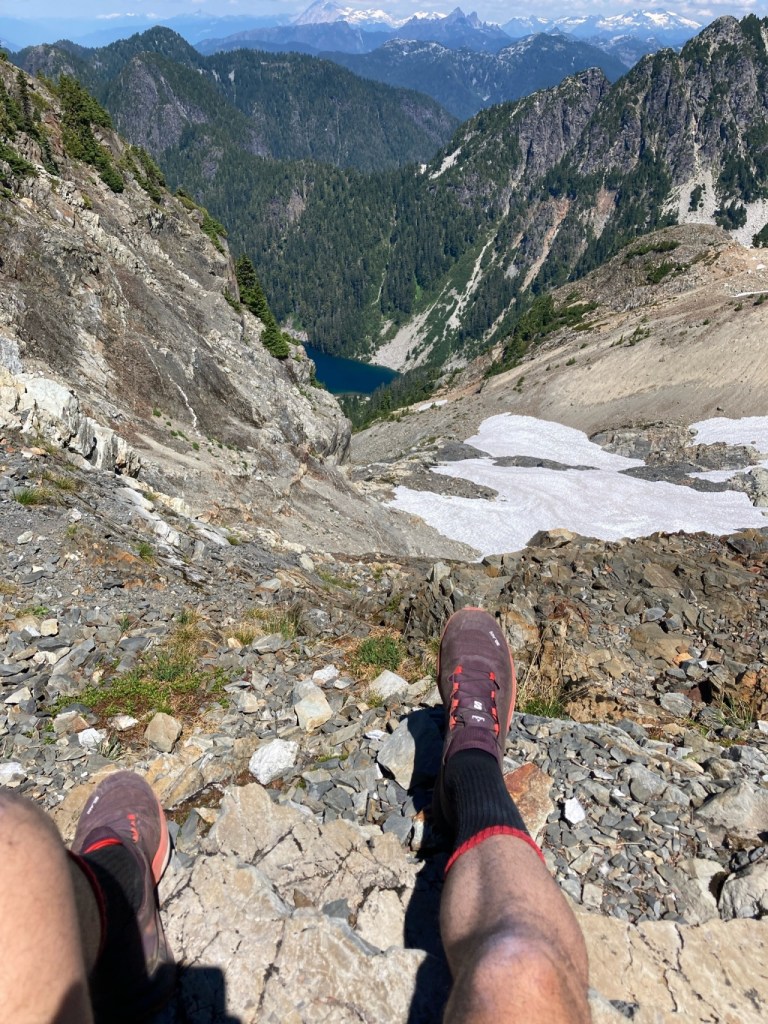
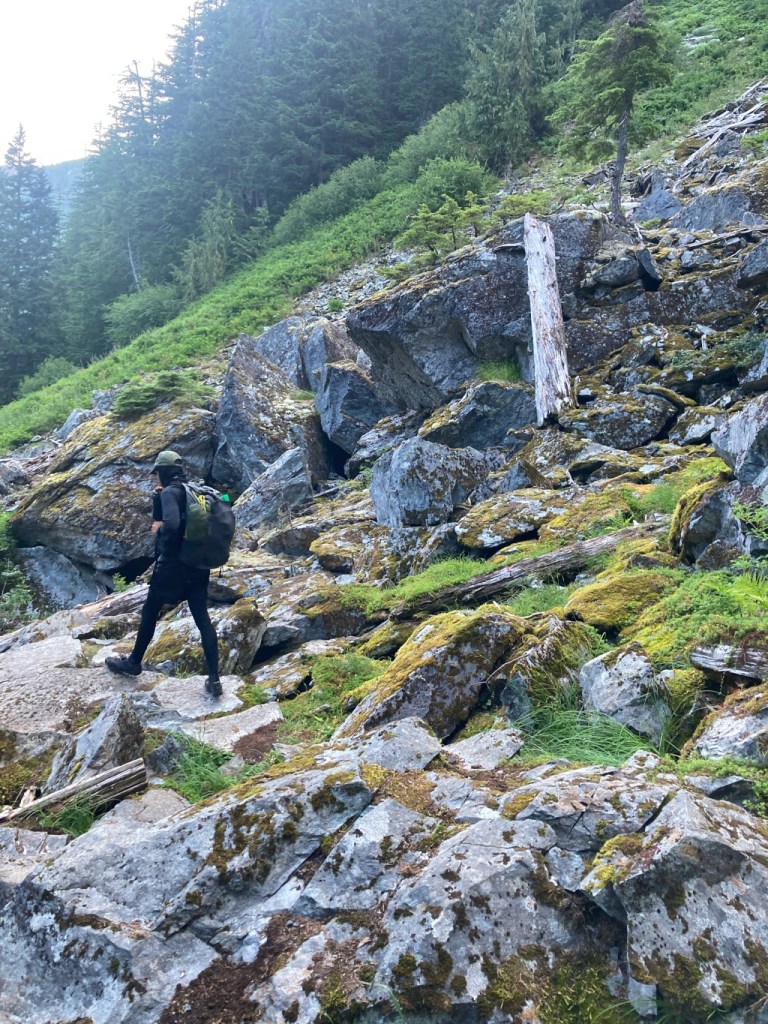
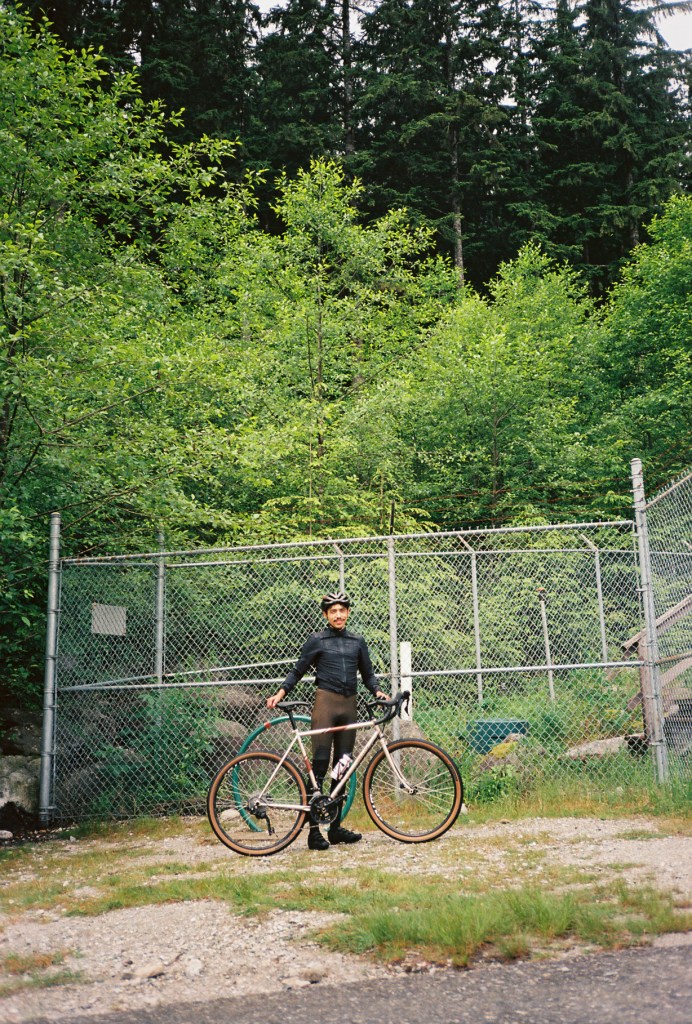
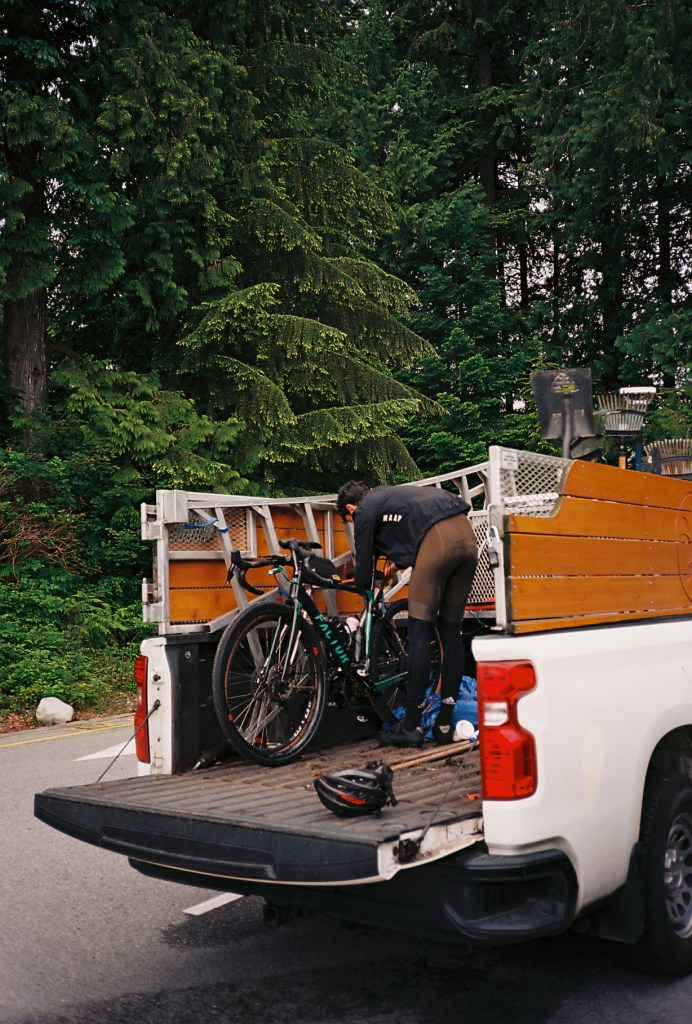
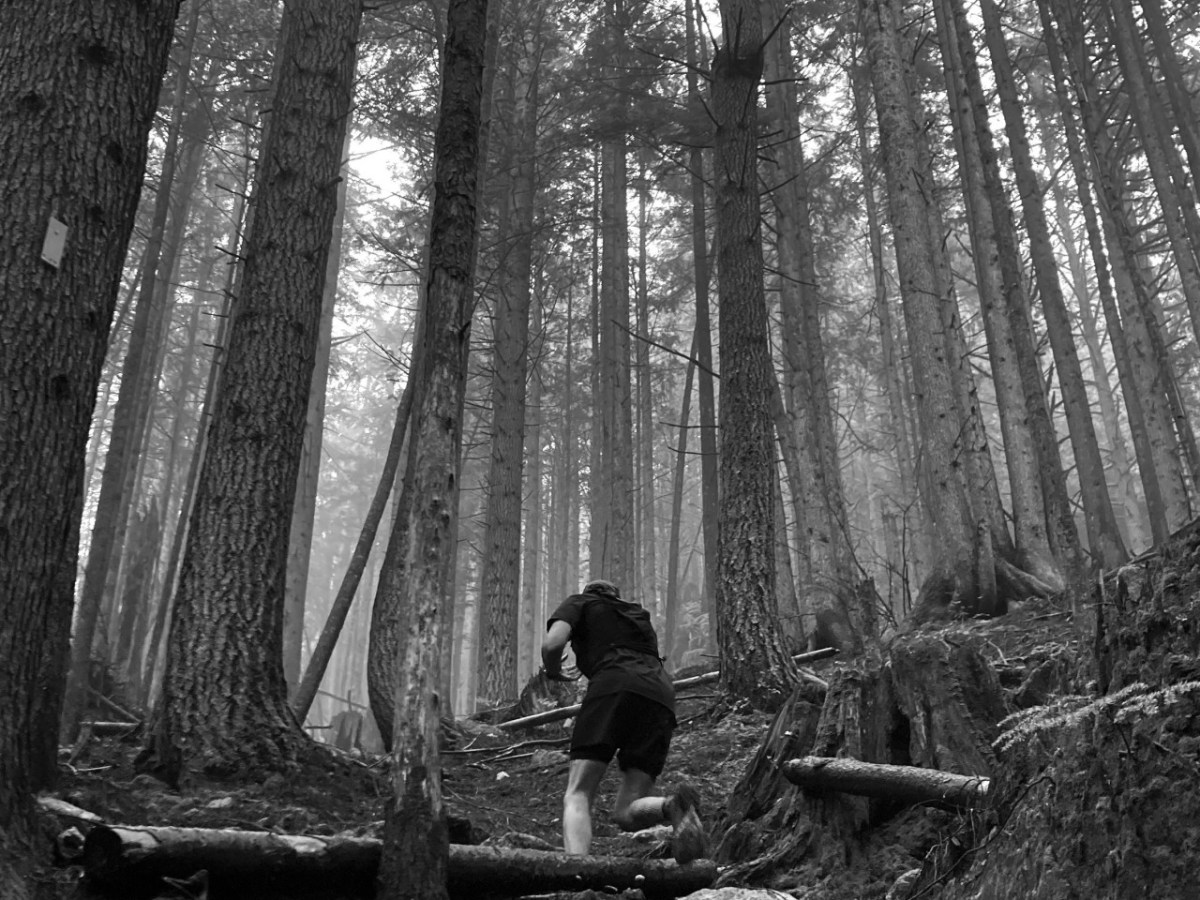
Second annual overnight hike from Porteau Cove up to Brunswick Lake and back with my brother. Just like last year, we set up camp at the lake and then set off for another ~500 meters of climbing up to the peak and back down before jumping in the cold glacier water. I am not that afraid of heights, but when I look out from on top of a peak like that, I get an overwhelming sense of scope that makes me a bit nauseous. I just try to keep my eyes on the ground beneath my feet. I was not prepared at all for the drop in temperature over night, so I didn’t get a single wink of sleep (too cold and uncomfortable), which made me pretty cranky during the hike down in the morning, but it was all worth it for the views, quality time, and the intense leg work out. Need to invest in a better tent and sleeping bag for next time.
Crack Cloud are quite the enigmatic group. Operating much like the rotating door of a musical chairs Recovery Club, and boasting upward of ten(?) members at a time, it’s no surprise that “expansive” seems to be the most commonly used adjective when describing Crack Cloud’s mixed media approach to experimental art punk. Having so many cooks in the kitchen is typically a recipe for disaster, but the band somehow manages to delegate tasks and maintain harmonic balance like some sort of communist punk pseudo-corporation. There are no overlapping hands or spilled dishes in this kitchen, each member has their own station, works according to their ability and need, and—for a band that once touted “creativity with no rules”—Red Mile somehow emerges as their most focused and fully realized vision to date.
Crack Cloud pulls a lot of inspiration from the era of 70s and 80s art punk, post punk, and new wave, but where the group really excels is with their plodding and methodic use of negative space. Eight songs in forty-five minutes might sound like a test of patience, especially for a record that is undeniably punk rock at it’s core, but Red Mile is an exercise in minimalist song structures with progressive intent—gracefully shifting to make space for new layers of ideas and orchestral instruments without any trace of busyness or clutter.
Third track “Blue Kite” begins with a charming new wave rhythm laden with synths and cowbell as singer Zach Choy recounts personal experiences of addiction and SRO’s (“Striking balance over years of push and pull / Absolved of bedbugs and that dirty fentanyl”) with a snarl to draw up an abstract statement on the breaking-of-self that happens under the pressure of social conformity. The song patiently dances into a crescendo of synthesizers, guitars and violins before falling back to a primitive simplicity. It’s a meditative psychic drawl in perpetual motion, both nihilistically poetic and painfully self aware.
Most of the album occupies this space of self deprecative character studies and bleak statements on culture obscured in referential poetry and delivered with cinematic enthusiasm. It’s inventive and experimental, but the soft punch of the rhythm section and familiar punk rock tropes never fail to keep the narrative grounded. It’s really hard to pick a favourite track here, as they all contribute so much, but some other personal highlights include the snark commentary on punk profiteers during second track “The Medium” (“Who would’ve thought that the socially reclusive could be exploited for industry usage?”), fourth track “Lack of Lack”, which reminds me of some of the more hushed and abstract cuts off of Fugazi’s End Hits, and the drunken piano-saxophone rock opera of seventh track “Ballad of Billy”.
I’ll be honest, I haven’t really followed Crack Cloud’s career up until this point, so I can’t speak in depth about the evolution between this album and their last two. I will say, however, that this one immediately felt more approachable and consistent. I saw an early iteration of the band live in some tiny sweat box venue back in 2016 and I remember being blown away by their performance, but with Red Mile, I really believe that Crack Cloud have crafted a timeless classic that any fan of rock music—be it The Sex Pistols, Talking Heads, or Pink Floyd—can find a piece of themselves in. Take a sip of something cool and sweet, and dive on in.
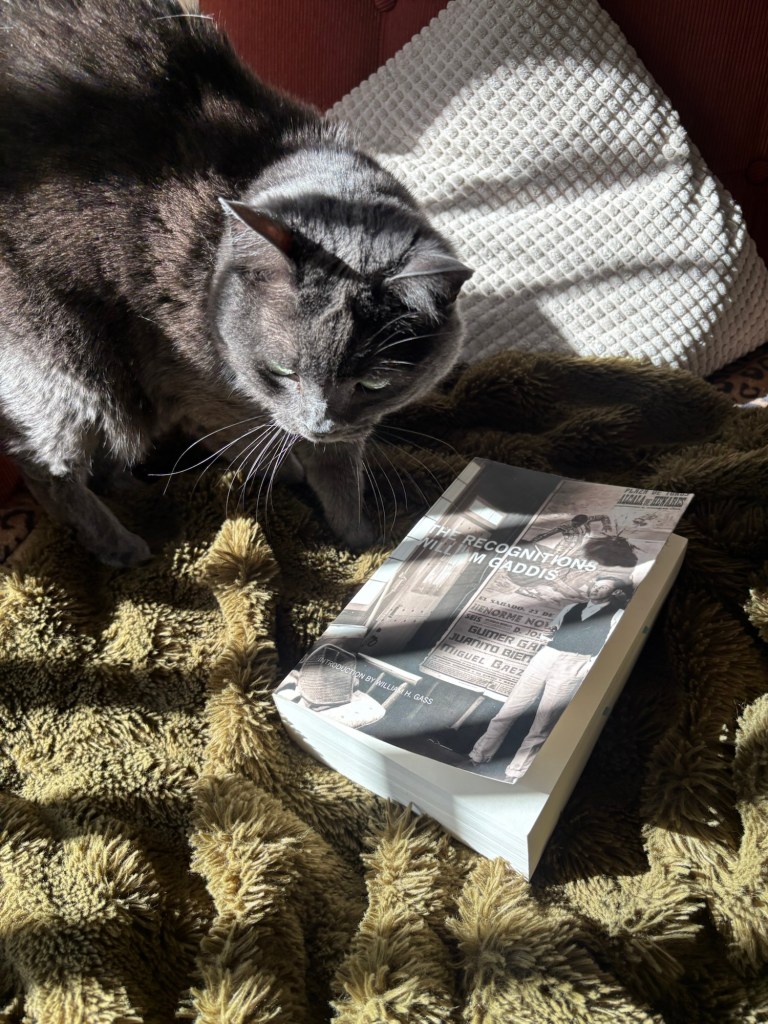
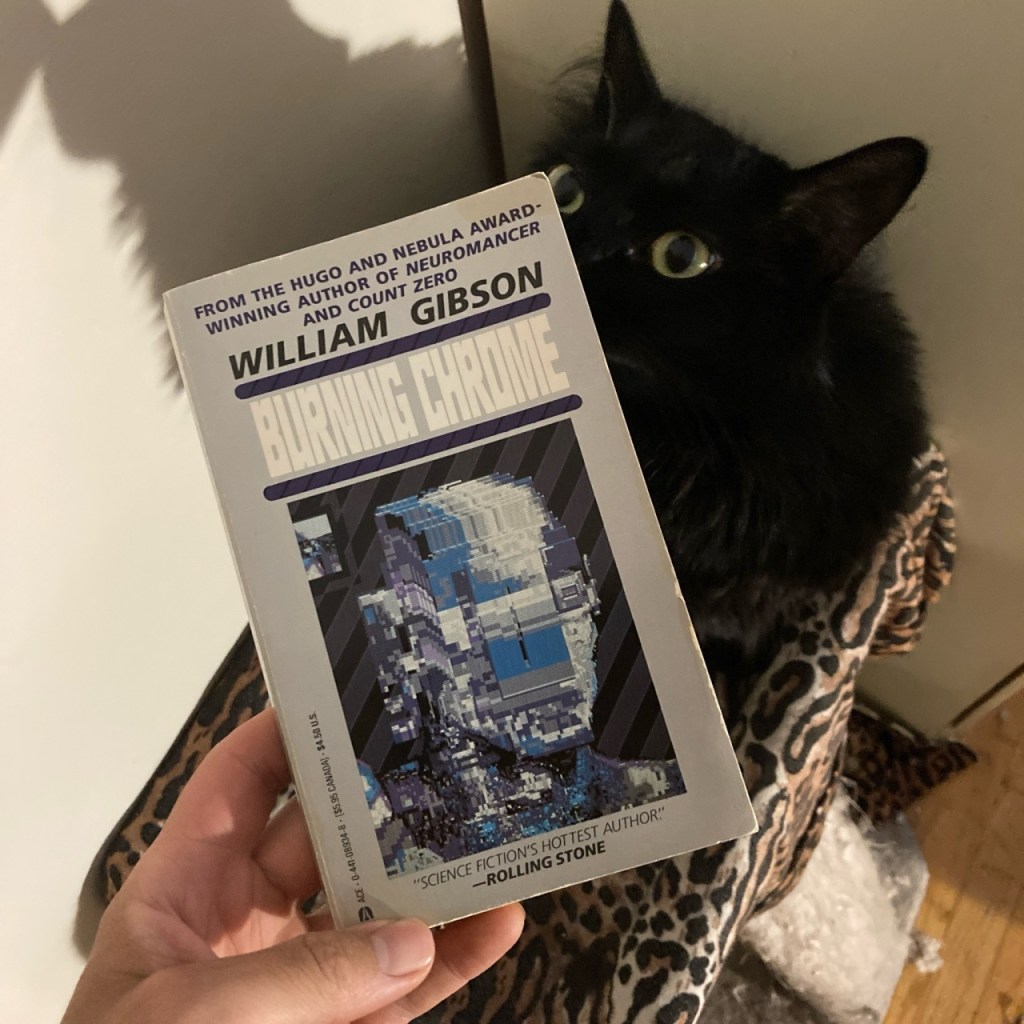
Felt nice to revisit Gibson. Neuromancer was the book that got me back into reading and made me realize how much I love sci fi, and it feels like so long ago now that I wrapped up Mona Lisa Overdrive. I didn’t know how interested I would be in reading a book of short stories, but when I saw this copy sitting on the book store shelves I couldn’t say no (1987 print, way cooler than the newer versions).
I’m really glad I decided to pick this up. These stories contain some of Gibson’s most imaginative writing, but also some of his most challenging. Just like his other books I’ve read, I found the best way to get through it was to not get caught up in the details. There is just a ton of psychedelic technobabble here that is really hard to follow or even imagine for anyone except Gibson himself. Considering how many times drugs are brought in these stories, I almost wonder if he was tripping when he wrote some of this (or maybe I’m just dumb). I mean, I had to read “Fragments of a Hologram Rose” twice and still have no fucking clue what happened. At least the short story format makes re-reading small sections a breeze, and there is plenty reward in doing so. Gibson is usually good at revealing concrete information toward the end of his stories, so going back to the start with that information can really shed a light on everything else.
“Johnny Mnemonic” and “Burning Chrome” were two of my favourites since I was already familiar with the Sprawl setting, and seeing some familiar characters make cameos was a nice touch. I also really connected with “The Winter Market” because it referenced a lot of actual locations around the city I live in. It was neat to be able to picture exactly where the characters were. Gibson’s attempts at Soviet Space Propoganda was an odd surprise but also neat cause it reminded me a lot of Omon Ra by Victor Pelevin in the way that it was simultaneously depressing and absurdly comedic. I found the three collaborations stories in this book to be some of the most narratively coherent—probably the result of having someone else keep Gibson on the rails. All of these stories were good at something though, even if that something was just pure technologic hallucinations.
Despite all of the dense, flashy, and often nonsensical sci fi imagery, a lot of these stories are actually very sad—often leaving you with a stark image of addiction, alienation and loneliness. It made me realize just how much focus and impact a short story can have (and may have inspired me to try writing my own). Getting to really zoom in close on some of Gibson’s character studies and strange thought experiments was a delight, even if it was sometimes hard to grasp. Highly recommended if you enjoyed the Sprawl trilogy. It made me really want to re-read Neuromancer and also check out some of the Bridge books.
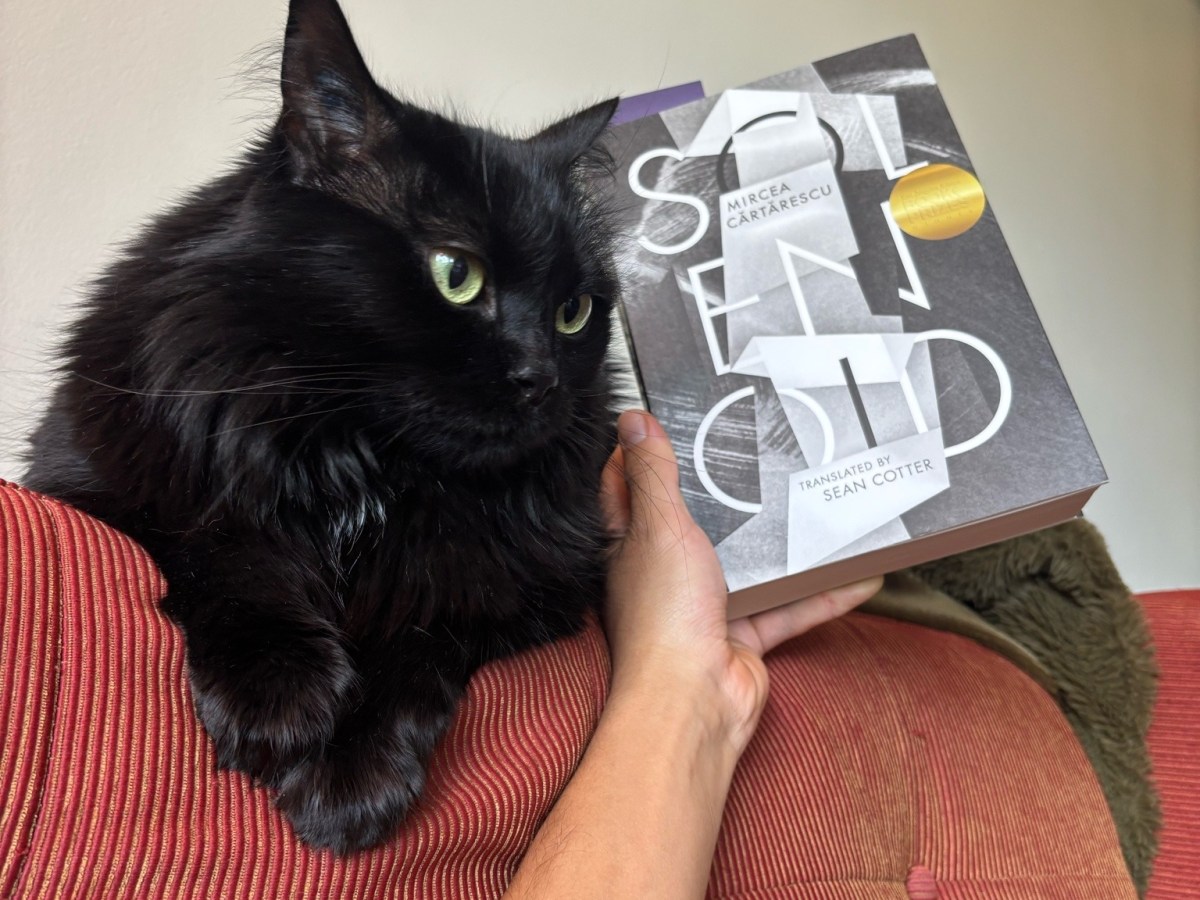
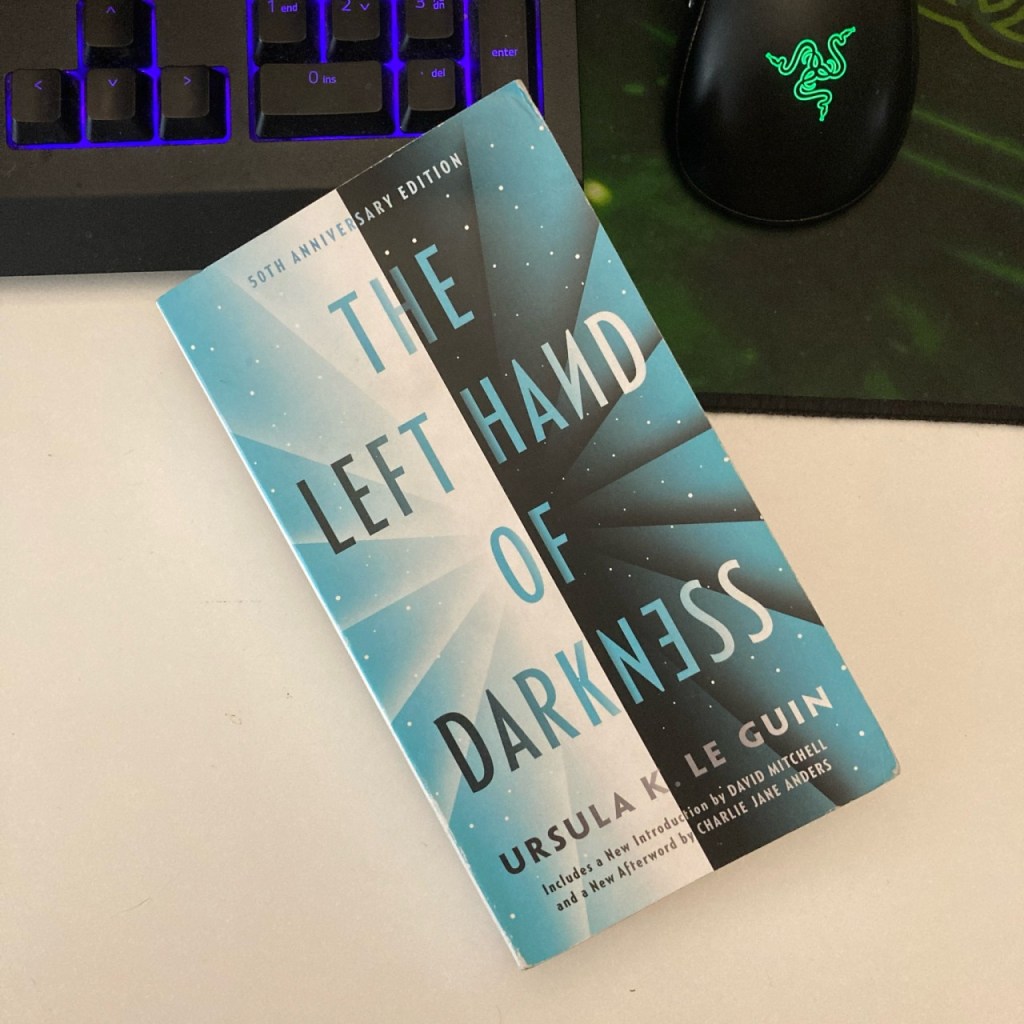
I can hardly describe how much of a pleasure this was to read this after spending almost 5 months going through the Hyperion and Endymion duologies. Simmons’ is good at worldbuilding and crafting grand, multifaceted narratives, but his actual writing is vanilla as hell and such a slog to push through sometimes. Ursula K. Le Guin on the other hand writes such poetic and beautiful prose that every paragraph feels like a paint stroke. Reminds me more of the visceral Gibson except Le Guin is much softer with her abstractions.
Really really loved the world and concept of society that Le Guin has created here. Despite being intentionally soft on the actual sci fi elements, Winter is one of the most believable “alien” societies I’ve read about. I enjoyed the way in which Le Guin plops the reader right down in the middle of this world and lets it’s culture and geography unfurl slowly as you read. It’s another refreshing technique to see after all of Simmons’ boring frontloaded info dumps. The people of this planet are also hard not to love. Even when they are actively working against our protagonist(s), there is something equally perplexing and endearing about their behavior.
I think I enjoyed the first two thirds of this book a bit more than the last. Without giving away any spoilers, the pace shifts heavily near the end. It goes from an exciting story of shady political intrigue and societal exploration into a really long travel phase that takes up most of the last third, and then the ending is just kind of sad and abrupt, but also hopeful. I’m not complaining though, I loved the relationship between Estraven and Genly, and the whole thing was beautifully written. Ursula K. Le Guin could write about ice melting for 200 pages and it would read like a breeze. I feel like there’s a lot of little nuances and reflections of real life that would benefit from multiple reads, so I’m definitely putting this in the “re-read asap” pile.
FFO: BRUTAL DEATH METAL, DISGUSTING NEANDERTHAL MUSIC/ LISTEN
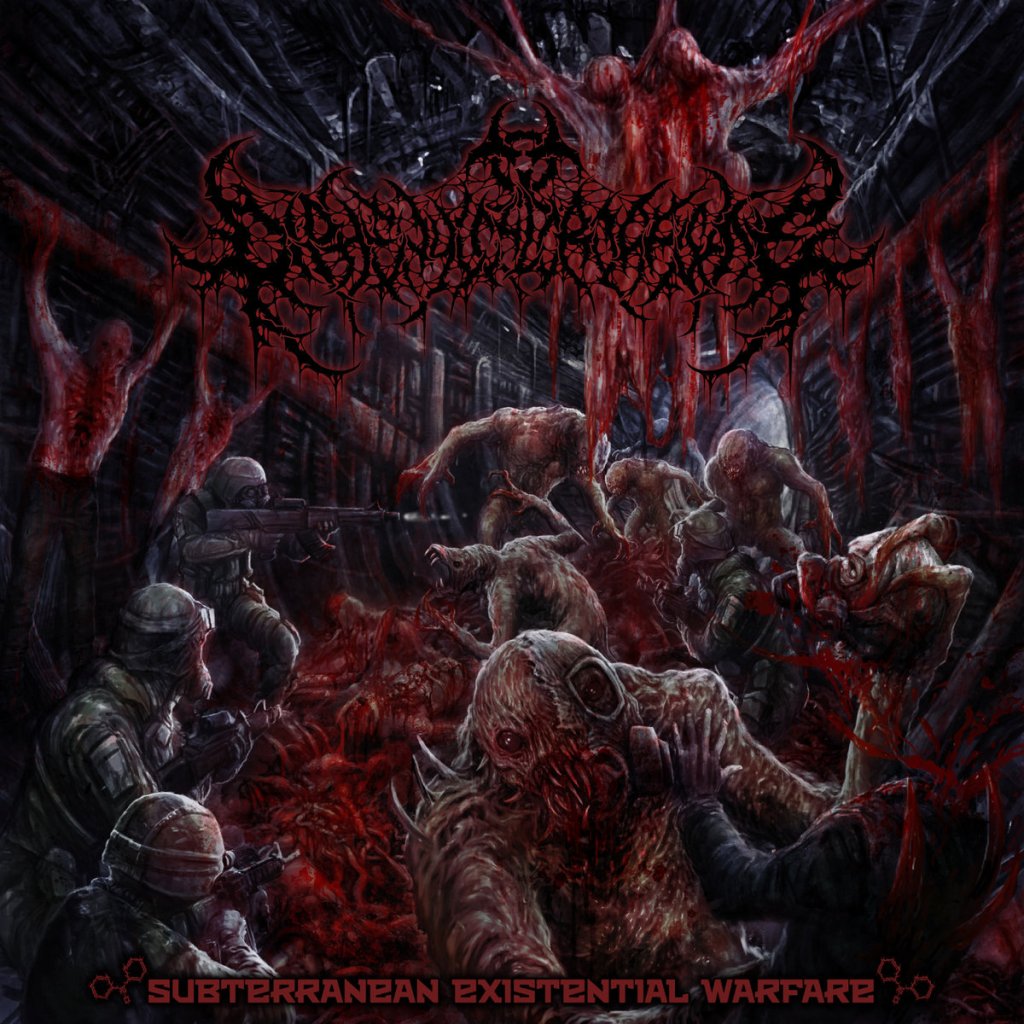
The human era is almost over. Subterranean Existential Warfare takes place in a future twenty years after the nuclear collapse of mankind, where creatures mutated by radiation threaten the final vestiges of humanity which have been pushed underground and gridlocked into bloody warfare. This is an album of stunning thematic clarity and visceral terror which is tied together by voice samples and environmental soundscapes that fully immerse you in the narrative. It is also one of the most ignorant pieces of music I’ve ever heard. Let me explain. Brutal death metal has long been split into two camps, with some bands branching in a direction where brutality is achieved through a show of pure speed and technicality, and others devolving, breaking the genre down to it’s most basic elements and then blending them into a thick slurry of intestines and cartilage. Snare go PANG, guitar go duunndunnn, bass go bluuurp, vocal go blurhhgugurggrg, job is done. Diphenylchloroarsine is in the latter camp, but this reductivist approach to death metal only plays in favour of the atmospheric lucidity.
For an entire hour, Subterranean Existential Warfare stomps, kicks and explodes out of a pure compulsion to degenerate. The entire recording sounds like it is decayed, rotten and blown out—pulled straight from the chest cavity of some bloodthirsty abomination. Sludgy mid paced riffs are dragged through a pool of human remains, dancing in tandem with a bass tuned so low that it registers as more of a threatening, extraterrestrial warble than a stringed instrument. Every hit of the drums feels like a surgical necessity, and they pull a heavy weight in supplying the album with some tempo deviation, often speeding up or slowing down as the goliath riffs and inhuman squeals remain steadfast in the wake of assault. Cinematic bass drops are commonplace in brutal death metal, and while I’ll admit they are abused on this record, they are also thematically consistent with a violent subterranean war, and further aid in the immersion. It is easy to imagine the ceilings of defunct subway tunnels collapsing on the bodies of man and creature alike as your speakers crumble to the sound of nuclear explosions.
You could criticize this album for being one note and obnoxious, and I would not necessarily disagree. On a surface level, the actual music has a neanderthal charm at best, chugging it’s way through eleven tracks with the grace of an ape slamming a rock into another ape’s head. But somehow, despite the hour long runtime, this album almost always breezes by without feeling redundant or tedious. The aura of doom that emanates from every track, the haunting piano interlude of “Intermission 235”, the nuclear bass drops, the collage of horror pieced together by the final voice transmissions of fallen soldiers, it all makes you feel like you’re really living in the fictional world that Diphenylchloroarsine created. There are more than enough nuances in the songwriting department to be picked up on by the attentive and faithfully patient, but it’s the hellish atmosphere—executed with a master’s touch—that keeps me crawling back into the subterranean darkness.
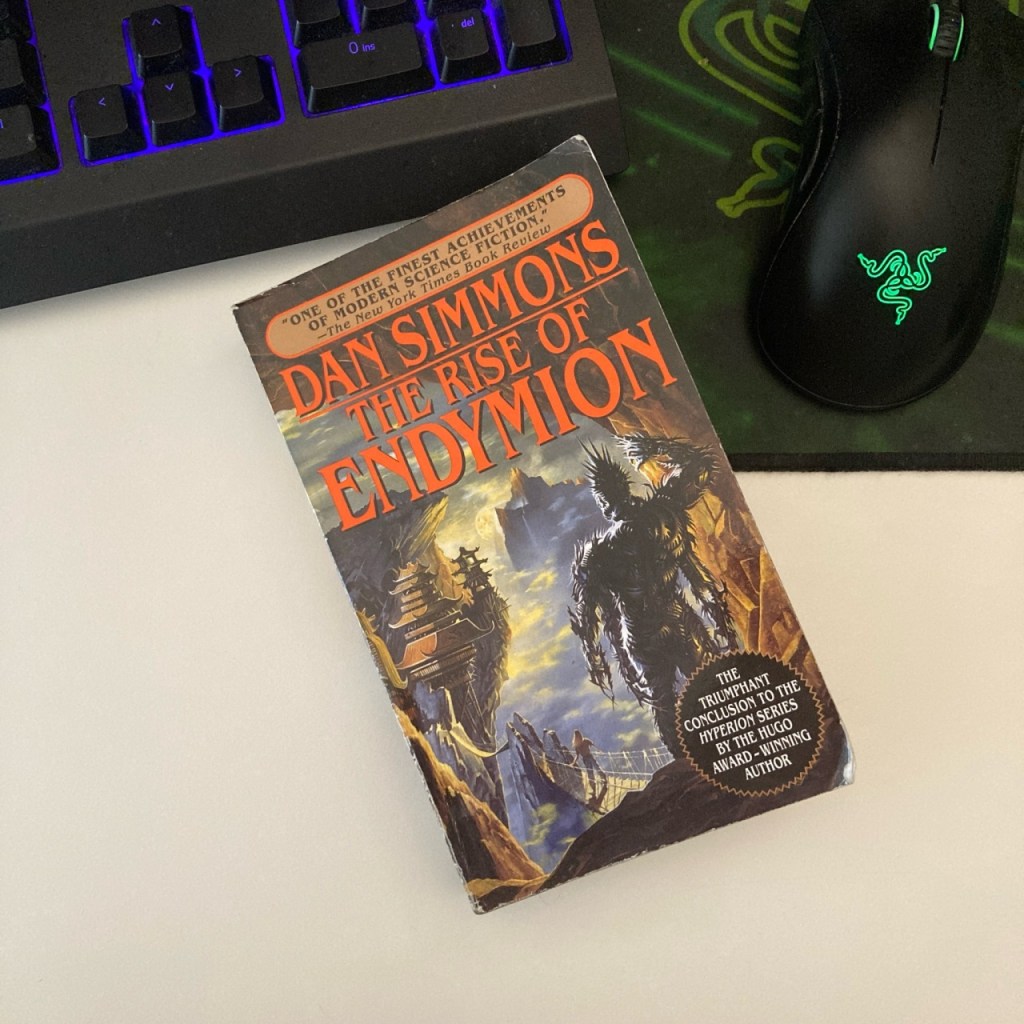
Finally wrapped up the Hyperion Cantos. It’s a bitter sweet moment. This final book is hard for me to talk about. I could probably write a thousand words about it, but I’ll try to keep it brief, because brevity is the soul of wit. Something Dan Simmons could have considered, perhaps.
The Rise of Endymion was a struggle to get through, to be honest. The prior book (simply; Endymion) was a fun, action packed interplanetary man hunt with relatively consistent pacing and enough turns and twists to keep things engaging. This one is hardly any of those things. The pacing in this book was straight up bad. Simmons’ writing is at it’s best when things are happening, but every time some form of action happened in this book, it was cornered by ten page descriptions of clouds and the colour of peoples clothes that frustratingly interrupted the flow. Hell, the entire section on T’ien Shan felt like a data dump with only brief sections of actual plot movement. The monologues were also so rough to sit through because it felt like Simmons was just using character speeches as another way to dump data, summarizing things we already know and tying up loose ends that honestly would have been better left as mysteries.
Aenea and Raul continue to be shallow characters as well, which is nothing new, but this time the good characters weren’t utilized enough to make a difference. Raul displays some incredibly eye rolling and predictable behavior during the course of the book as Aenea turns into some flat, robotic guru figure. She’s supposed to be the symbol of empathy, but her emotions were not convincing in the slightest (I guess she is part cybrid after all). Aenea and Raul’s entire relationship just bordered on creepy and unbelievable. The only interesting development from Aenea was at the very very end where she shows an uncharacteristic burst of impulsivity and rage. Father De Soya still remains the best character, even though he was absent for large chunks of the story, and A. Bettik had hardly any presence at all. The Shrike still shows up but isn’t even scary or interesting anymore because it’s basically the good guy now. Most of the other side characters were forgettable, there were simply too many of them to keep track of in the first place.
I can count the actual exciting moments in this book on one hand. It’s way longer than it needs to be, it’s packed full of unnecessary information that disrupts the flow, it’s cringe inducing and ridiculous at times. It’s also very, very heavy on the romance and religious philosophy. Simmons is lucky that I mostly agree with and respect his feelings on religion, or I probably would have stopped reading it. Organized and corrupt religious institutions are the bad guy in Simmons’ books, but he also preaches the beauty of faith and love and ability to choose what one believes in without judgement. It’s all wonderful stuff, but sometimes it’s so on the nose that it feels like a personal rant from the author.
Despite all of that, I still loved this book. Simmons really turned things around in the last 150 pages or so, and wrote the best possible ending that he could have, which was a total shock to me as the endings of all the previous books were pretty lackluster. It made the entire slog feel so worth it. It was riveting, tragic, beautiful, profound, it put me in tears, god damnit. I was weeping like a child. Not only because of how good it was, but also because it hurt to close the last page on a world and characters that I’ve spent the last four and a half months immersed in. Would I recommend it? Not really… but despite how utterly disappointing this book was at times, I still feel forever changed by the world and philosophy of the series, and I’m glad I stuck it out to the end.