
Category: book reviews

  • Book Review: In the Heart of the Heart of the Country by William H. Gass (1968)

    🌕🌕🌕🌗🌑

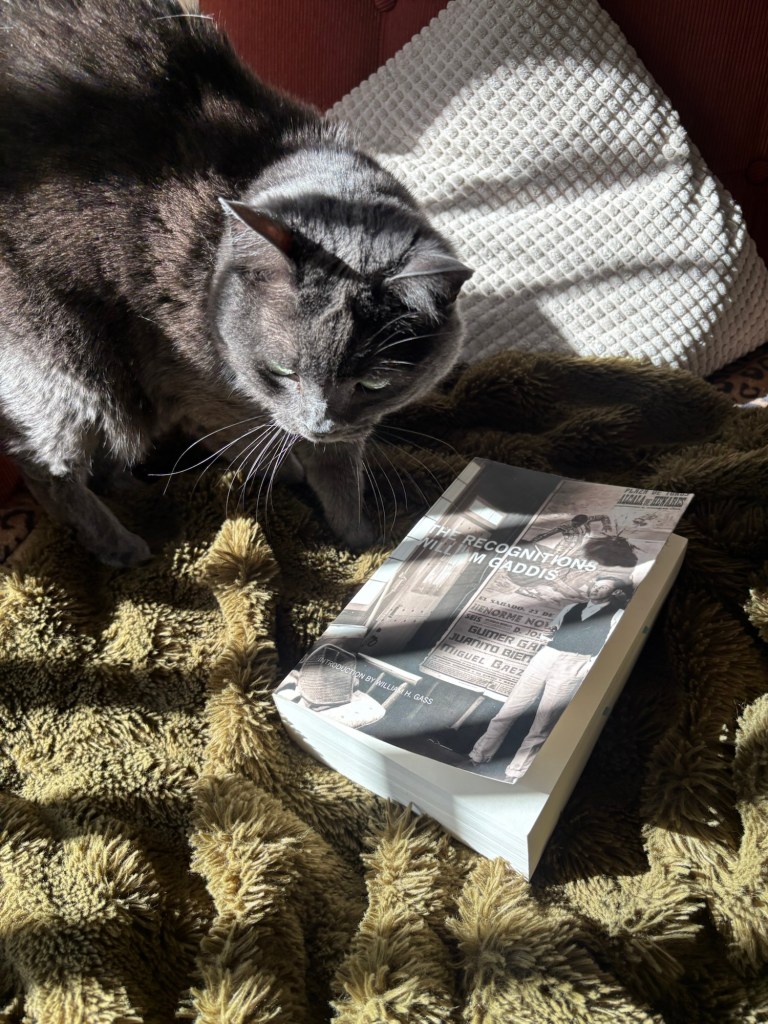
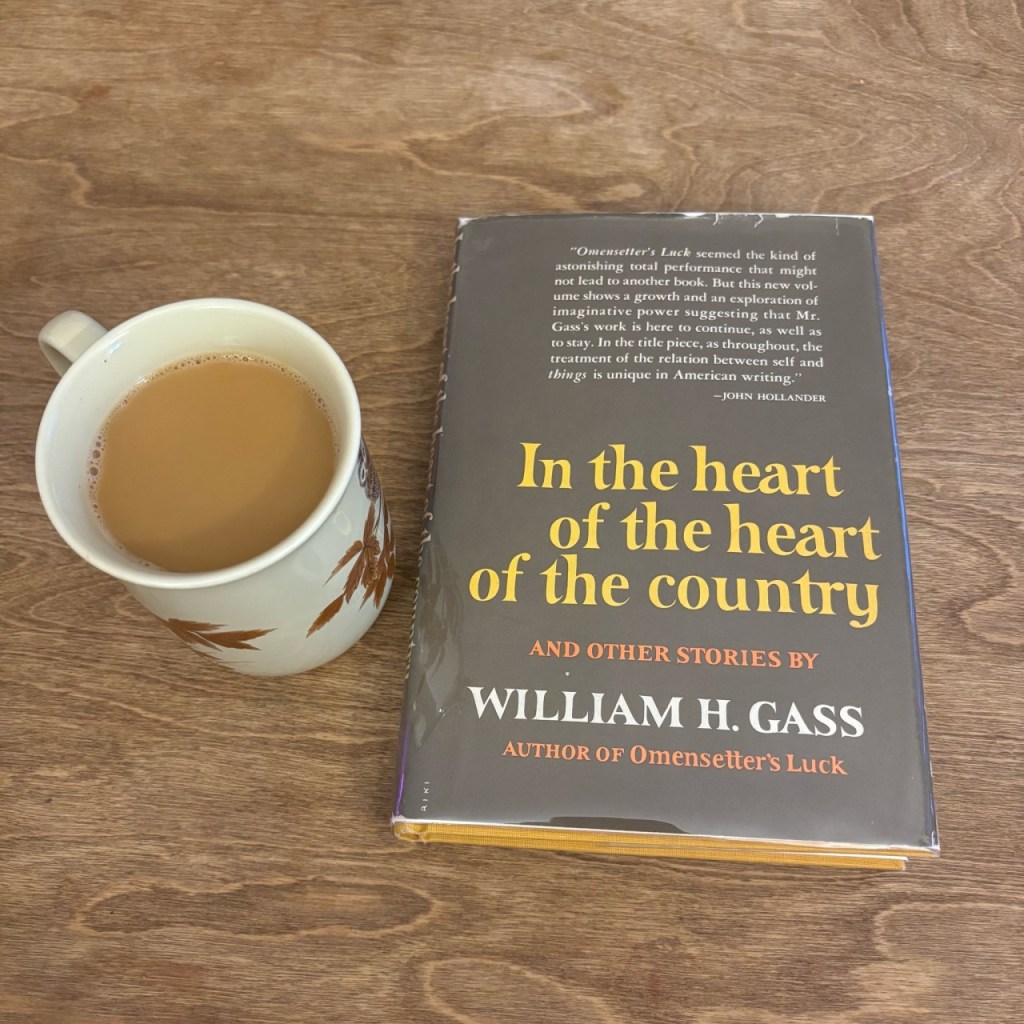
    I’ve been looking forward to reading Gass for a long time, but I mostly picked this up because of its beautifully composed typographical cover—a little worn on the edges yet glistening in its mylar jacket. It’s beautiful on the inside too, with elegant lettering on the spine, soft deckled pages, wide margins, and an inky serif typeface. The heart of the country called to me, and I listened, but what I found in these five short stories was nothing short of darkness, decay, and neurosis. It was awesome, with some caveats.

    (more…)
  • Book Review: Água Viva by Clarice Lispector (1973)

    🌕🌕🌕🌕🌑

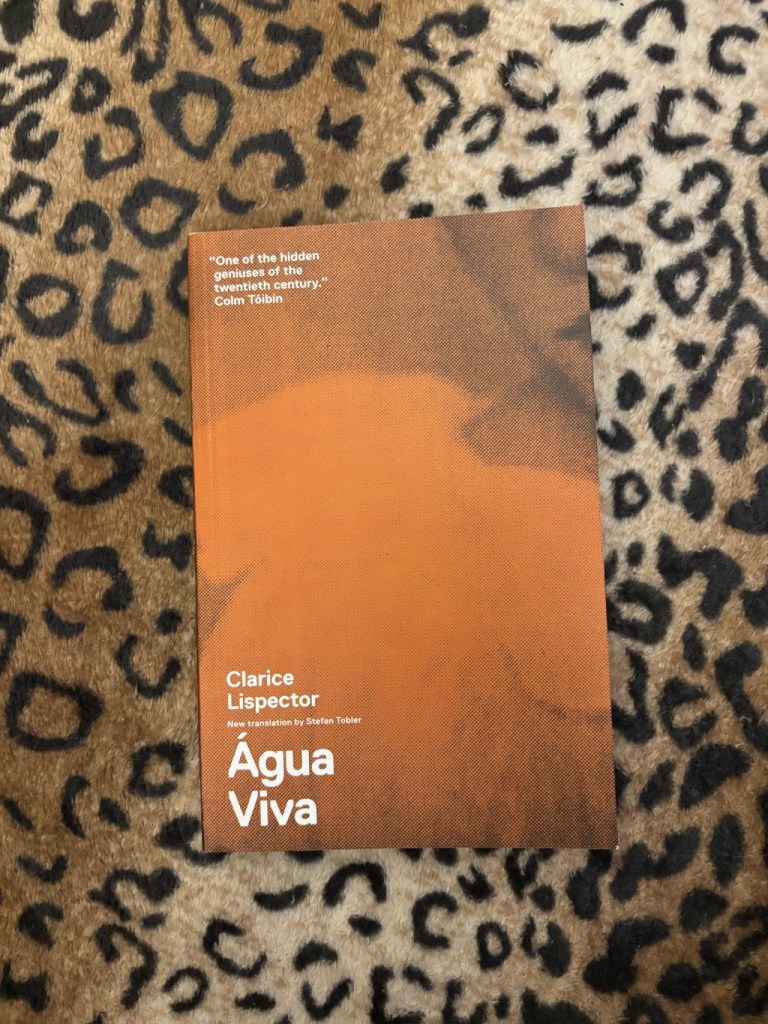
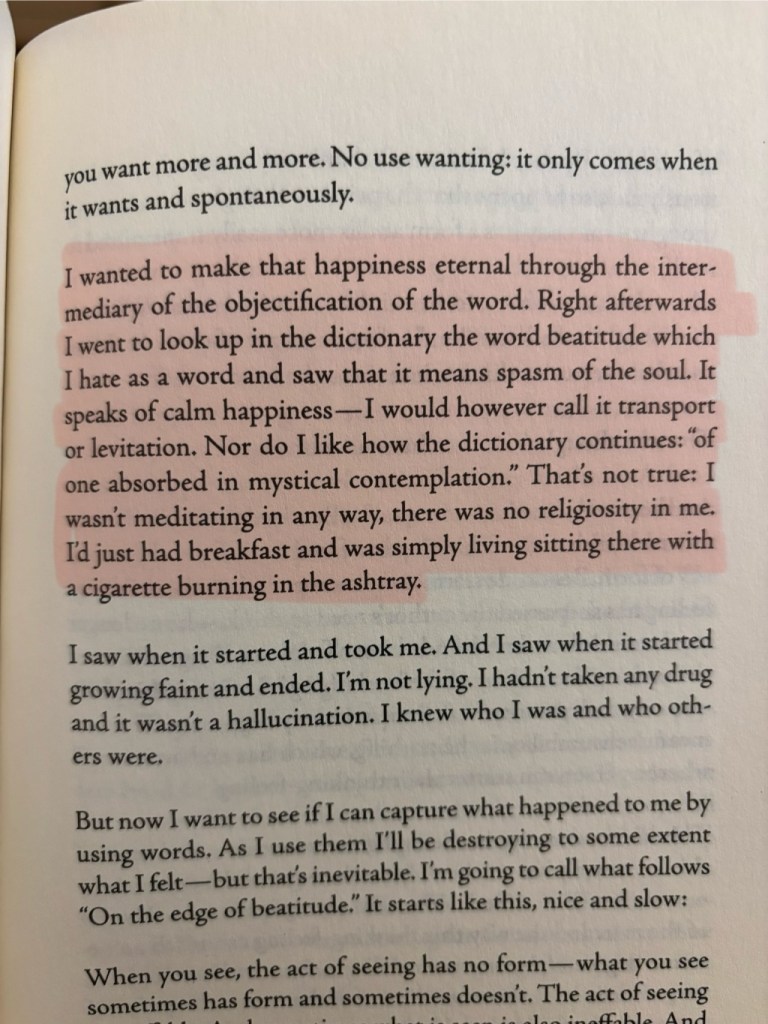
    Água Viva is not a novel, and this is not a review—I have no stars to award something that isn’t even playing for the judge’s panel; this is an attempt to contextualize a series of interconnected paragraphs that materialized from the abyss of an unknown consciousness and landed like daggers on the page. You see, Água Viva is not a story; it has no characters and no corporeal realm to occupy; it is concerned purely with being—it’s a literary exorcism, a birth, a violent becoming of life. Lispector taps into the source of untamable spirit and lets Jesus take the wheel, essentially. At times reading Água Viva felt like watching a sentient spark of electricity bounce from corner to corner of each page, searching frantically for a sense of structure, only for it to find none and continue blazing its path with ferocity anyway.

    (more…)
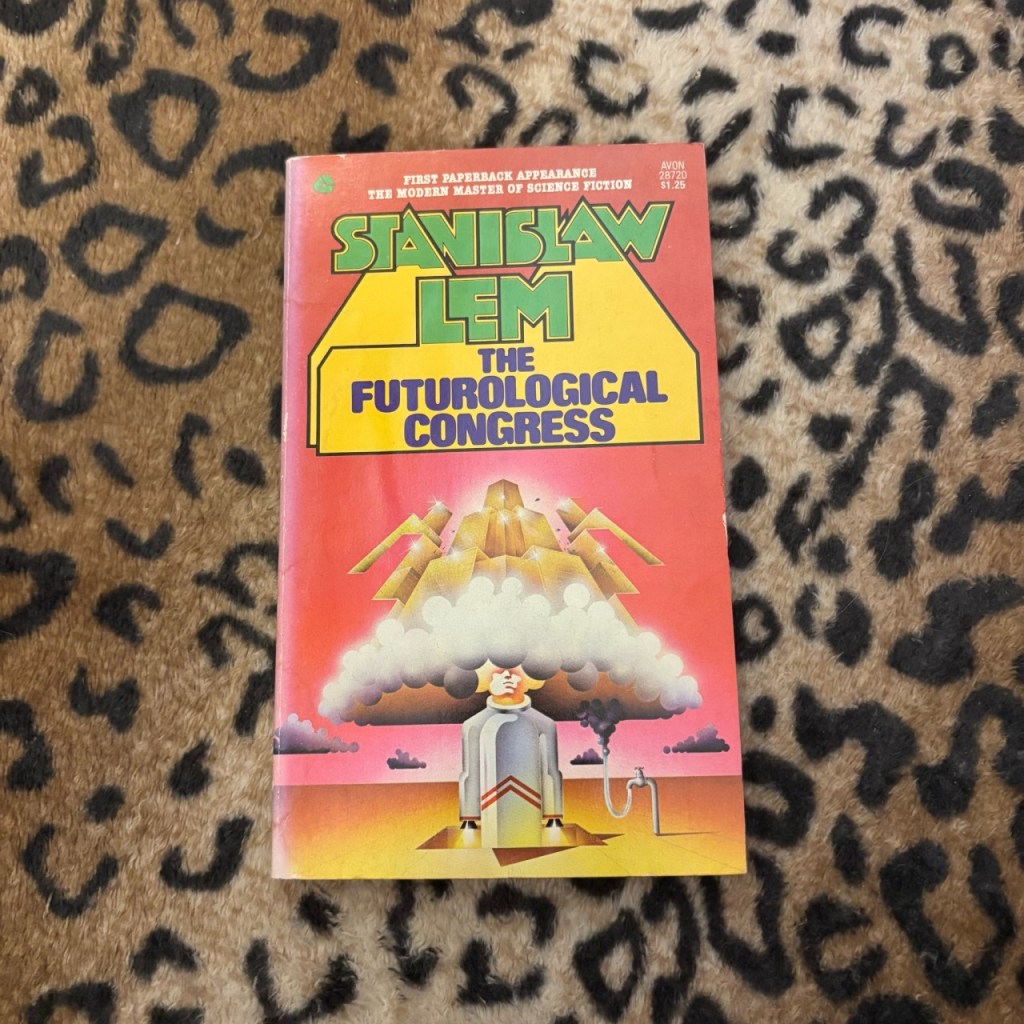
  • Book Review: The Futurological Congress by Stanisław Lem (1971)

    🌕🌕🌕🌗🌑

    The Futurological Congress is an absolute blast of a novel; 142 pages of full-throttle, balls-to-the-wall satire that revels in utter absurdity while still cutting straight for the throat with its sociopolitical critiques. Through the extrapolation of chemical warfare and unchecked capitalism, Lem envisions a world in which an entire population is under constant control of mind-altering hallucinogens and asks the question of whether or not this is a moral pathway for humanity to take if the drugs ultimately result in an egalitarian utopia.

    (more…)
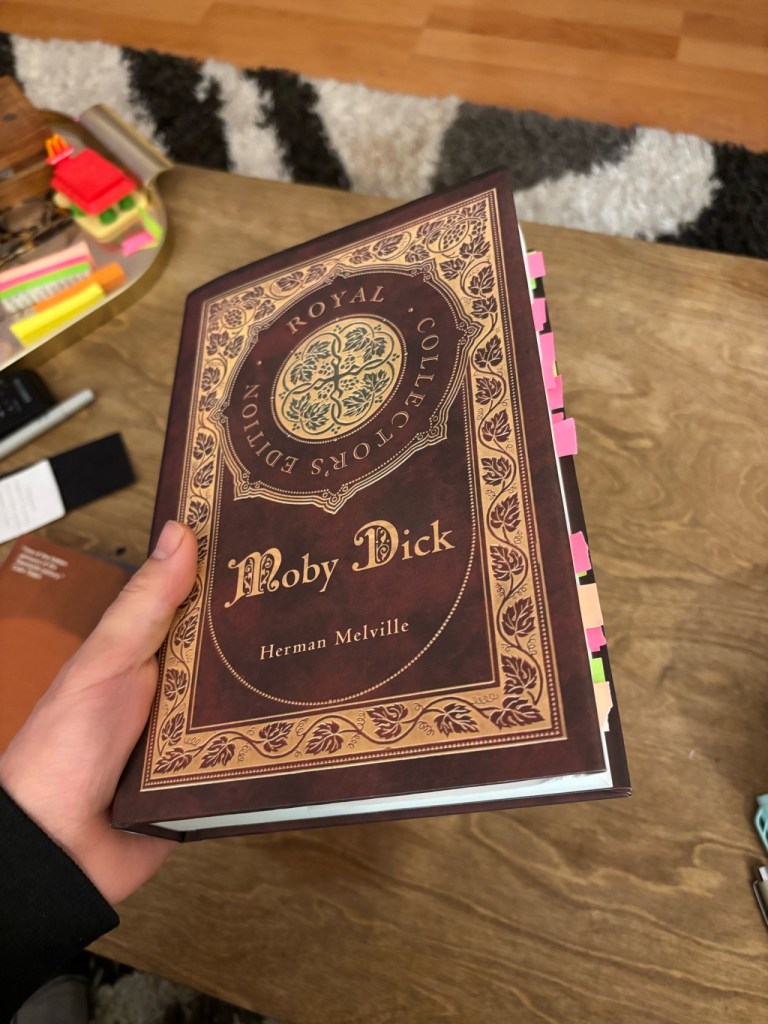
  • Book Review: Moby Dick by Herman Melville (1851)

    🌕🌕🌕🌕🌗

    Read American literature long enough and you’ll soon notice a pattern of all your favourite writers being influenced by this goddamn whale book. What gives? Moby Dick has always had a bit of a reputation for being boring (at least amongst my peers). People complain about long chapters in which our narrator, Ishmael, just nerds the fuck out about absolutely everything. Like, entire chapters about ropes, hooks, sails, pots and pans, or a multi-chapter walkthrough on how to catch, dissect, and extract resources from a whale. You name it, Ishmael will talk about it with analytic detail, but I’d argue that is where the majority of the juice lies in this book.

    (more…)
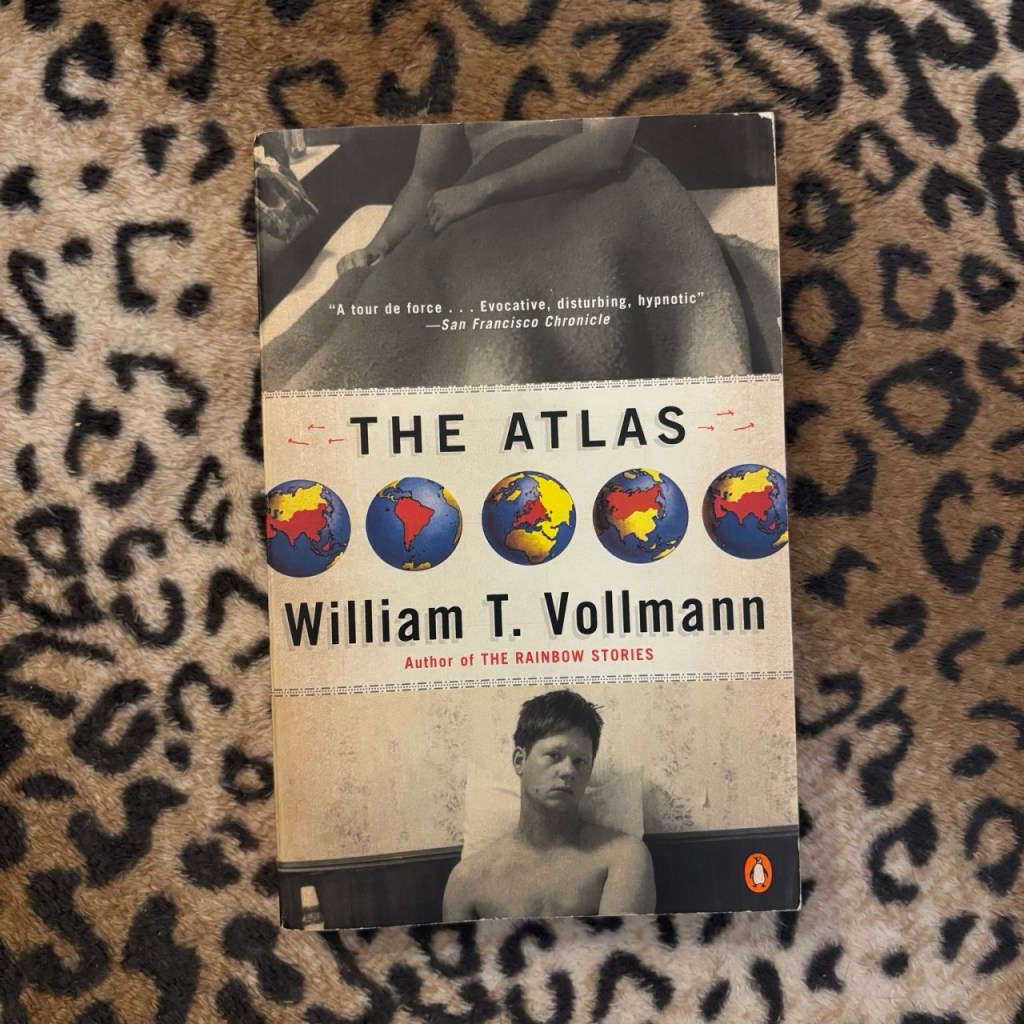
  • Book Review: The Atlas by William T. Vollmann (1996)

    🌕🌕🌕🌑🌑

    The Atlas is a very interesting book when looked at in the larger context of Vollmann’s bibliography, because in some ways it represents the nucleus of his career in one neat package—Vollmann traveled the world extensively as a journalist, war correspondent, and ruthless researcher of his own whims, and The Atlas pulls together all of these intimate behind-the-scenes sketches from the experiences that would go on to form his larger works. It’s almost humorous that Vollmann wrote a book about Copernicus called Uncentering the Earth, because The Atlas is very much the center of Vollmann’s universe, and all of his other works orbit around it.

    (more…)
  • Top 11 Reads of 2025

    Why 11? Well, I had my top 10 established but then I realized how unfair it would be to not include Miss MacIntosh in the stack just because my completion of it missed the deadline by a few days. After reading 1000 pages of it in December I think I have the right to claim it as one of my favourites of the year, and time is fake anyway, so I’m putting it in the damn pile.

    This year has been huge for me in terms of broadening my horizons. I started my reading journey not too long ago as a pure sci-fi reader, but then I read Gene Wolfe at the start of the year and he really opened the floodgates of literary fiction for me. Then I read stuff like Vollmann and Bolaño and Rulfo and all bets were off, I quickly realized that genre conventions don’t matter to me half as much as the themes explored and the prose employed to get there, and all of a sudden an entire new world of literature opened before my eyes.

    Without further ado, and in no particular order:

    We by Yevgeny Zamyatin

    GENRE: DYSTOPIAN SCI-FI

    A psychological sci-fi thriller like no other. We takes place in a far future authoritarian state where the citizens have been walled off from the outside world and every hour of their day is mandated and scheduled by the glorious Benefactor and his bureaucracy. One day, our main character, D-503, has a sudden awakening that causes him to spiral as he questions everything he’s ever know about himself and his surroundings. One of my favourite things about this novel is how, as our protagonist spirals further out of control, the narrative itself (written as a series of journal entries) becomes more frenetic and disorganized, and it really makes you feel like you are in the head of someone who is dissociating from reality. An exciting read that really hits the nail on the head with its social and political critiques.

    Full review / Goodreads

    (more…)
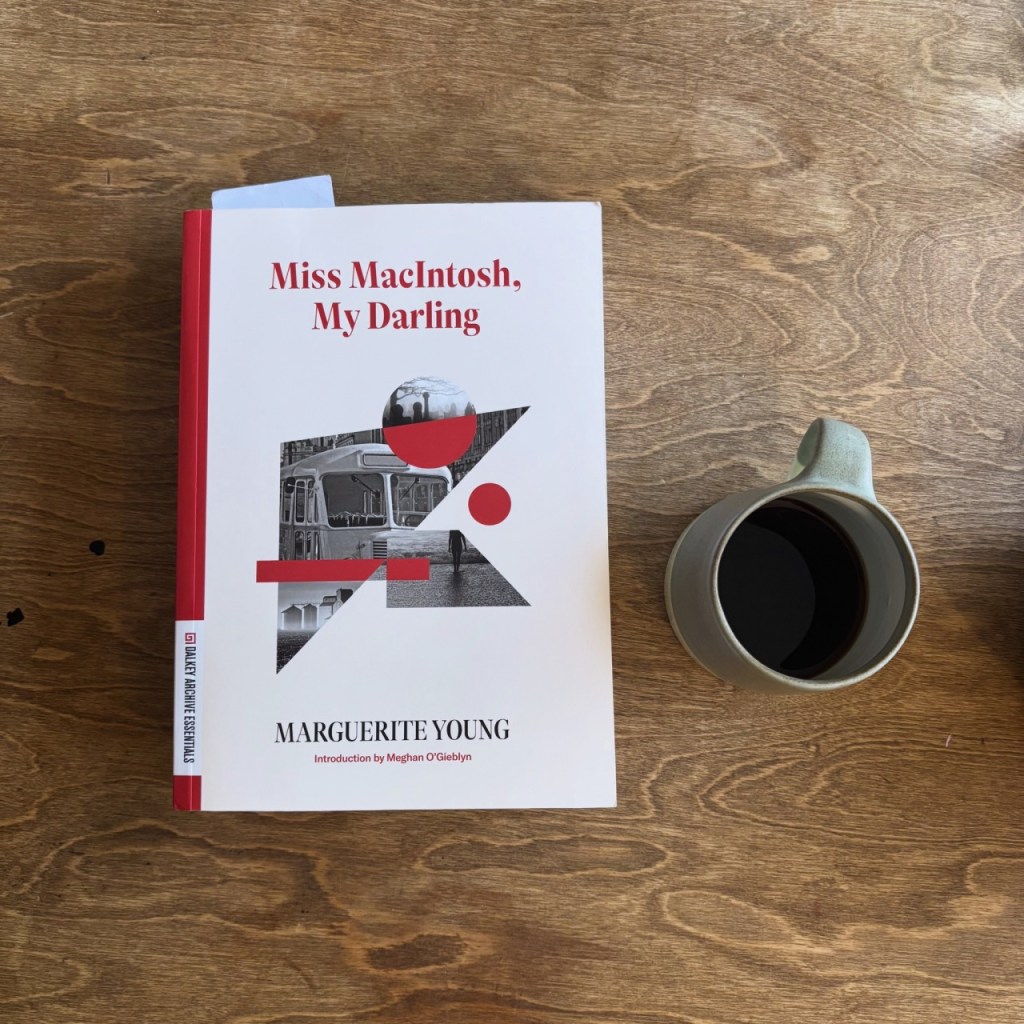
  • Book Review: Miss MacIntosh, My Darling by Marguerite Young (1965)

    🌕🌕🌕🌕🌕

    Allow me to set the stage: Marguerite Young was born in Indianapolis, IN, in 1908, lived through the Great Depression, grew up during an extremely pivotal moment of the women’s suffrage movement, saw the ways in which women of colour were continually barred from political engagement for decades after their male counterparts, saw the manifestation of Roosevelt’s ‘New Deal’ in the 30s, then lived through WWII and saw the post-war economic boom, and noticed the unsubstantiated inflation of speculative value in the stock market, the increasing divide between rich and poor, and the delusion of the ‘American Dream,’ all whilst Jim Crow laws and the lynchings of Black people continued to thrive in the South.

    Are you noticing a pattern here? The inseparable relation between life and death? Progress and regress? Action and reaction? These things existing always in tandem and opposition, creating “these frictions, sobbings, tensions, nervous disorders, flying sparks like stars?”

    (more…)
  • Book Review: The Crying of Lot 49 by Thomas Pynchon (1966)

    🌕🌕🌕🌑🌑

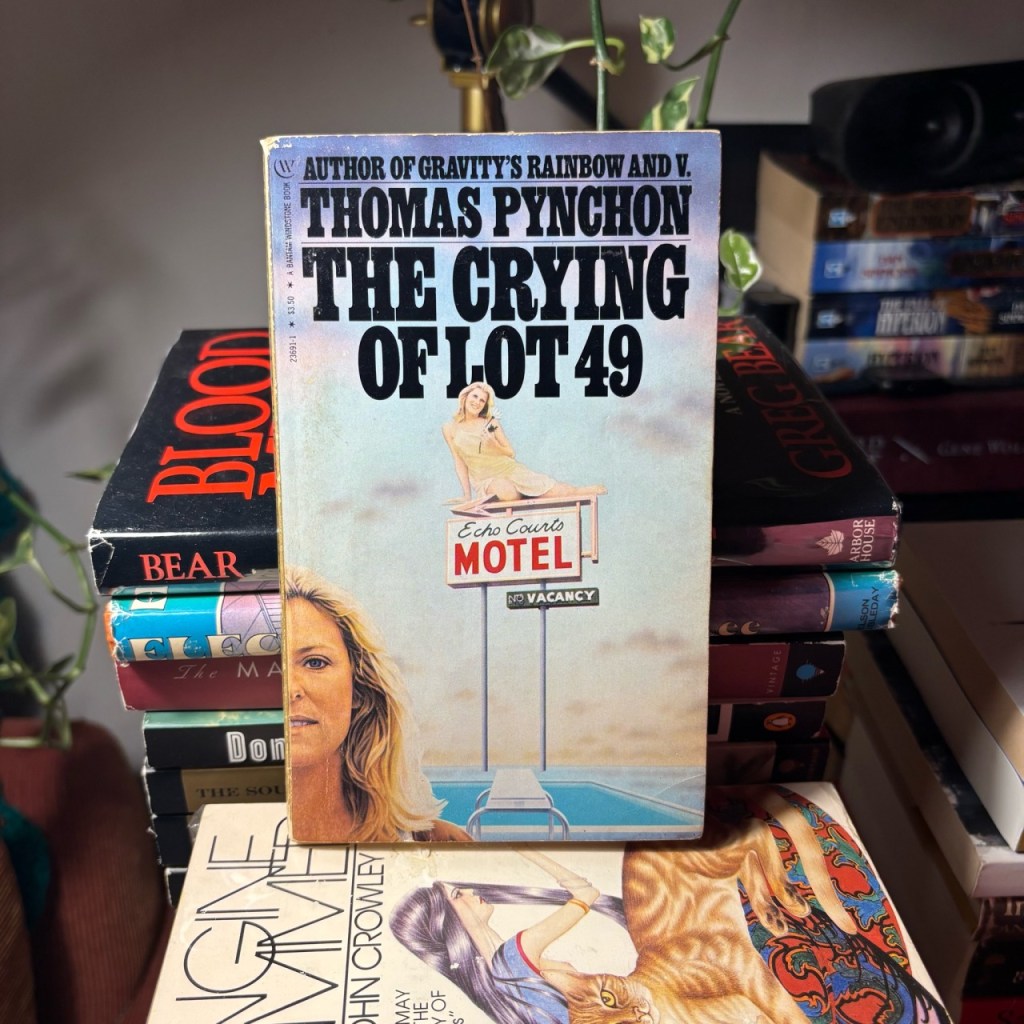
    Very strange novel. Pynchon is one of the sacred cows of the lit-fic community, and The Crying of Lot 49 is often cited as the best entryway to his bibliography, so I hesitate to say anything too negative about it, but I’ll be honest: I hardly knew what was happening at any given moment throughout this story. Something about the will of an ex-lover, an estate, and some lady getting wrapped up in a nonsensical conspiracy, blindly following leads and seeing connections in the most bizarre places: a theatrical play, mysterious discrepancies between the publications of old books, strange stamps, divine symbols, an underground postal service, and something about bones at the bottom of a lake. What is happening?

    (more…)
  • Where Late the Sweet Birds Sang by Kate Wilhelm (1976)

    🌕🌕🌕🌗🌑

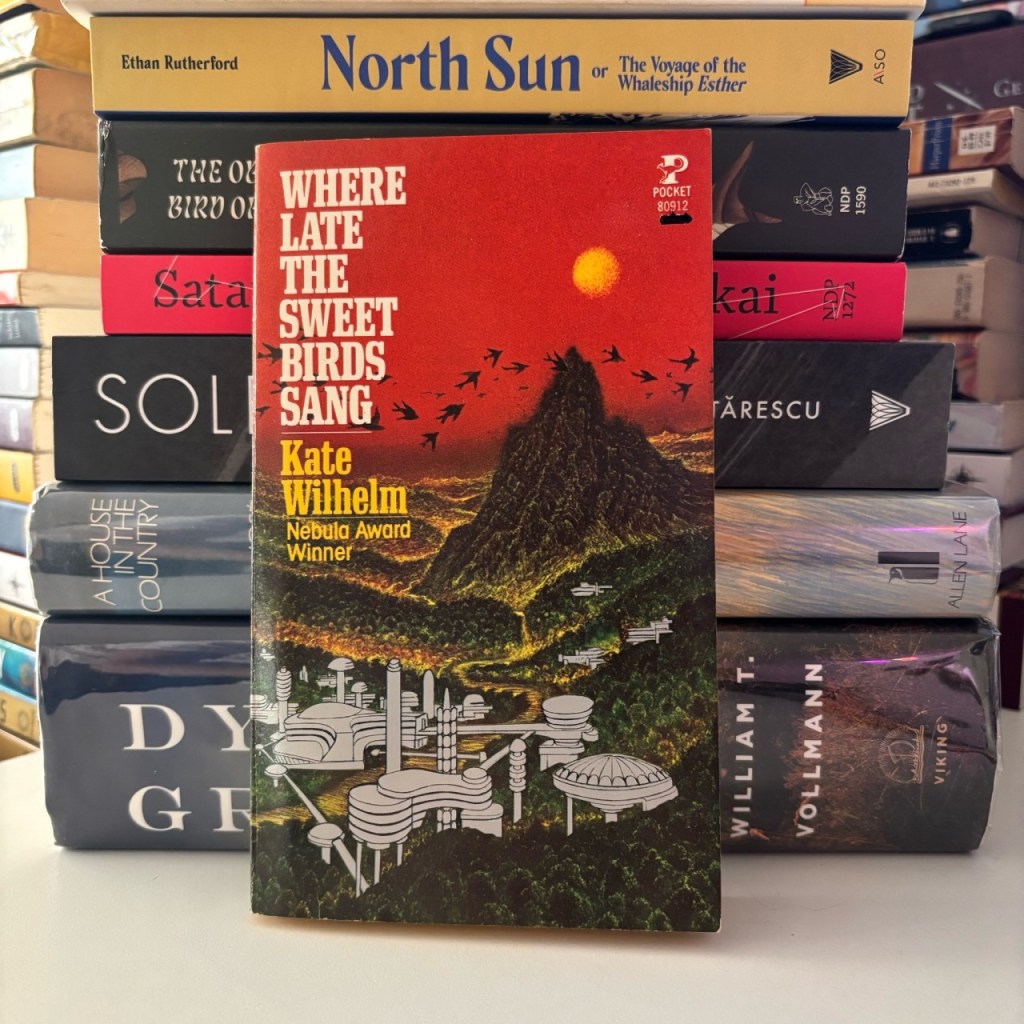
    Where Late the Sweet Birds Sang caught me off guard in a way I didn’t expect. It is often shipped as an underrated classic, “the best novel written about cloning to date,” but it ended up being much more than that. Where Late the Sweet Birds Sang is very much an idea-focused sci-fi novel, but the experiment it lays out is more sociological than scientific, and it reads more like a generation-spanning Little House on the Prairie. Under its genre-fiction cloak is a slice-of-life family saga that explores themes of individuality and the psychological consequences of genetic uniformity. The world it portrays is one that is hanging on by the thread of biological science rather than thriving under technological capitalism; some of it even seemed very inspired by the “Children of God” cult, which was infamous in the 70s for its incest, pedophilia, and doomsday mind control. All dark themes, but Where Late the Sweet Birds Sang is ultimately a story about the perseverance of the human spirit and critical thought in the face of extinction—a theme I found encouraging, given the times.

    (more…)
  • Book Review: The Word for World is Forest by Ursula K. Le Guin (1972)

    🌕🌕🌕🌕🌑

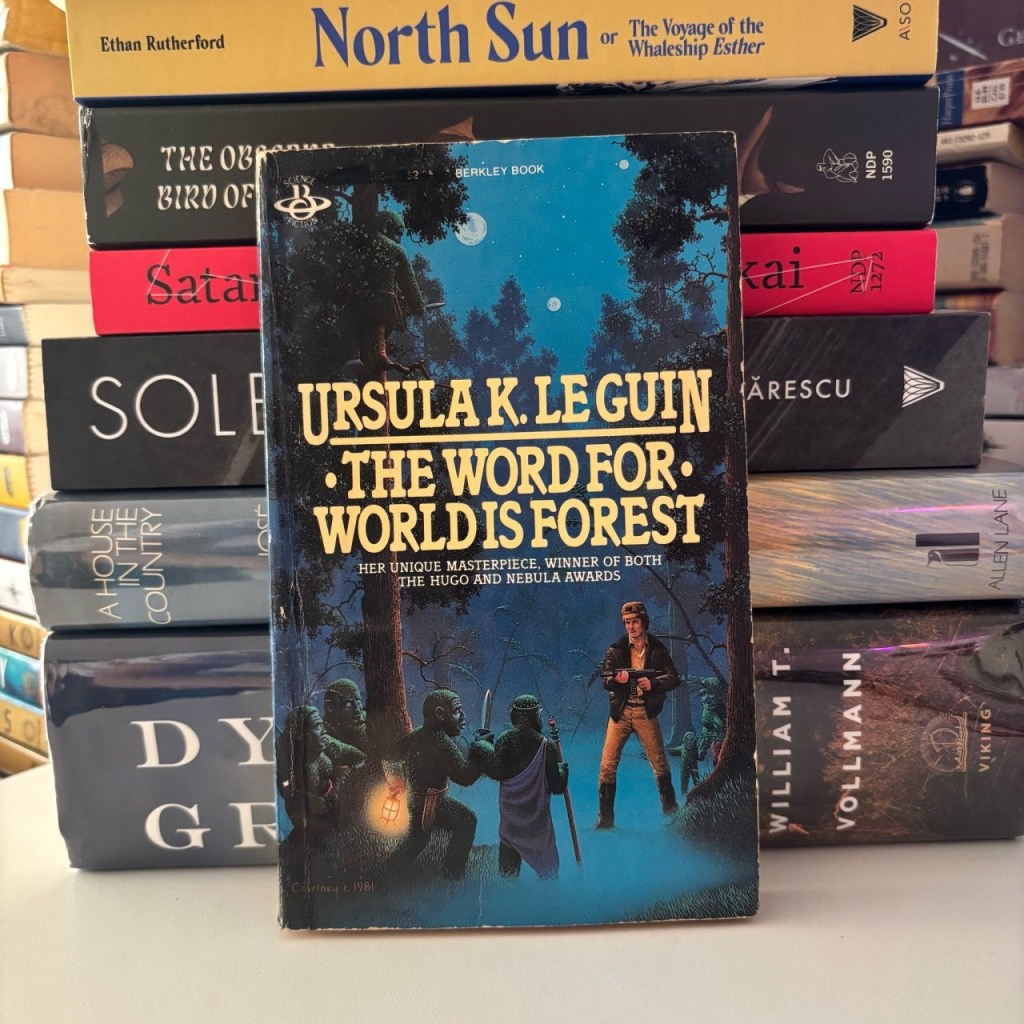
    I can’t even begin to describe how refreshing this was after the colossal letdown of Silverberg’s ‘Downward to the Earth.’ Leave it to Le Guin to write a story about colonialism with some real intersectional nuance and critical intellect.

    The World for World is Forest takes place in a far future on the planet of Athshe, where human colonists from Terra have established logging camps to extract the planet of its most valuable resource. The Terrans have subdued groups of surrounding Athsheans (the planet’s native species, who are for the most part just smaller, greener humanoids who have simply adapted to their unique conditions) by way of military dominance and forced labour. The Terrans are outnumbered by the amount of free Athsheans who still occupy the forest, but they don’t attack the Terrans for fear of their weapons and the lives of the hostage slaves held in their camps.

    (more…)

Something went wrong. Please refresh the page and/or try again.