🌕🌕🌕🌗🌑
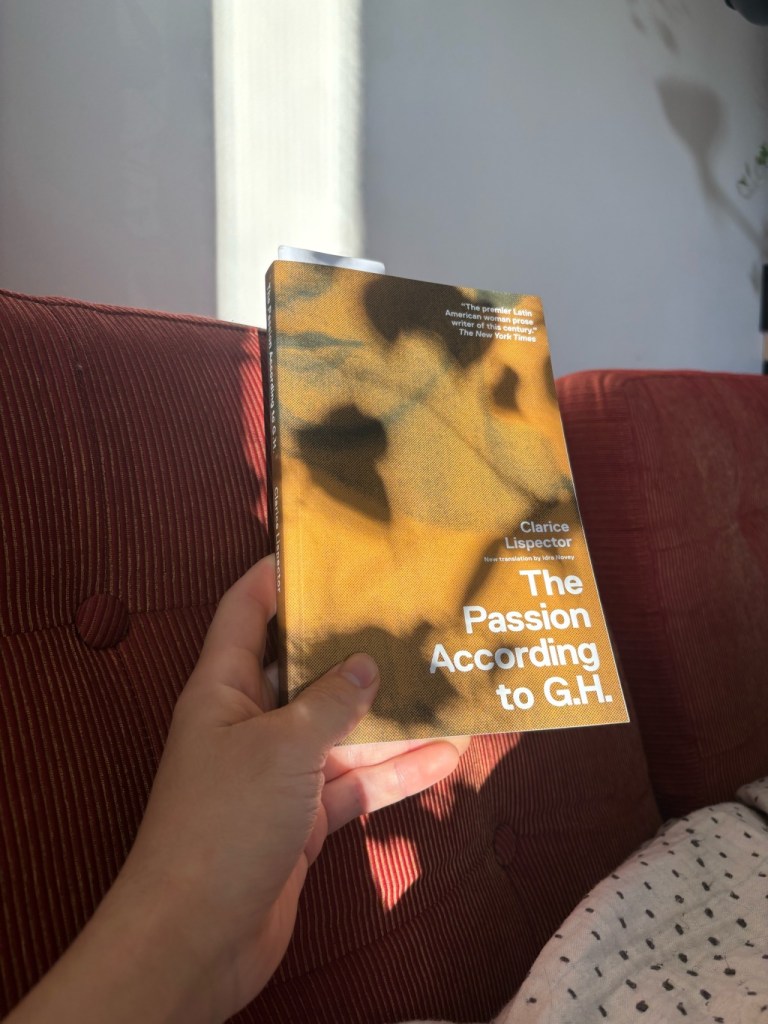
After being impressed (if not mystified) by the ingenuity of Água Viva back in January, I quickly hopped into The Passion According to G.H. with a friend, and we read it slowly over the course of ten days. It was great, as I expected, but I think reading it in small bites between other books did a bit of a disservice to Lispector. Lispector just has a flow to her prose that shan’t be broken; her stream of consciousness is a river, and the constant starts and stops made it hard for me to grasp the panoramic view of the ideas she was playing with. That being said, I still enjoyed what I got out of this book.
The Passion According to G.H. very much operates in the same mode as Água Viva in that its use of language to unlock subconscious information takes precedence over plot or character, but I loved that Lispector gave her narrator a sense of place and a physical event to meditate on this time around in order to give the reader some sense of tangible causality.
The novel is essentially about a bourgeois woman who kills a cockroach and has an existential crisis over it, but there are many different layers to this crisis, which make it interesting. Lispector does one thing that I really love in this novel, and that is exploring the idea of physical spaces as an extension or mirror of our inner worlds. When our narrator enters the old maid’s chamber and finds it in clinical, sanitary order, except for a single cockroach and a crude cave painting of naked, hollow bodies on the wall, the symbolism is not lost on her; it sends her into a spiral of her own perception that results in a form of rebirth, but not until after the initial act of violence has been committed—only then can the cleansing begin.
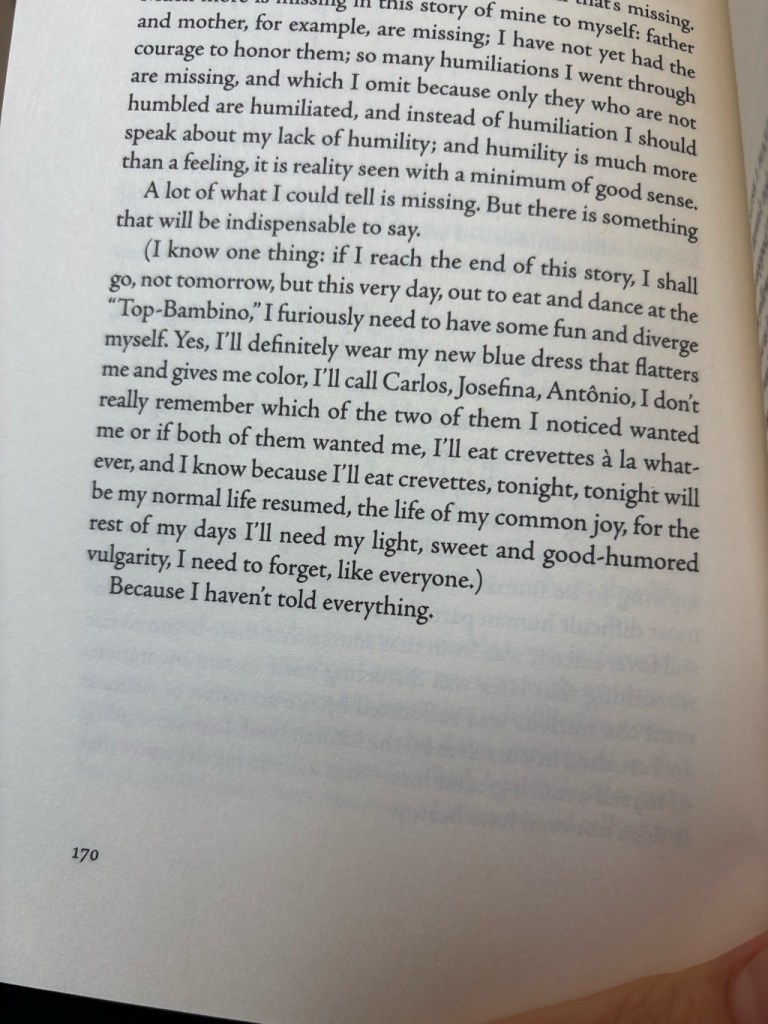
There are numerous symbols and interpretations to extract from this set and the sequence of events that happen in it, which is all the reason to reread the novel multiple times (as if the prose weren’t addictive and propulsive enough), but if I have to wager one complaint against Lispector, it’s that she does have a tendency to get lost in the grandiosity of her own profundity. This could very likely be a consequence of translation, but I just found some of the grand reflections our narrator has to sound sort of like overwrought platitudes (or like an emo myspace status circa 2006). However, this was pretty inconsequential to my enjoyment—I just found myself thinking, “alright, whatever you say,” more often than I would have liked. Otherwise, The Passion According to G.H. was another stellar Lispector experience. Can’t wait to read Hour of the Star next.
Leave a Reply