🌕🌕🌕🌗🌑
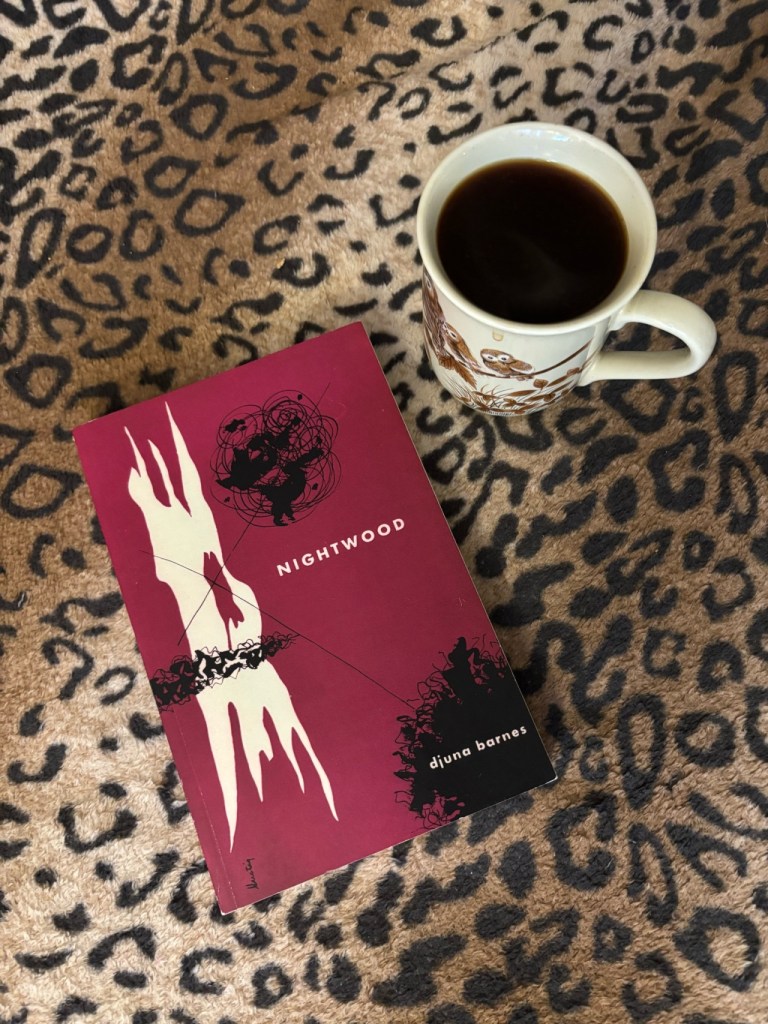
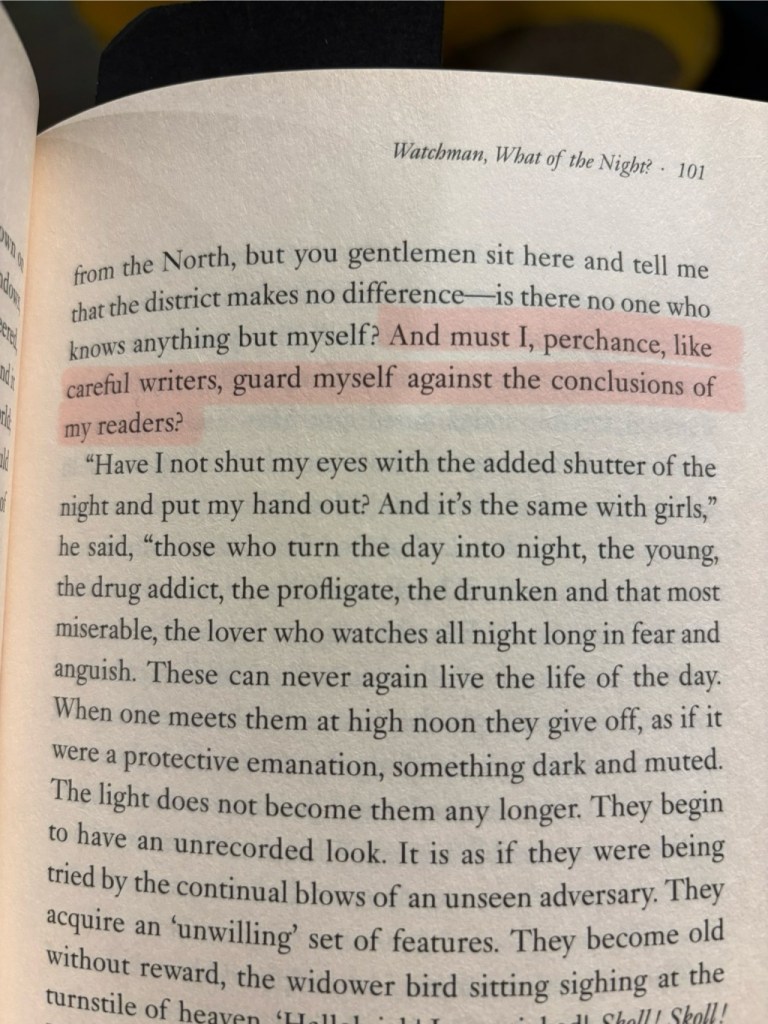
Nightwood absolutely humbled me, and I loved it. I knew it had a reputation for being difficult and dense, but I wasn’t expecting to have to give myself a crash course on the interplay of religious, national, and sexual identities in Europe from the 1400s to the late 1800s before even getting past the second page. I still felt ill-equipped to understand all the social and theological themes that Barnes puppeteers the characters with here, but some rudimentary knowledge allowed me to at least feel more situated in the time period. After that, I kind of just laid back, let the prose do its work, and tried not to get too caught up on the things I didn’t understand, which was a lot, because Nightwood is a highly allegorical and impressionistic piece of art.
In a way it reminded me of a much shorter and more condensed Miss MacIntosh, My Darling by Marguerite Young, where you have these archetypal characters who kind of just whirl around each other as their identities and beliefs are broken down into a primordial stew of symbols and titles until reality begins to blur. It also made me think of Ice by Anna Kavan with its brooding exploration of morality and its vague, dreamlike atmosphere that functions with a logic outside of mere physics.
There was ultimately a lot of this book that went over my head, but the prose was so intoxicating and the characters were so intriguing that I couldn’t put it down. I especially loved the character of the enigmatic Doctor with all of his chaotic monologues, and Robin Vote with her unconscious compulsion to escape into the night and leave a storm of broken people in her wake. I really look forward to rereading this one and trying to extract more from this novel, because the juice is worth the squeeze, and there is a lot of it. I’ll be reading some of Barnes short fiction next.
Leave a Reply