🌕🌕🌕🌑🌑
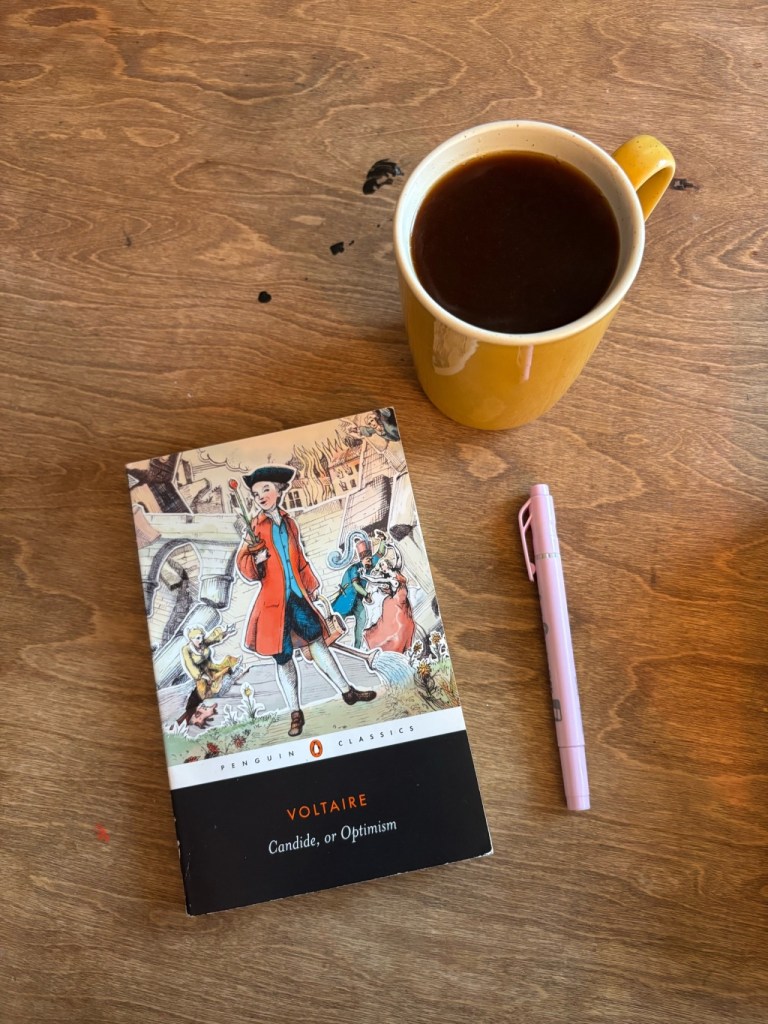
Voltaire blipped onto my radar after asking some discord friends for recommendations to bridge the gap between Cervantes’s Don Quixote (1605) and the 1800s. Candide, being published in 1759, fit the bill precisely, and while its story ultimately left me yearning for something more substantial to chew on (they weren’t exactly pushing the envelope of maximalist narratives in the 1700s), there are still plenty of reasons to pick this up and enjoy it in the 21st century and plenty of reasons why it still feels relevant.
Candide is a philosophical tragi-comédie with a straightforward plot that follows our “hero” as he is kicked out of his castle home for kissing his cousin, Cunégonde (the Baron’s daughter), triggering a series of unfortunate events that send him traveling around Europe and across the Atlantic Ocean to South America and back again, always in retreat from persecution or in pursuit of love.
Throughout his travels, Candide comes up against a variety of challenges and unsavoury characters who force him to reassess the philosophy of optimism that was ingrained in him by his mentor Pangloss, but his indomitable spirit keeps him pushing on like a smooth baby dolphin gliding through the deep, and he is unwilling to believe that all his suffering is not ultimately for the best, which is ultimately where the majority of the novel’s humour comes from.
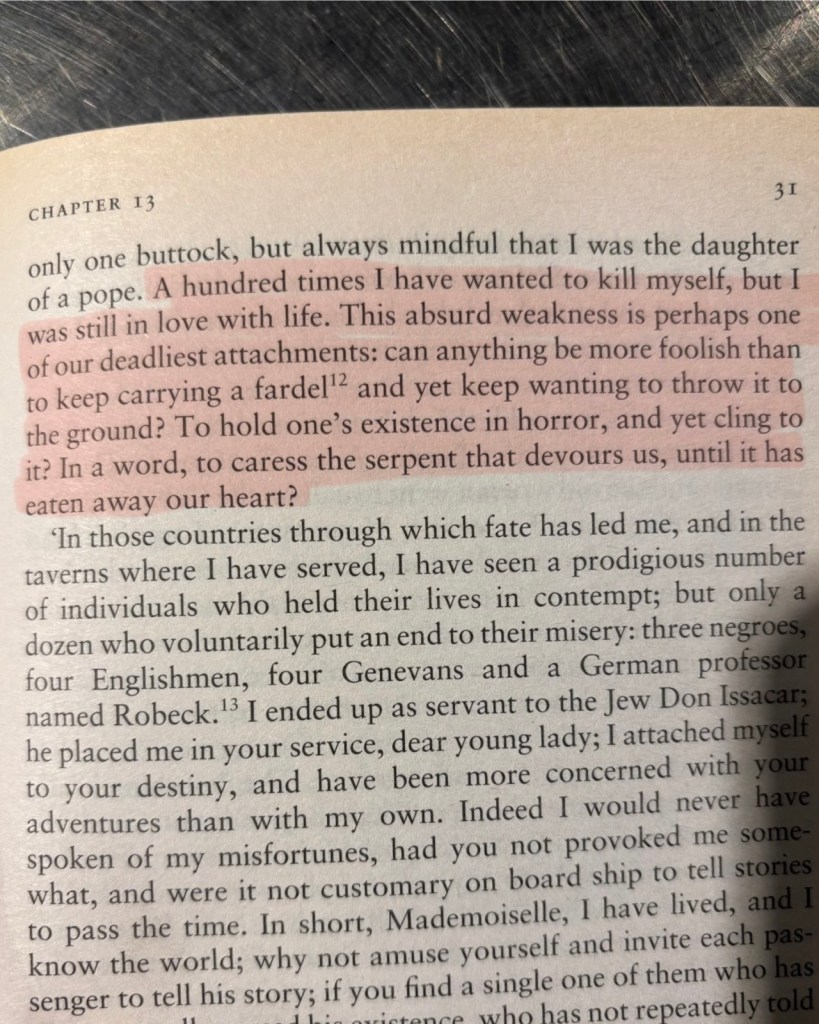
Candide is certainly jam-packed with action and satirical commentary, but my favourite takeaways have to be the conversations that Candide has with the nameless Old Woman and the pessimistic scholar Martin, who offers a direct counterpoint to Candide’s optimism—this is where the relatability of the story skyrocketed for me, and I realized that Candide is more than just a classic of 18th century literature; it’s a fossilization of humanity and a needed reminder that we have been asking the same questions and dealing with the same psychological pain since the dawn of civilization.
And this is where the novel’s biggest merits lie, not in its story, which is serviceable at best, but in its testament to the fact that we are not alone in our suffering and that our societal woes are nothing new. I felt a deep sense of peace in this realization, and for that, I thank Voltaire.
Leave a Reply