🌕🌕🌕🌗🌑
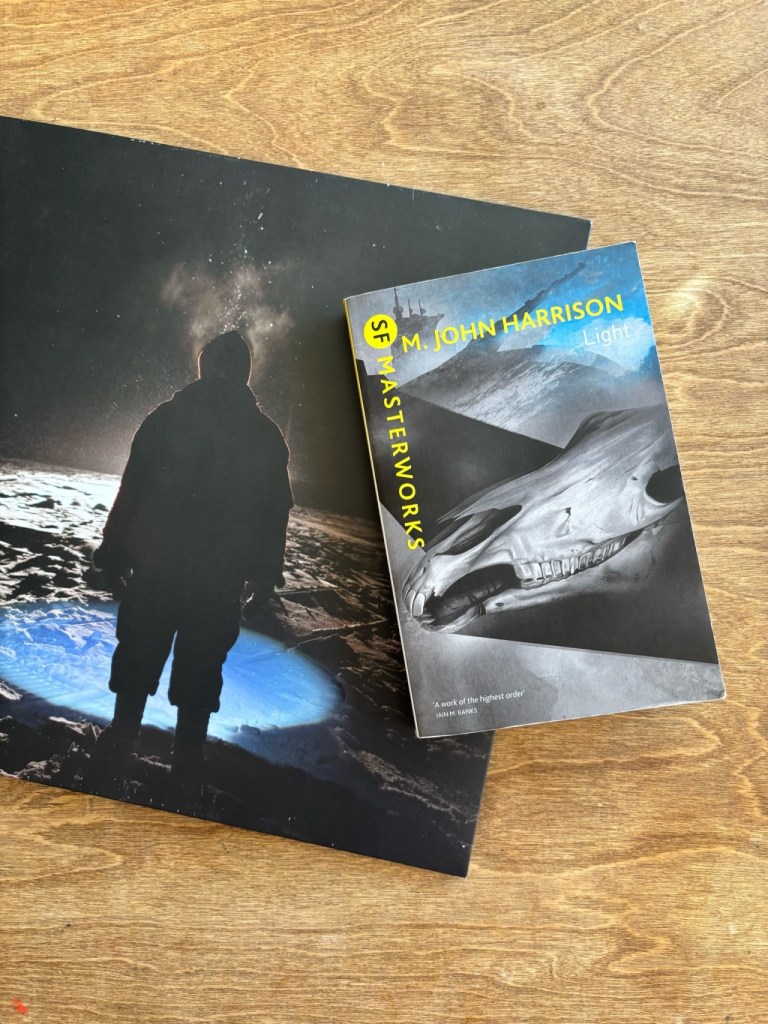
I initially found out about M. John Harrison because his Viriconium sequence is often cited on lists of ‘books for fans of Gene Wolfe,’ but I decided to go with Light as my first novel by him because, well, I found it first.
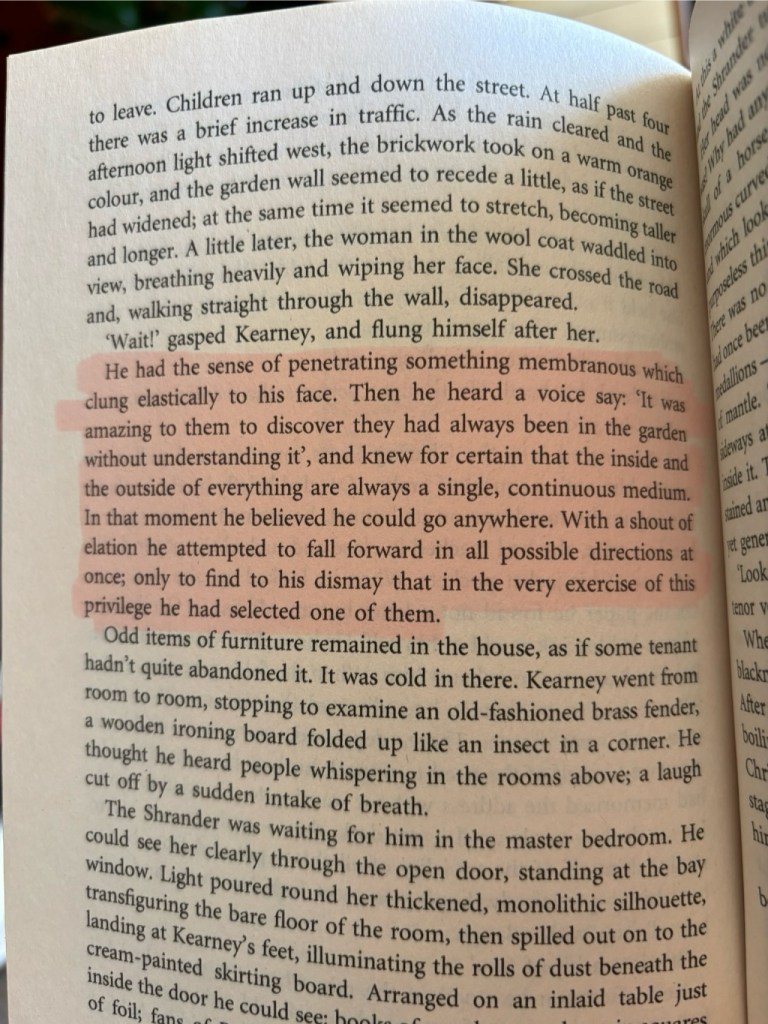
This book was great. I didn’t know what to expect going in, but Harrison’s writing pulled me in quickly. His prose almost reminds me of a more graceful, less syntax-heavy Gibson—nimble and descriptive—but that could just be the cyberpunk influence talking. Harrison’s use of language ultimately didn’t wow me as much as his skill at constructing a story of three parallel narratives that feel deeply connected despite taking place more than a millennium apart in time. These stories are connected only by thin, omnipresent threads of light: a white cat, an anomaly in the fabric of space teeming with Lovecraftian tech, and the haunting presence of greater, potentially malevolent power.
All of the characters in this book are running from something—a person, a past, a self—and often relying on sex, drugs, and technology to satiate their fears and insecurities, but it is through these cosmic failures and patterns of self-destruction that they also seek meaning. We have Micheal Kearny (1999), the tech bro serial killer who accidentally releases an unknown cosmic energy into the world and has to keep it at bay with human sacrifices, and then we flash forward to 2400 with Seria Mau Genlicher, a girl who has given up her body to implant her consciousness into the cortex of an alien spaceship, and Ed Chianese, a virtual reality addict turned circus freak fortune teller.
It’s not clear at first how these stories are connected, but as they progress, the parallels become clearer, and they converge in the end in a really neat way, not unlike what Haruki Murakami did in Hard Boiled Wonderland and the End of the World. Hell, there are even shadow people in the future timelines who appear as ethereal manifestations of memory. Honestly, if you wanted me to boil it down to a single bit of clickbait, I’d say ‘as if Gibson and Murakami had a baby’ isn’t too far off, but there are also some cool space opera vibes coming from Seria Mau’s storyline that add a really unique flavour to the pot.
But what started out as something more akin to a Neuromancer or a Snow Crash with the narrative structure of Hard Boiled Wonderland ultimately became something more like a Contact by Carl Sagan in the way that it offers a super optimistic and heartwarming message about humanity, our place in the universe, and the intersection of spirituality, technology, and magic.
Alas, if I have one caveat about the book, it’s that Harrison really overdid it with the ending. Not only did it start to get a little too corny for my tastes with the hammering home of love, self-forgiveness, and higher powers, but Harrison also overexplained the mechanics of the plot, ultimately drawing back the curtains so far that the magician’s trick lost its magic, which was a bummer. That being said, the main chunk of the book was so good that I’d say the reading experience is still 100% worthwhile, especially if you like science fiction that favours subjective realities and parallel universes over real-world physics.
Leave a Reply