
Tag: science fiction

  • Top 11 Reads of 2025

    Why 11? Well, I had my top 10 established but then I realized how unfair it would be to not include Miss MacIntosh in the stack just because my completion of it missed the deadline by a few days. After reading 1000 pages of it in December I think I have the right to claim it as one of my favourites of the year, and time is fake anyway, so I’m putting it in the damn pile.

    This year has been huge for me in terms of broadening my horizons. I started my reading journey not too long ago as a pure sci-fi reader, but then I read Gene Wolfe at the start of the year and he really opened the floodgates of literary fiction for me. Then I read stuff like Vollmann and Bolaño and Rulfo and all bets were off, I quickly realized that genre conventions don’t matter to me half as much as the themes explored and the prose employed to get there, and all of a sudden an entire new world of literature opened before my eyes.

    Without further ado, and in no particular order:

    We by Yevgeny Zamyatin

    GENRE: DYSTOPIAN SCI-FI

    A psychological sci-fi thriller like no other. We takes place in a far future authoritarian state where the citizens have been walled off from the outside world and every hour of their day is mandated and scheduled by the glorious Benefactor and his bureaucracy. One day, our main character, D-503, has a sudden awakening that causes him to spiral as he questions everything he’s ever know about himself and his surroundings. One of my favourite things about this novel is how, as our protagonist spirals further out of control, the narrative itself (written as a series of journal entries) becomes more frenetic and disorganized, and it really makes you feel like you are in the head of someone who is dissociating from reality. An exciting read that really hits the nail on the head with its social and political critiques.

    Full review / Goodreads
    (more…)
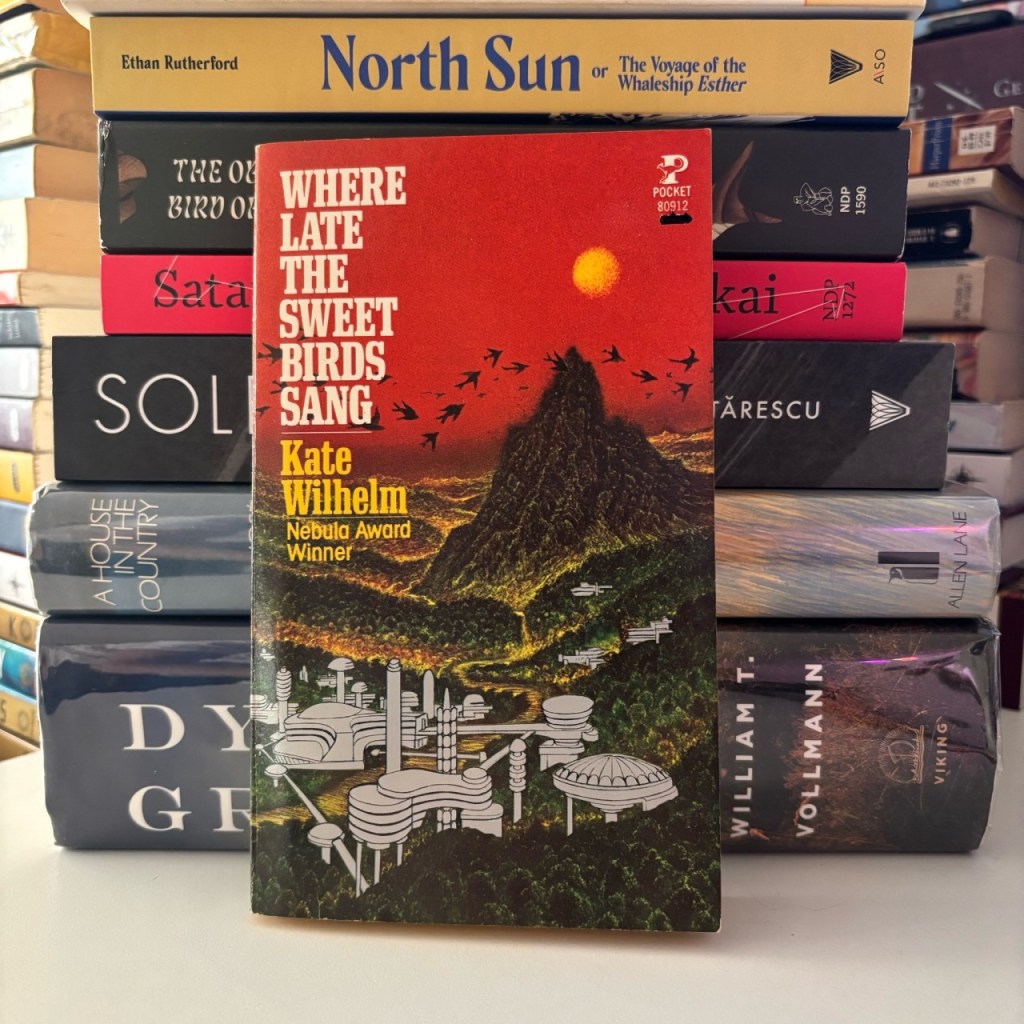
  • Where Late the Sweet Birds Sang by Kate Wilhelm (1976)

    🌕🌕🌕🌗🌑

    Where Late the Sweet Birds Sang caught me off guard in a way I didn’t expect. It is often shipped as an underrated classic, “the best novel written about cloning to date,” but it ended up being much more than that. Where Late the Sweet Birds Sang is very much an idea-focused sci-fi novel, but the experiment it lays out is more sociological than scientific, and it reads more like a generation-spanning Little House on the Prairie. Under its genre-fiction cloak is a slice-of-life family saga that explores themes of individuality and the psychological consequences of genetic uniformity. The world it portrays is one that is hanging on by the thread of biological science rather than thriving under technological capitalism; some of it even seemed very inspired by the “Children of God” cult, which was infamous in the 70s for its incest, pedophilia, and doomsday mind control. All dark themes, but Where Late the Sweet Birds Sang is ultimately a story about the perseverance of the human spirit and critical thought in the face of extinction—a theme I found encouraging, given the times.

    (more…)
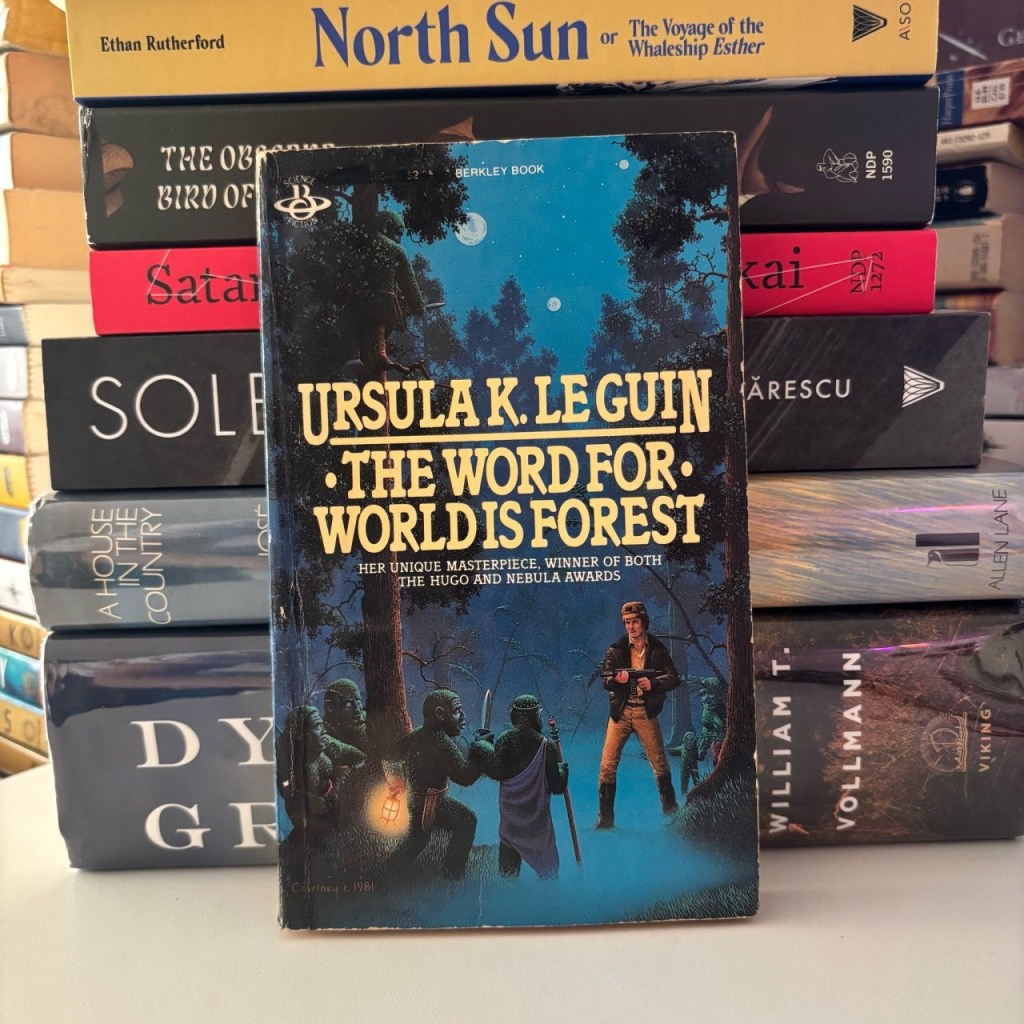
  • Book Review: The Word for World is Forest by Ursula K. Le Guin (1972)

    🌕🌕🌕🌕🌑

    I can’t even begin to describe how refreshing this was after the colossal letdown of Silverberg’s ‘Downward to the Earth.’ Leave it to Le Guin to write a story about colonialism with some real intersectional nuance and critical intellect.

    The World for World is Forest takes place in a far future on the planet of Athshe, where human colonists from Terra have established logging camps to extract the planet of its most valuable resource. The Terrans have subdued groups of surrounding Athsheans (the planet’s native species, who are for the most part just smaller, greener humanoids who have simply adapted to their unique conditions) by way of military dominance and forced labour. The Terrans are outnumbered by the amount of free Athsheans who still occupy the forest, but they don’t attack the Terrans for fear of their weapons and the lives of the hostage slaves held in their camps.

    (more…)
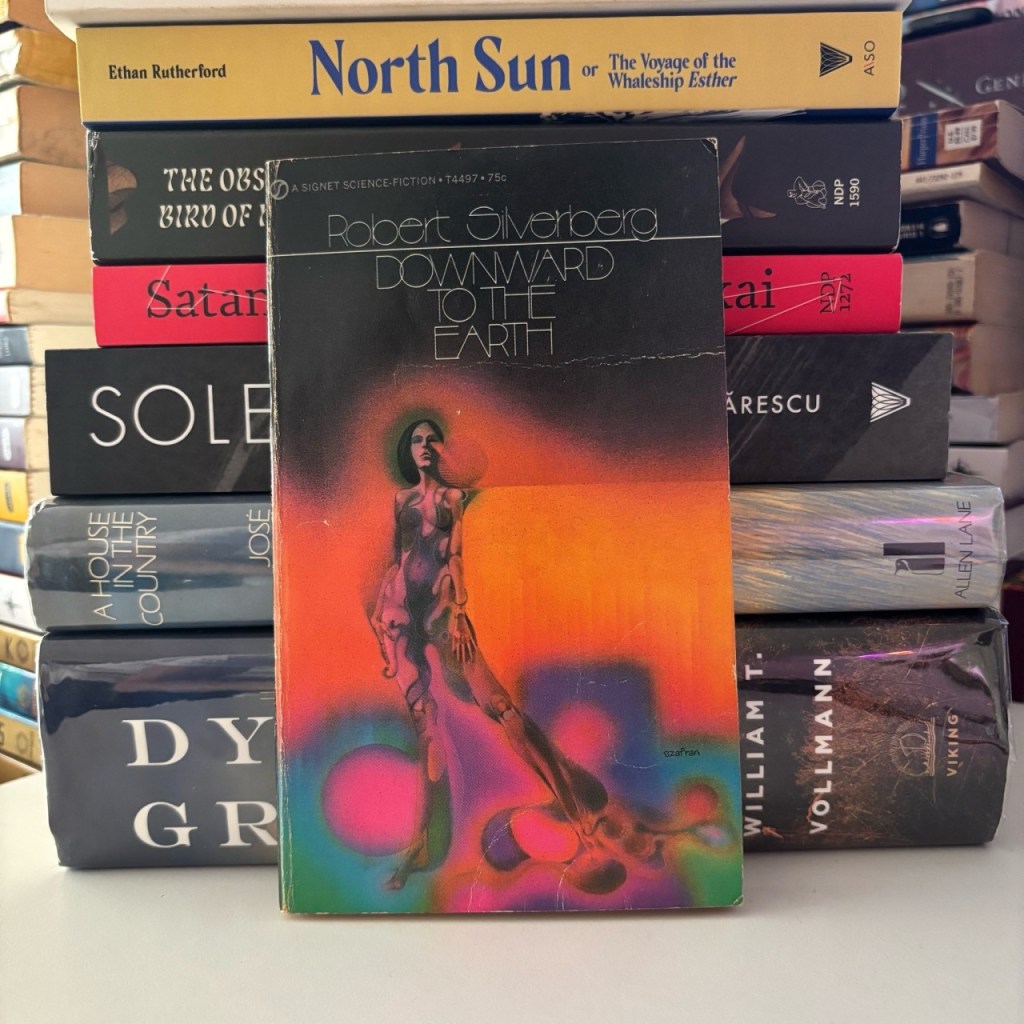
  • Book Review: Downward to the Earth by Robert Silverberg (1970)

    🌕🌗🌑🌑🌑

    Aaaaand drumroll please, for the biggest disappointment of the year. Oh, how this book was hyped up to me for so long. “Silverberg’s best,” they all said in unison. To be fair, I can see how this might’ve been mind-blowing back in 1969, flying off the coattails of the Hippie Revolution when the concept of doing psychedelics and *gasp* having empathy for others was a radical new idea. In 2025, its peace and love kumbaya bullshit is simply outdated and shallow. That isn’t to say that this novel doesn’t have its merits, but before I go there, I just thought it was so funny how the edition of this novel I read included a foreword from Silverberg himself where he writes about how much he hated writing this novel and how he thought it sucked only until it gained a positive critical reception, and then he changed his mind about it. Feelings about your own work can change, I get it, but I think its positive reception had much more to do with its themes being culturally relevant at the time than it actually being like… a well-crafted story. All I’m saying is that perhaps Silverberg’s original intuition about his own work was correct, but I digress.

    (more…)
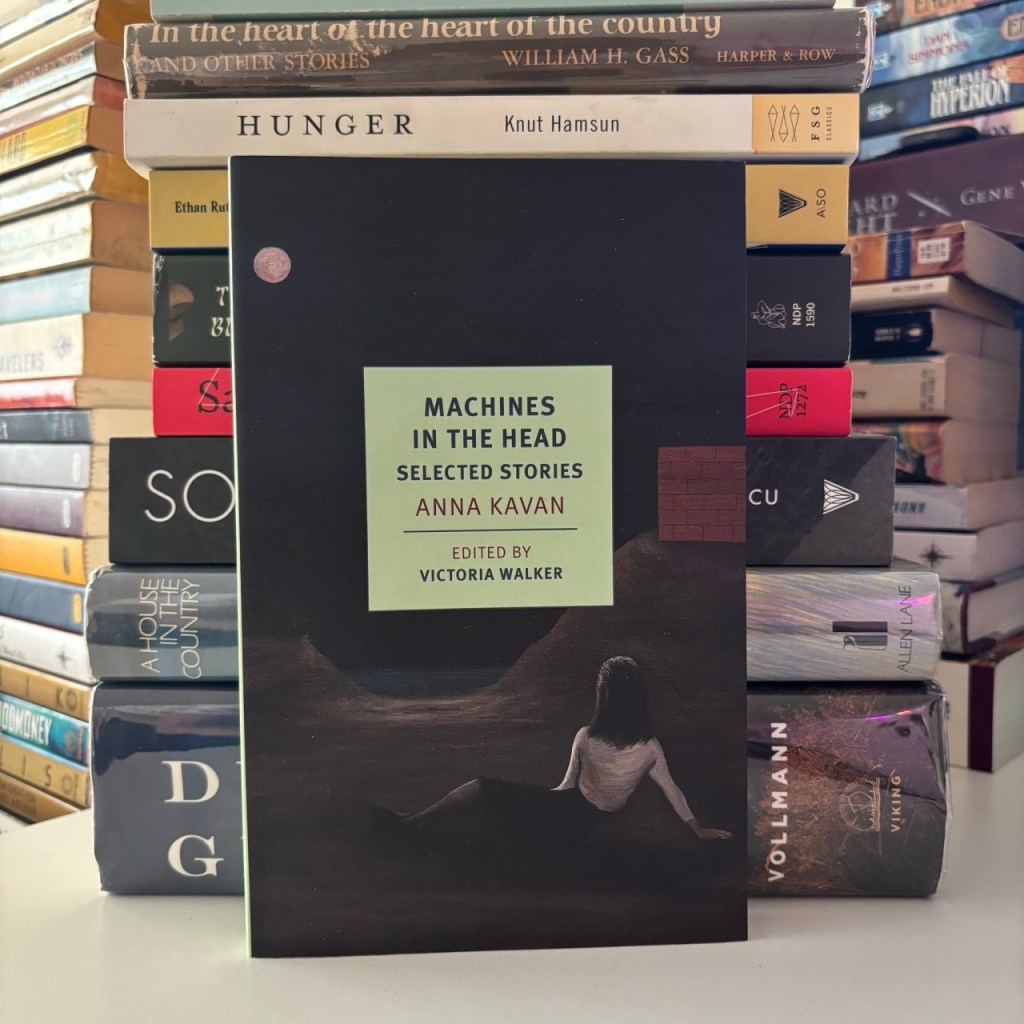
  • Book Review: Machines in the Head: Selected Stories by Anna Kavan

    🌕🌕🌕🌕🌑

    I loved Ice so much that I couldn’t resist picking this up immediately after finishing it. Some of the stories in this collection were written as early as the 1930s, a few decades before Ice was published in 1967, and some of the later stories were published posthumously after her death in the following year, so you get a very good sense of her evolution by reading this. The first collection of stories in here, Asylum Piece, which was (surprise!) written about her time in a psychiatric ward, holds some of her most raw and emotive pieces. By this point she was already a fairly experienced writer, having published a few works under the name Helen Ferguson, and she was extremely clever with her portrayal of her mental illness as this sort of legal sentencing—a condemnation with no fair trial; the shadow of a gavel poised permanently above her head. The way she instills this larger-than-life and oppressive sense of doom in her words is like nothing I’ve ever experienced from another writer. The way she manages to spark the imagination despite her gloom is even more impressive.

    (more…)
  • Book Review: Ice by Anna Kavan (1967)

    🌕🌕🌕🌕🌕

    One of the best feelings as a reader is pulling something out of your pile that has been sitting there almost long enough to lose its luster and being hit with a literary grenade that blows you away. I knew Ice was going to be good, but I didn’t expect it to turn Anna Kavan into one of my favourite authors within the first five pages. I couldn’t believe how long I let this one fester in my pile; what a shame.

    (more…)
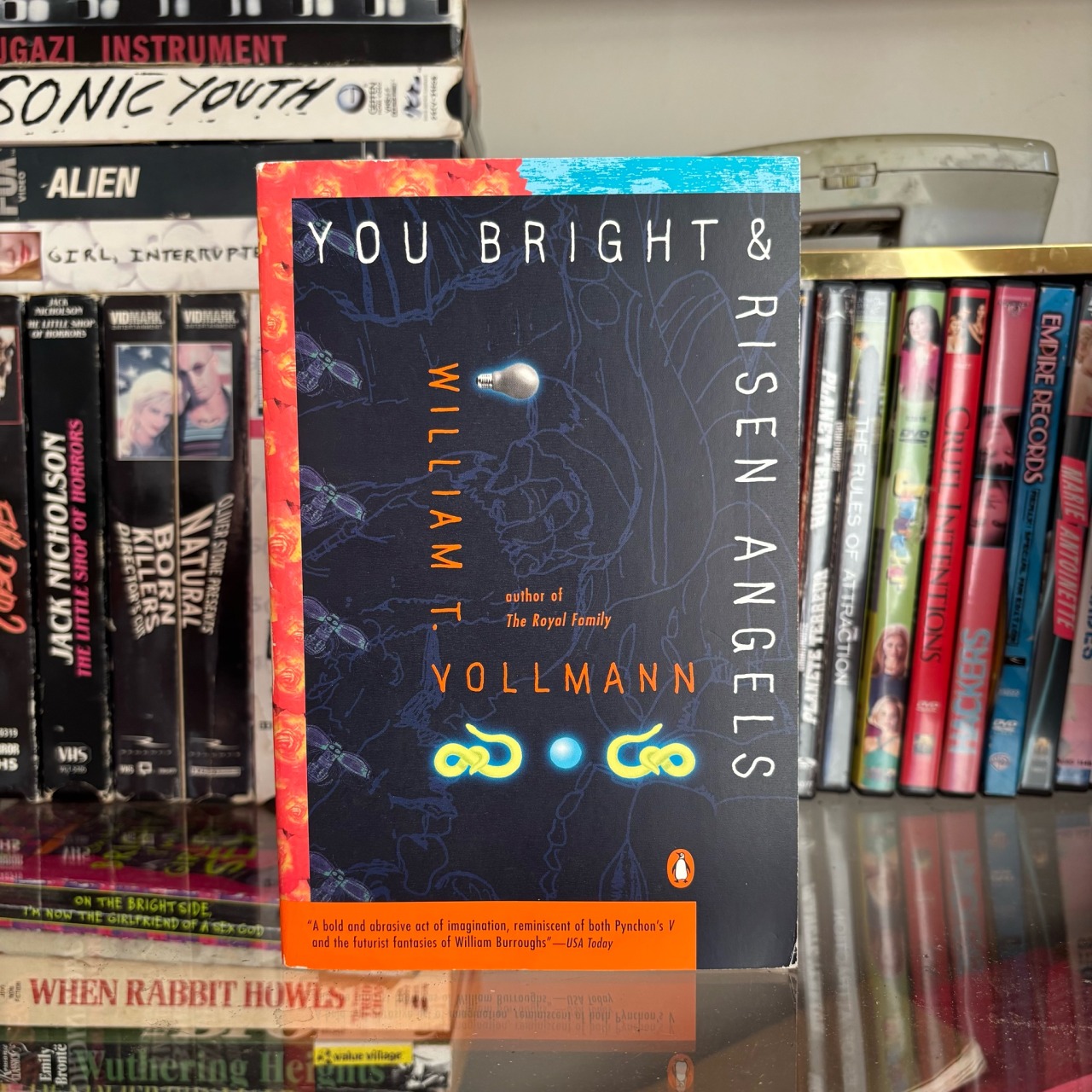
  • Book Review: You Bright and Risen Angels by William T. Vollmann (1987)

    🌕🌕🌕🌗🌑

    This is another book that will be difficult to write about, not only because there is just a lot going on in terms of story, character arcs, and meta shenanigans, but also because it is quite a disorderly novel that eschews linearity for a postmodern collage of out-of-sync moments. You Bright & Risen Angels is cunning and unpredictable, especially as Vollmann freely jumps to and fro in the timeline and trails off on endless tangential daydreams, but it is also extremely rich in humanness, where the focus is less on “what is happening right now?” and more on “how do these variable environmental factors make people behave?”

    (more…)
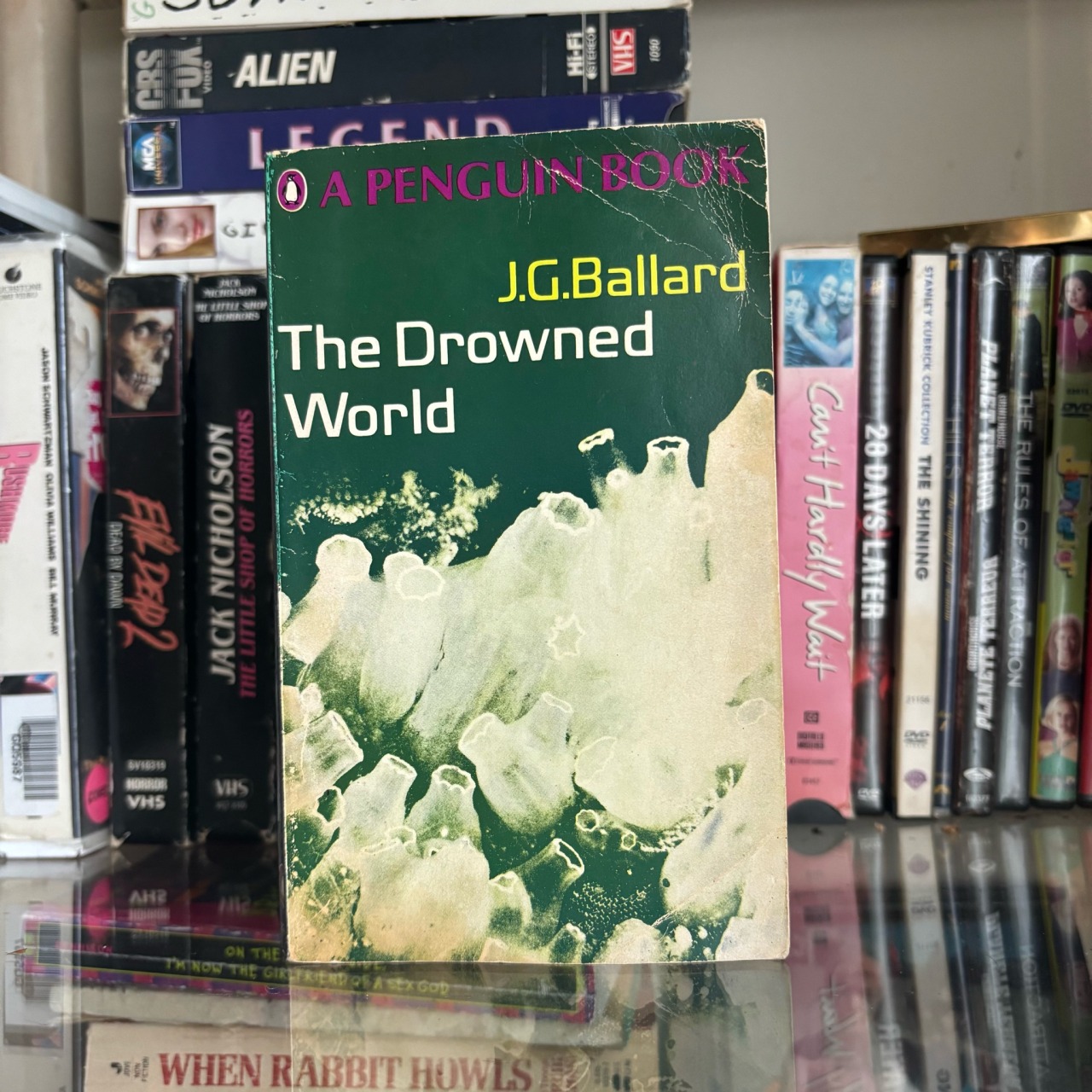
  • Book Review: The Drowned World by J. G. Ballard (1962)

    🌕🌕🌕🌑🌑

    Picked this up as a short (170-page) palate cleanser after the head-bashing torture that Moderan put me through, and it was the perfect book for the job. This was my first J. G. Ballard experience, and, to be honest, I was expecting something a little more challenging, more in line with what I’ve heard about Crash and High Rise (which I will read soon). But to be fair, this is only Ballard’s second published novel, and through my reading I could get the sense that he was very much still trying to formulate his own style within the confines of what is essentially a small set-based story.

    (more…)
  • Book Review: Moderan by David R. Bunch (1971)

    🌕🌕🌕🌑🌑

    Moderan is a collection of short science fiction stories that were published by David R. Bunch in various magazines between 1960 and 1989. These stories are all centered around the world of Moderan, which is a satirical, irony-ridden hyper-capitalist future—one where the entire earth is coated in grey plastic to seal in the radiation from nuclear pollution, and cyborg men (whose humanity is literally held together by a few strips of flesh) with strongholds wage perpetual war on their neighbors for the sake of, uh… war. And a bit of good-natured competition, of course. Metal flowers are pushed from holes in the ground, the atmosphere is artificially coloured (and flavoured!), and the lowly commoners are forced to live their lives inside tiny bubbles. It is also a HYPER masculine world where women are reduced to literal sex robots with on and off switches, and the ones that begin to develop free will get cordoned off to the White Witch Valley, where they essentially become another faction to wage war with. I know that sounds jarring if you are at all a reasonable, normal person, but it’s done in a way that is so obviously a damning critique of the toxic masculine psyche that Bunch manages to pull it off without it ever feeling like misogyny itself is the butt of the joke.

    (more…)
  • Book Review: The Fifth Head of Cerberus by Gene Wolfe (1972)

    🌕🌕🌕🌕🌑

    I loved this book. I don’t have much to say about it. That’s just the way it is with Gene Wolfe sometimes. It pains me to try and write a coherent review about a book that feels more like a mirage, or—considering The Fifth Head of Cerberus is a collection of three self-referential novellas—a reflection of a reflection of a reflection. Another reason I struggle to write about this book is that, in all honesty, I can hardly tell you what it’s about. Does that mean I didn’t pay attention? No, no. Anyone who says they have a full grasp on this book after their first read either used a guide or is lying. What I can tell you is: there is a colonial element to the story, a large mystery surrounding the ongoing existence of a native population of shapeshifters, something about twin planets and a vaguely psychopathic family of clones, and a whole bunch of myths. There is a lot of guessing about who characters really are throughout the three novellas, and it all sort of blends together into a loose narrative about identity, personhood, heritage, and the erasure of such things by the state (or at least that’s how I interpreted it). I’m glad that I read the whole Solar Cycle before reading this because it prepared me for a lot of the tricks that Wolfe likes to play, especially regarding the hybridization of personalities that comes into play in the third novella.

    (more…)

Something went wrong. Please refresh the page and/or try again.