
Tag: sci fi

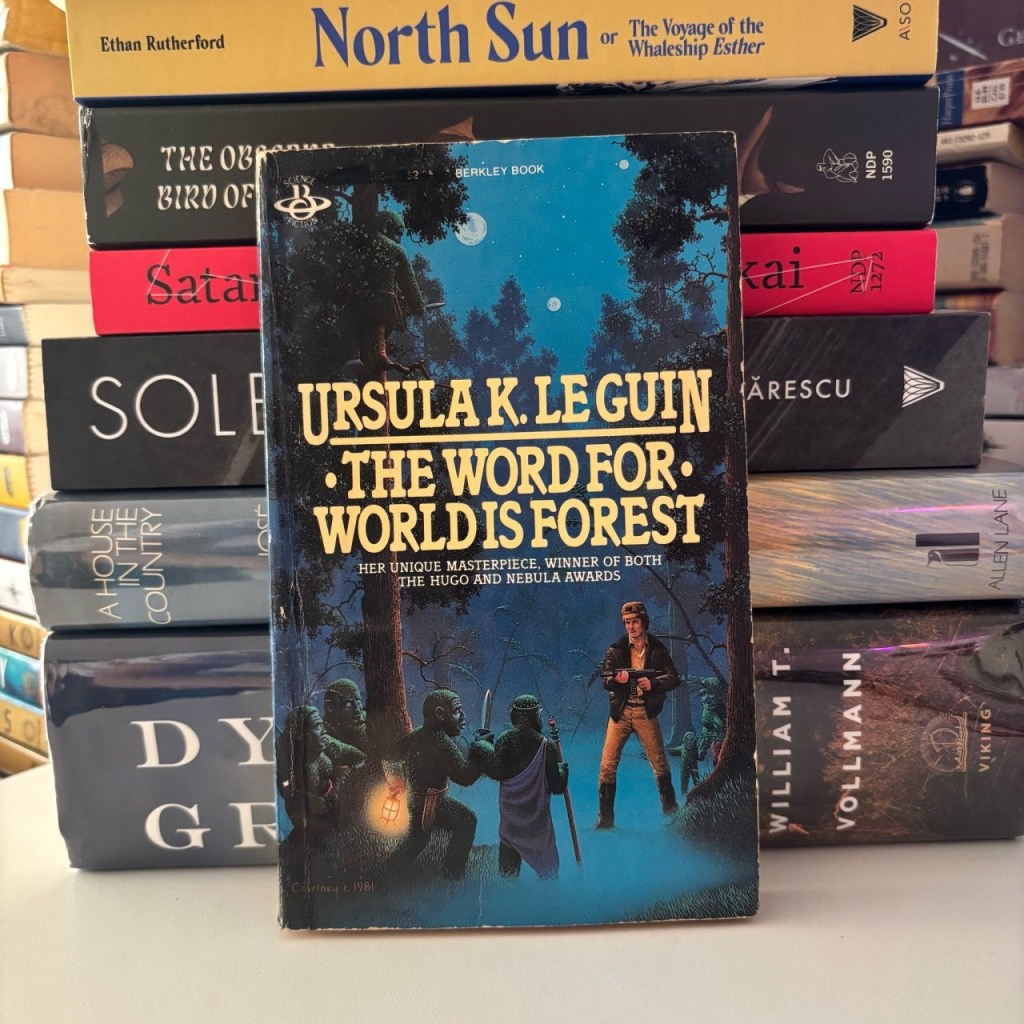
  • Book Review: The Word for World is Forest by Ursula K. Le Guin (1972)

    🌕🌕🌕🌕🌑

    I can’t even begin to describe how refreshing this was after the colossal letdown of Silverberg’s ‘Downward to the Earth.’ Leave it to Le Guin to write a story about colonialism with some real intersectional nuance and critical intellect.

    The World for World is Forest takes place in a far future on the planet of Athshe, where human colonists from Terra have established logging camps to extract the planet of its most valuable resource. The Terrans have subdued groups of surrounding Athsheans (the planet’s native species, who are for the most part just smaller, greener humanoids who have simply adapted to their unique conditions) by way of military dominance and forced labour. The Terrans are outnumbered by the amount of free Athsheans who still occupy the forest, but they don’t attack the Terrans for fear of their weapons and the lives of the hostage slaves held in their camps.

    (more…)
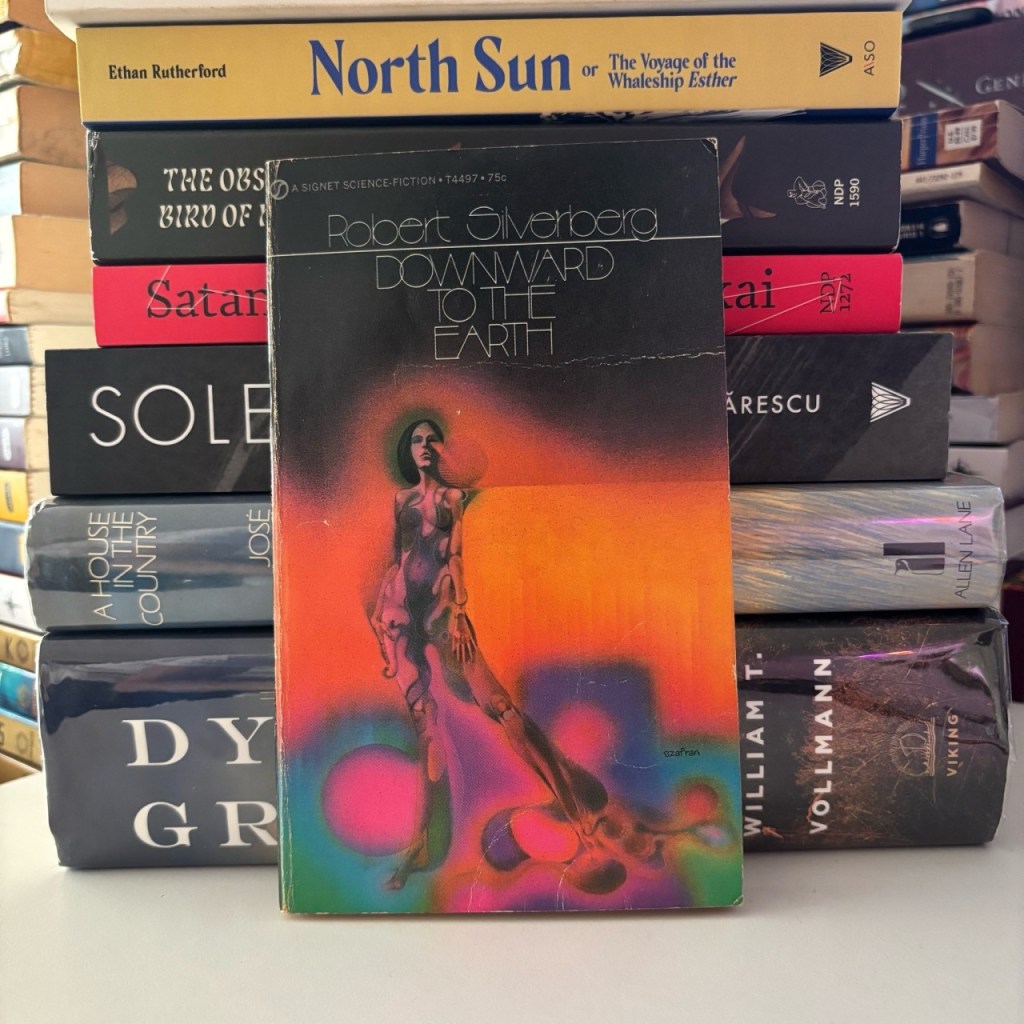
  • Book Review: Downward to the Earth by Robert Silverberg (1970)

    🌕🌗🌑🌑🌑

    Aaaaand drumroll please, for the biggest disappointment of the year. Oh, how this book was hyped up to me for so long. “Silverberg’s best,” they all said in unison. To be fair, I can see how this might’ve been mind-blowing back in 1969, flying off the coattails of the Hippie Revolution when the concept of doing psychedelics and *gasp* having empathy for others was a radical new idea. In 2025, its peace and love kumbaya bullshit is simply outdated and shallow. That isn’t to say that this novel doesn’t have its merits, but before I go there, I just thought it was so funny how the edition of this novel I read included a foreword from Silverberg himself where he writes about how much he hated writing this novel and how he thought it sucked only until it gained a positive critical reception, and then he changed his mind about it. Feelings about your own work can change, I get it, but I think its positive reception had much more to do with its themes being culturally relevant at the time than it actually being like… a well-crafted story. All I’m saying is that perhaps Silverberg’s original intuition about his own work was correct, but I digress.

    (more…)
  • Book Review: The Fifth Head of Cerberus by Gene Wolfe (1972)

    🌕🌕🌕🌕🌑

    I loved this book. I don’t have much to say about it. That’s just the way it is with Gene Wolfe sometimes. It pains me to try and write a coherent review about a book that feels more like a mirage, or—considering The Fifth Head of Cerberus is a collection of three self-referential novellas—a reflection of a reflection of a reflection. Another reason I struggle to write about this book is that, in all honesty, I can hardly tell you what it’s about. Does that mean I didn’t pay attention? No, no. Anyone who says they have a full grasp on this book after their first read either used a guide or is lying. What I can tell you is: there is a colonial element to the story, a large mystery surrounding the ongoing existence of a native population of shapeshifters, something about twin planets and a vaguely psychopathic family of clones, and a whole bunch of myths. There is a lot of guessing about who characters really are throughout the three novellas, and it all sort of blends together into a loose narrative about identity, personhood, heritage, and the erasure of such things by the state (or at least that’s how I interpreted it). I’m glad that I read the whole Solar Cycle before reading this because it prepared me for a lot of the tricks that Wolfe likes to play, especially regarding the hybridization of personalities that comes into play in the third novella.

    (more…)
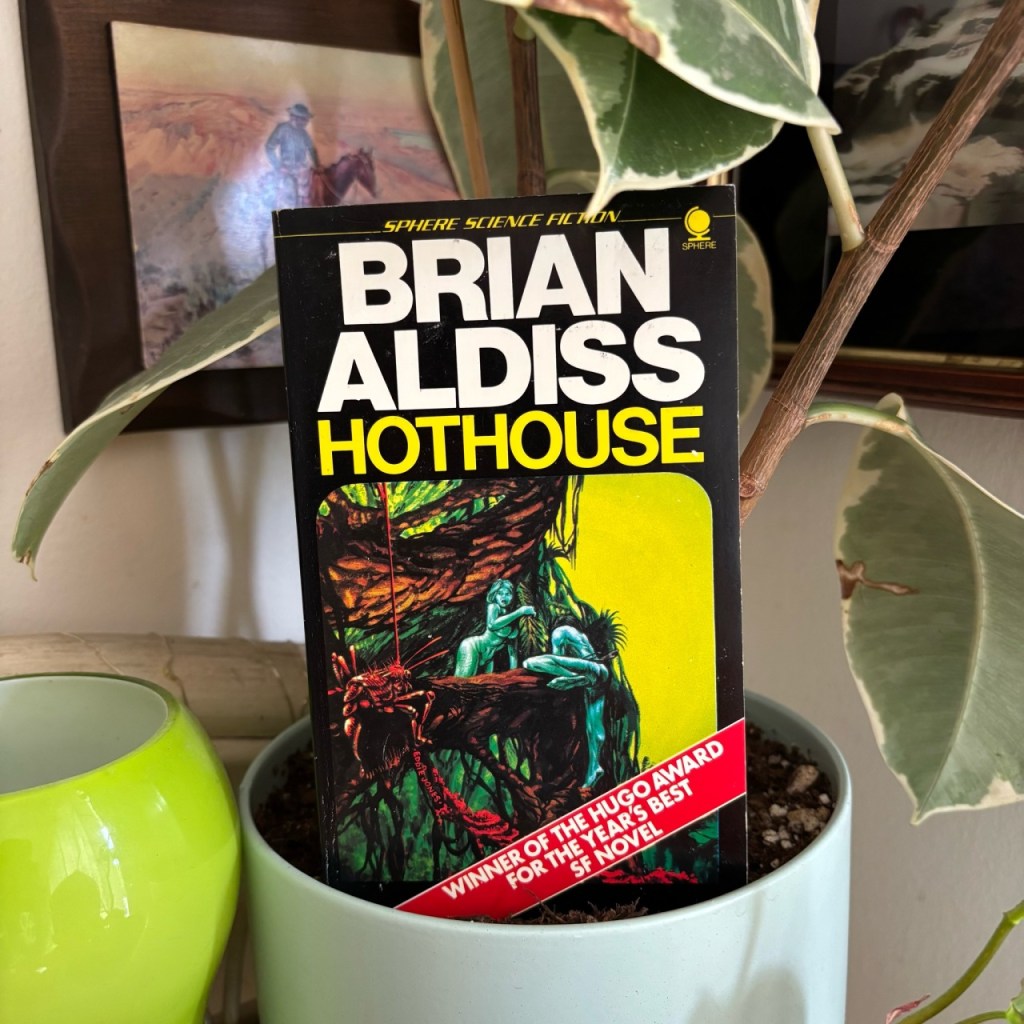
  • Book Review: Hothouse by Brian Aldiss (1962)

    🌕🌕🌕🌕🌑

    Hothouse is such an awesome, silly book. Seriously. A story about a world that stopped spinning, where one side is bathed in perpetual heat and the other in perpetual dark; where the light side of the globe is covered in dense jungle, brimming with sentient plant life that has evolved to mimic animals in order to better compete for resources; where gigantic spider-like creatures called Traversers have literally spun webs to the moon; where green-skinned humans live in small matriarchal tribes in the branches of a continent-encompassing banyan tree, and those taken to the moon by Traversers grow wings from the space radiation and then fly back to Earth to capture regular human babies in order to bolster their mutated tribe. I have not even begun to scratch the surface of the biodiversity that Hothouse has to offer.

    (more…)
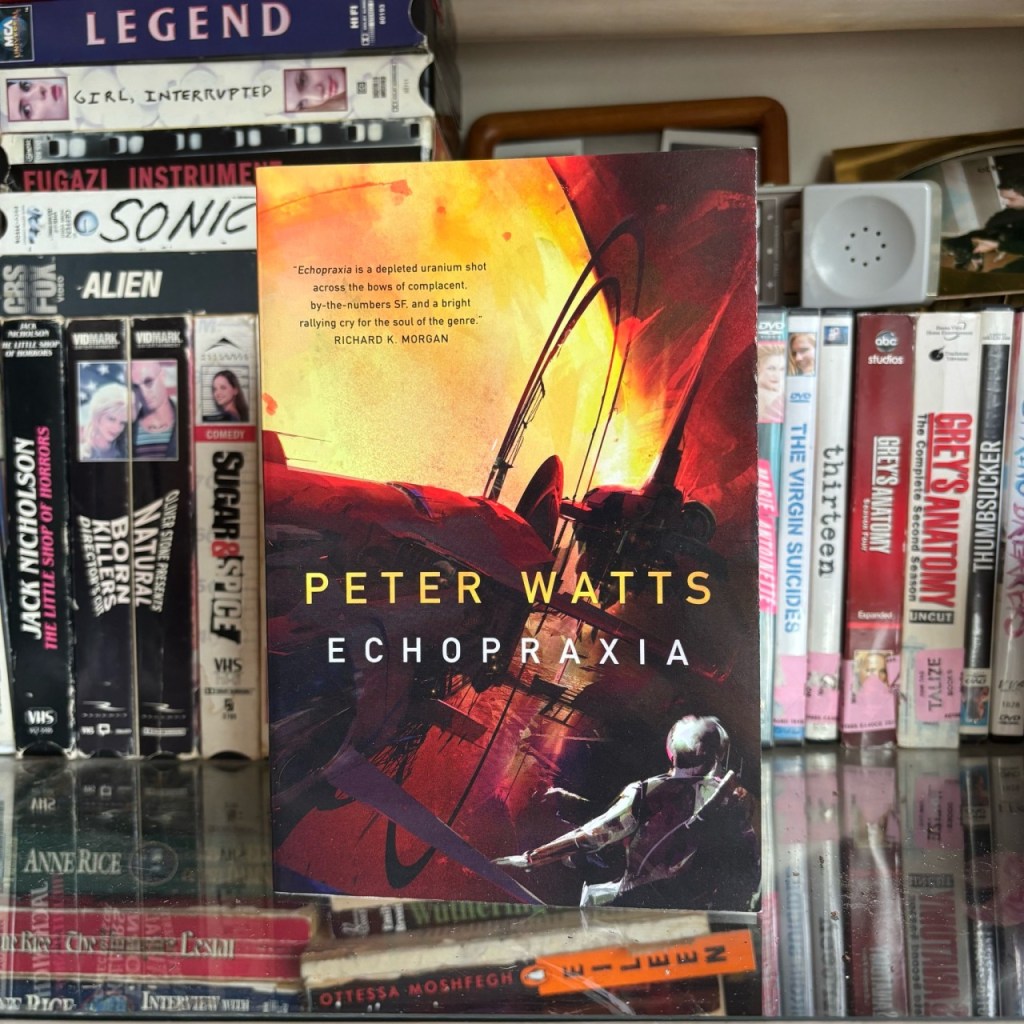
  • Book Review: Echopraxia by Peter Watts (2014)

    🌕🌕🌕🌕🌑

    Peter Watts left such a strong impression on me with Blindsight that, despite having a much more muddled reputation, I couldn’t resist picking up Echopraxia right away. It is true what they say: Echopraxia is not quite as good as Blindsight—it is an even more convoluted and spatially disorienting read that doesn’t yield enough enlightenment to justify its pitfalls—but there is still something incredibly sticky about it that I can’t wrench from my mind.

    (more…)
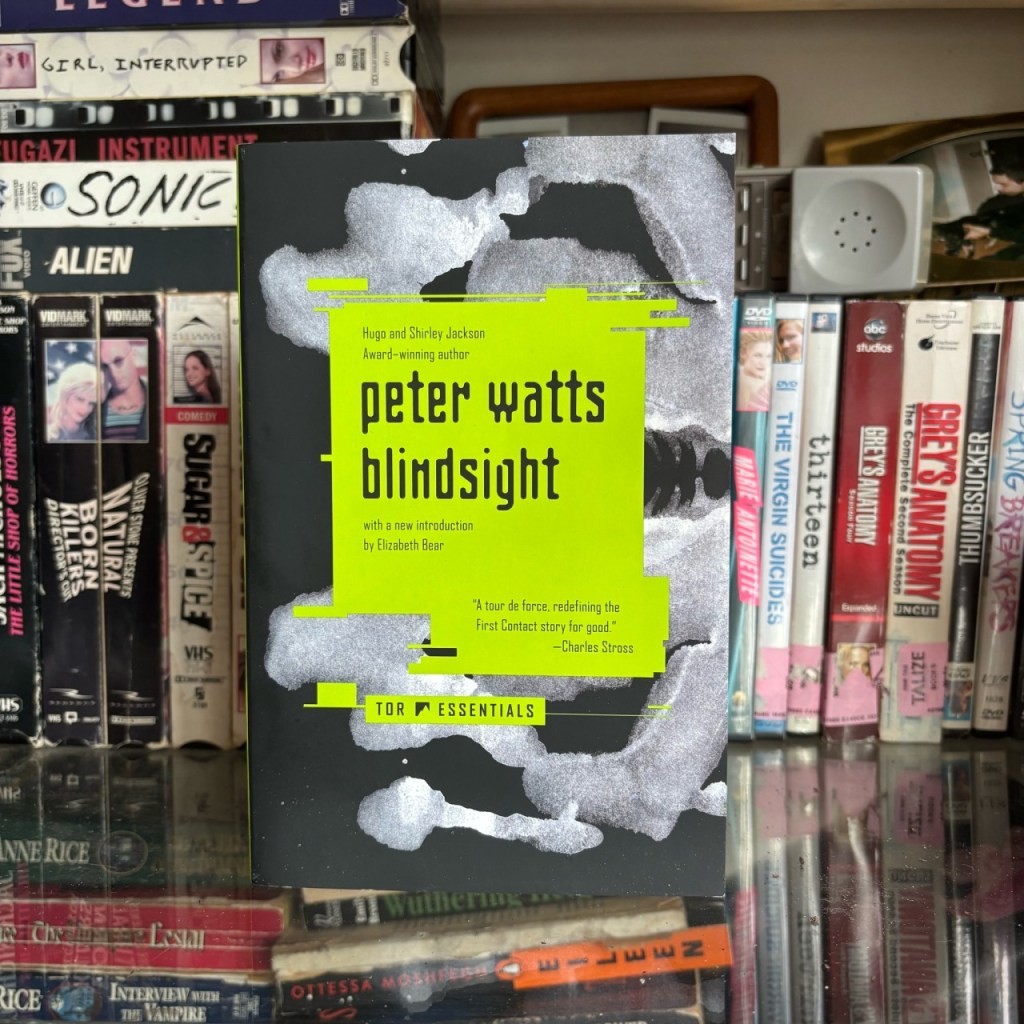
  • Book Review: Blindsight by Peter Watts (2006)

    🌕🌕🌕🌕🌗

    I put this one off for too long. And for good reason. Blindsight has been touted as one of the hardest-to-parse science fiction novels ever, tackling a plethora of ideas, both technological and philosophical, with a cast of characters who could easily be described as psychopathic and/or insane, and a narrative hook centered around the idea of intelligence and consciousness. It’s every bit as harrowing as it sounds, but thank god Peter Watts had enough rebellious whimsy in him to at least make it fun and put a scientifically plausible vampire in the story. No, really—Sarasti brought just the right amount of fantasy to break the surface tension in Watts’ lofty psychological stronghold.

    (more…)
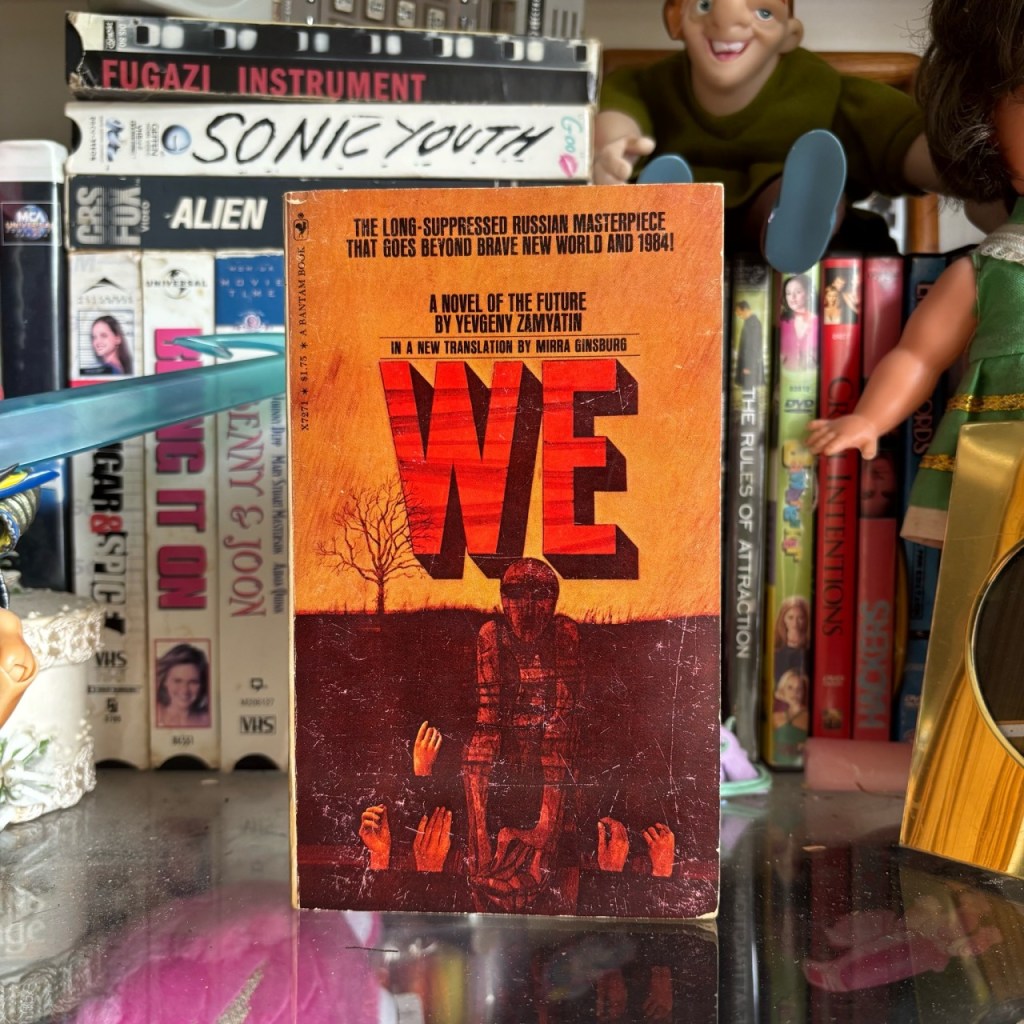
  • Book Review: We by Yevgeny Zamyatin (1924)

    🌕🌕🌕🌕🌕

    We is a dystopian novel that takes place after the Great 200 Year War has utterly destroyed the world and fractured mankind, giving way for totalitarian governments to seize control of populations like a plague. Our protagonist, D-503, lives in the One State. A giant city of millions—walled off from the barbarism of nature—where everything is made of transparent glass, every hour of the day is mandated, and individuality of the citizen is the biggest threat to the status quo. The very freedom of thought is suppressed, critics of the state are lynched, and election day is a parodial ceremony in which every citizen lines up to unanimously vote for and celebrate the only candidate on the bill—the authoritarian ruler ironically referred to as the Benefactor.

    (more…)
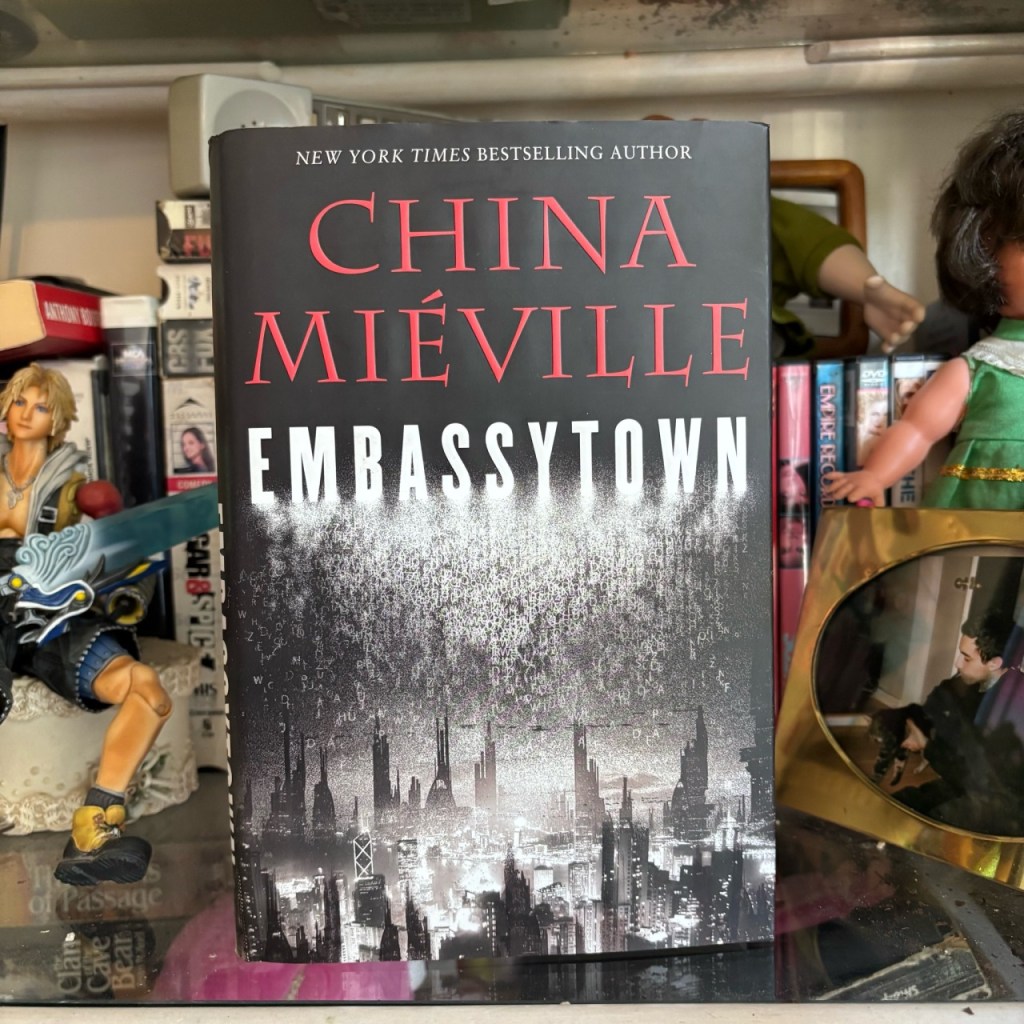
  • Book Review: Embassytown by China Miéville (2011)

    🌕🌕🌕🌗🌑

    I don’t think I’ve ever been more conflicted about a book in my life. Torn between 3 or 4 stars, but I’ll leave it at 4 while I huff my copium. I could sum up this whole review with a GIF of someone crossing their arms and saying “I’m not mad, I’m just disappointed”. This is not a bad book, it just could have been so much better. It didn’t live up to its full potential because the plot doesn’t do justice to the world building, and that is why I am sentencing you to garbage duty for the rest of the week, son.

    (more…)
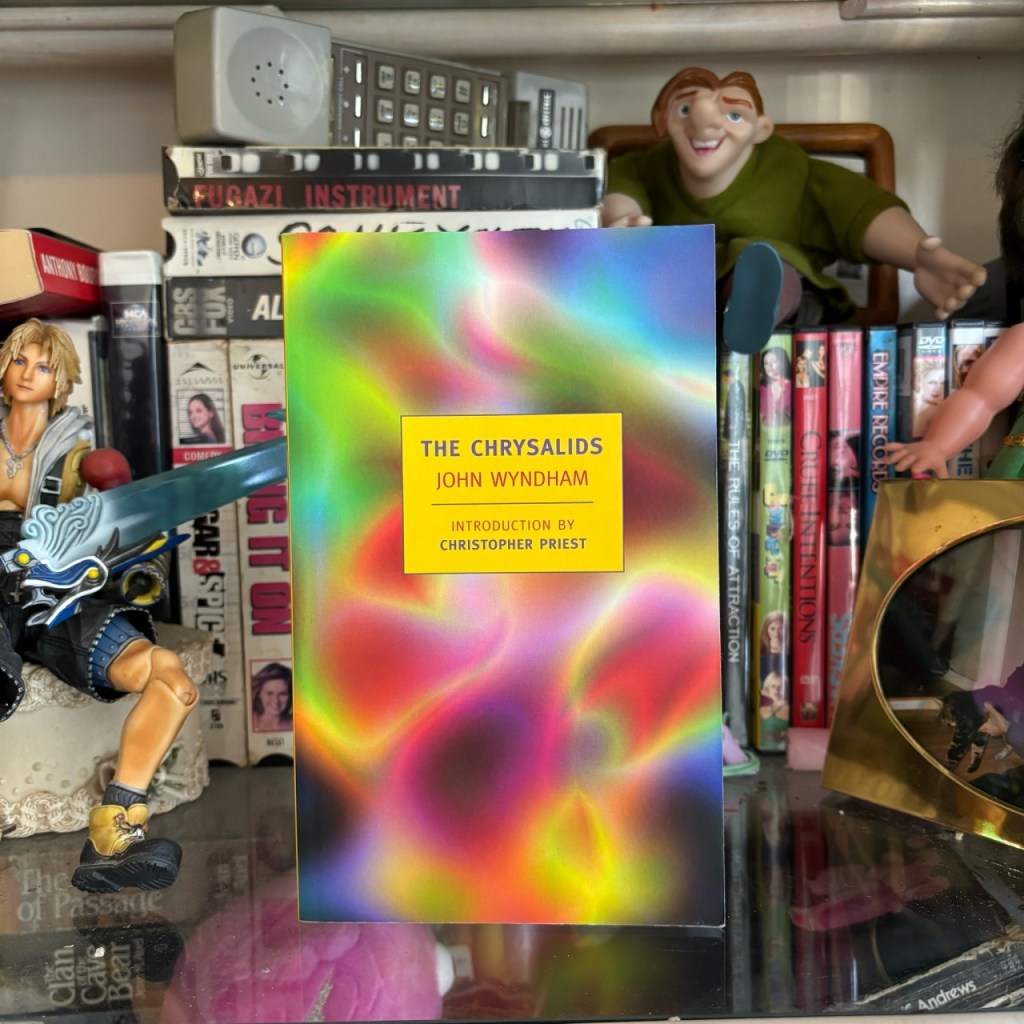
  • Book Review: The Chrysalids by John Wyndham (1955)

    🌕🌕🌕🌑🌑

    Quick-fire review because I’ve read two other books since finishing this one and my memory is getting hazy. I had multiple people tell me they read this in high school for English class, but apparently my curriculum missed the memo. Really glad to have read it now, though (I mean, it’s not like I could say no to this pretty NYRB cover).

    (more…)
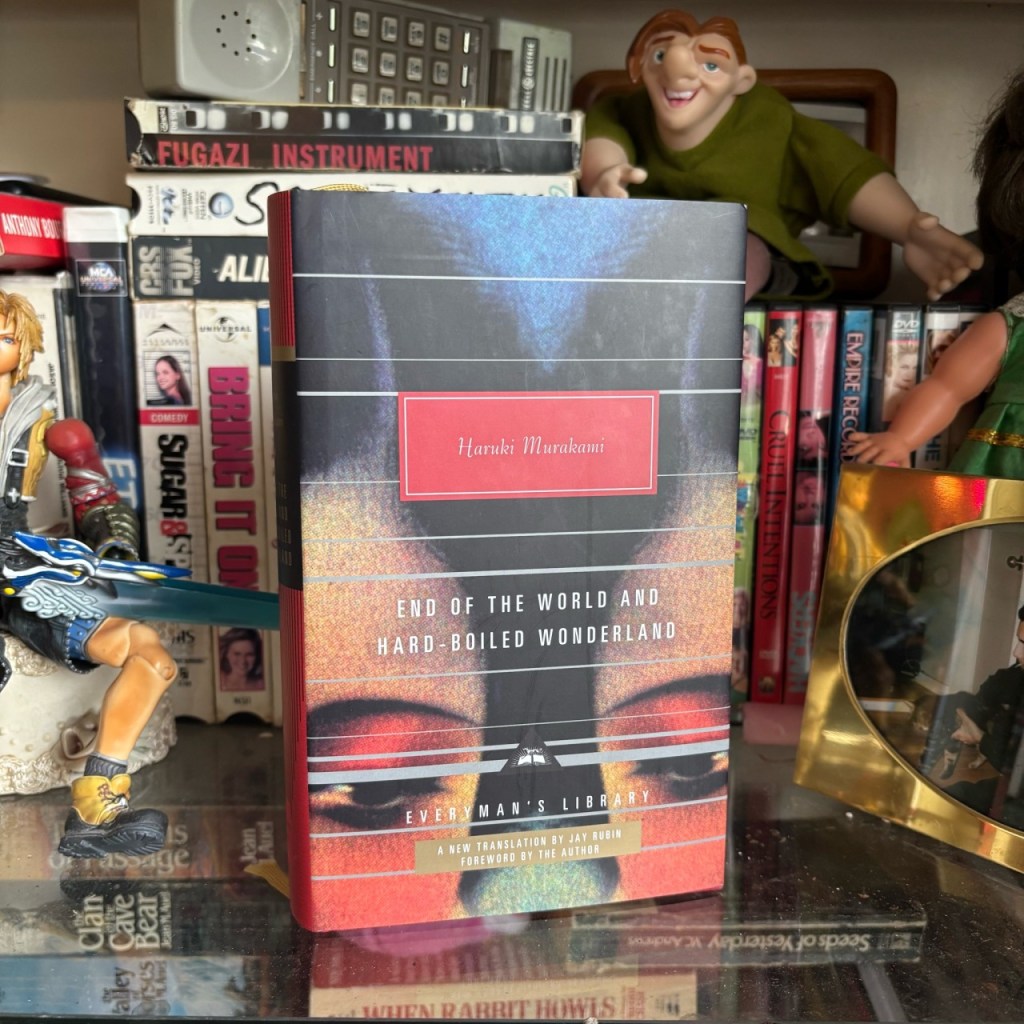
  • Book Review: End of the World and Hard-Boiled Wonderland by Haruki Murakami (1985)

    🌕🌕🌕🌗🌑

    My first Murakami. Was not disappointed. I would consider this to be a peak comfort novel: flowy, colorful, fun—and not challenging in the slightest (which I am discovering is not always a bad thing). The reader is very much put in the passenger seat, and Murakami delivers on providing a vivid wonderland and a fun cast of characters to engage with. The way Murakami describes the world is so vivid, it doesn’t even bother me that the larger political powers at play in this reimagining of Japan are portrayed as these overblown, cartoonish, shadow puppet-type caricatures. It’s very much a “the big scary bad guys” versus “the good guys” type of deal, but it just works for the story, which ends up being far more ambiguous and interesting than you might expect. The tone is kept fairly light and comedic even when the action gets intense, but this doesn’t stop the philosophical nature of the book from losing its impact. Our first-person narrator—the classic “likeable but slightly problematic aloof guy turned hero” who sort of stumbles into importance on accident—thankfully has a good sense of humour and a lot of insightful observations to express.

    (more…)

Something went wrong. Please refresh the page and/or try again.