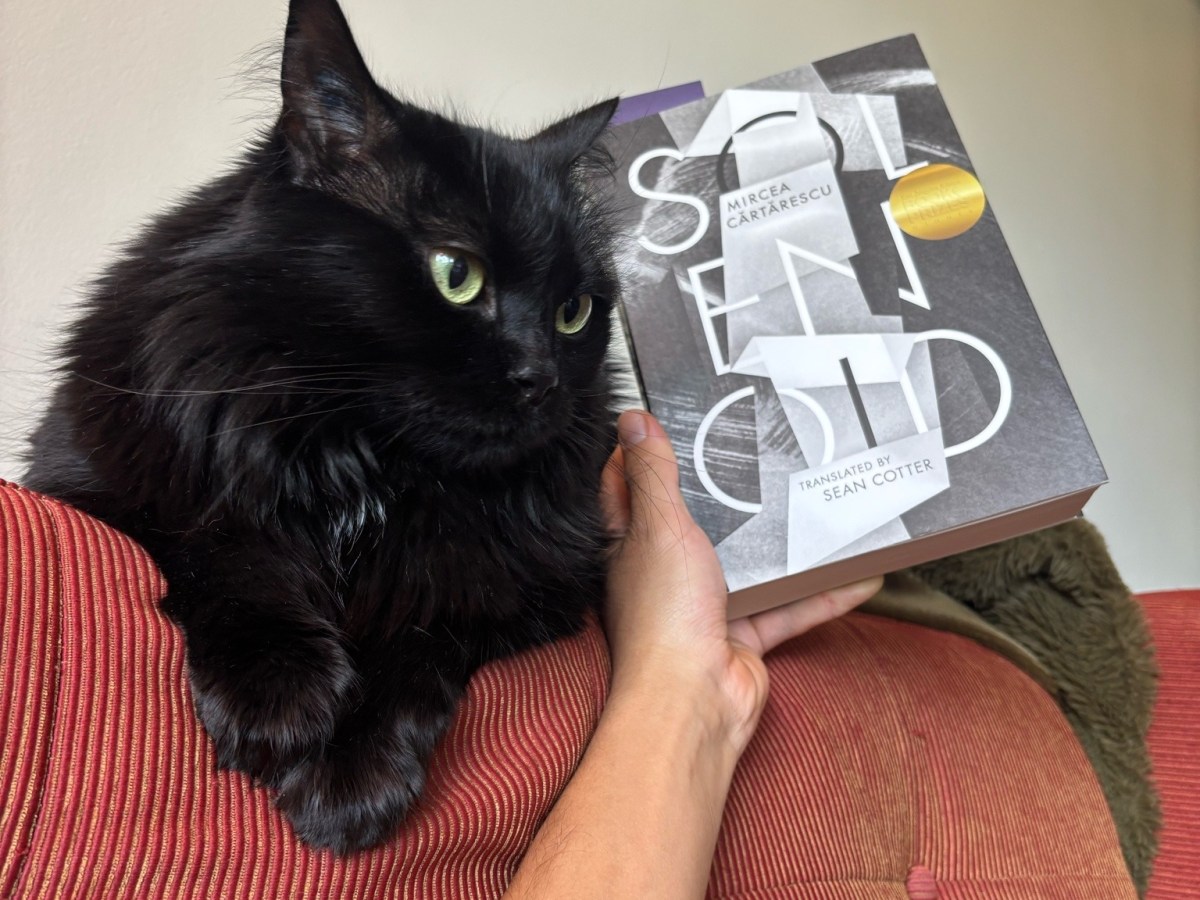
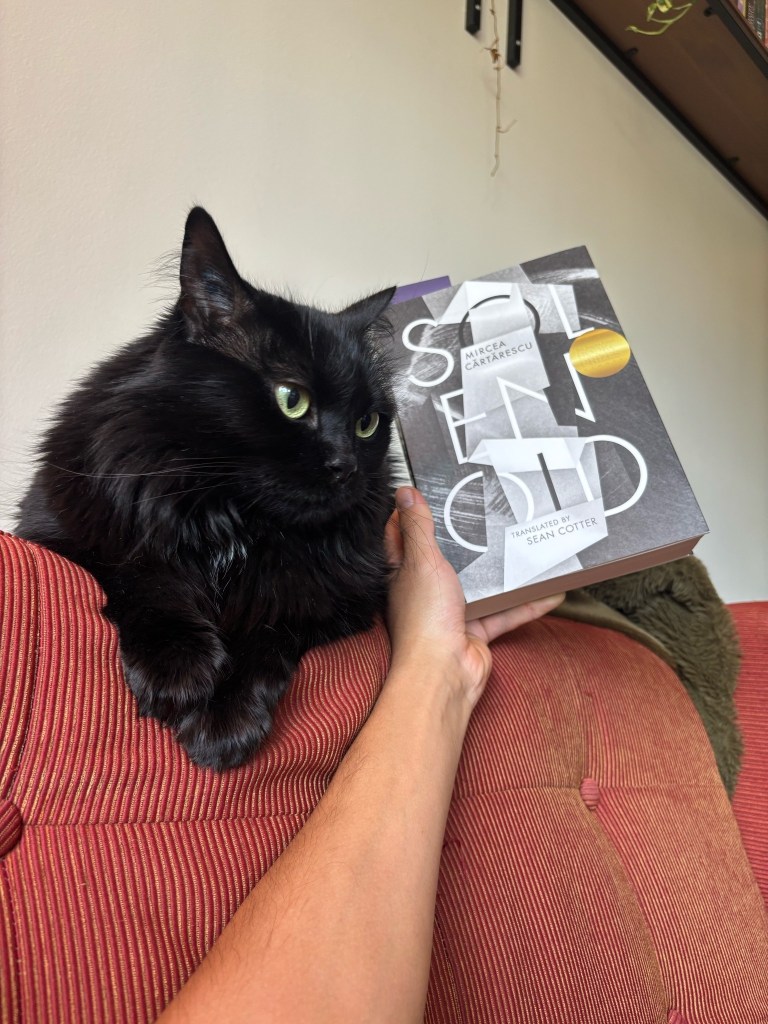
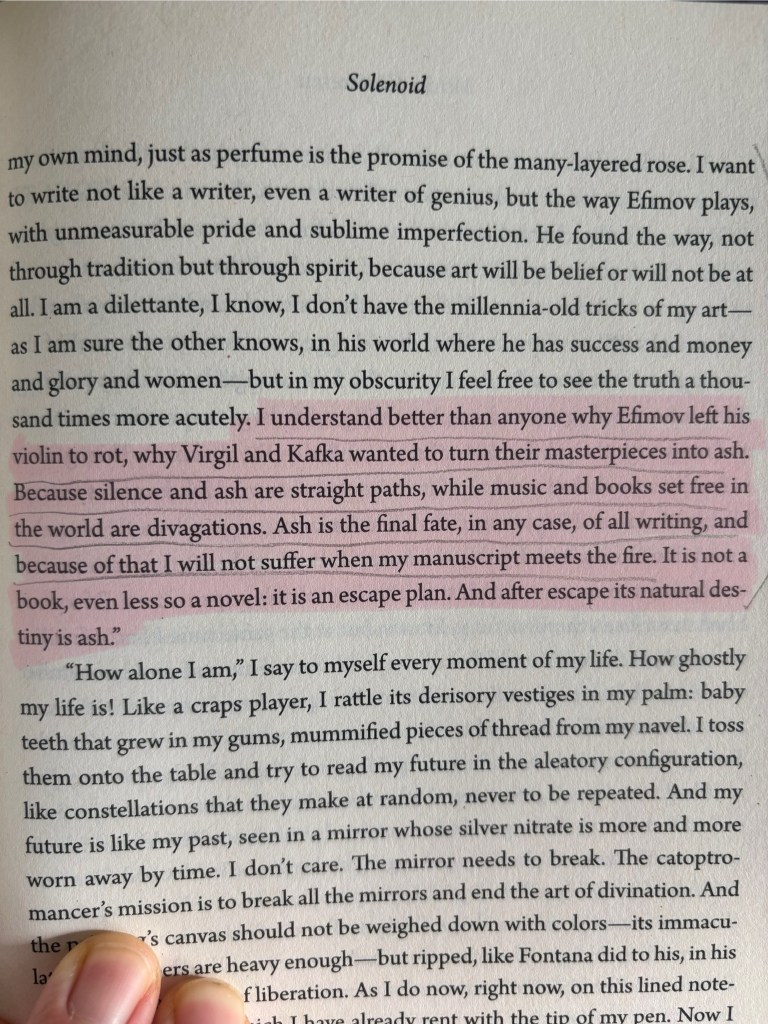
Solenoid may be touted as a labyrinthine tome, but it is by no means a difficult read. It is a 672-page treatise on the horror of existence and the cryptographic symbols that guide our fate, but Sean Cotter’s translation is beautiful; the prose flows like melted butter; Cărtărescu leads us from thought to thought in our narrator’s miserable life with a smooth and measured pace that is always easy to follow. Even when I took a week or two off from reading this book, I found myself quickly swept away by its crystalline stream of language and lulled into its opiate warmth.
Solenoid’s ease of access is part of what makes it such a captivating work, though; it creates a cool dichotomy between the subject matter (which is often grotesque and constantly working to destabilize our reality) and the serene language that is used to describe it. The decomposing, war-torn city of Bucharest is alive and animated by a Lovecraftian horror beyond our comprehension, but it is like in a dream, where we waltz through the murmuring organs of a supranatural deity without suspicion, as if life has always been this way. The city feeds on the fear of its inhabitants through a system of underground pipes and tunnels, but the air is quiet, the water is still, and our reflection stares back at us, shell-shocked, like an alien from another plane of existence, equally disturbed to see us as we are to see them.
The story itself is largely plotless, following a failed writer as he meanders through his cratered city, the infinite rooms of his boat-shaped house, the dilapidated school where he works with monstrous children, and the chambers of his own mind in an attempt to cope with the reality of his life, and I’ll be honest, there were some parts that dragged a bit too much for my liking. I didn’t love reading through his dream journals for the same reason I don’t love listening to people recount their dreams in real life, but the intrigue picked up in part three, and I found part four concluded the novel in a surprisingly powerful and life-affirming way. I was GLUED to those last fifty pages.
My favourite aspect of the book, however, is how much it completely surrenders itself to pure fantasy. Our narrator makes absolutely no delineation between reality and his imagination, and whether he truly lives in an alien world or is just suffering from escapist delusions is entirely up to the reader to decide. As a fledgling writer, I found this very inspiring, like it gave me permission to allow my perceptions to become reality and concrete evidence that it could work. I could actually see this novel appealing heavily to fans of genre fiction. Even the narrator mentions how instrumental science fantasy magazines were to his development, and it felt like Cărtărescu was drawing a direct line from Virgil to Dante to Kafka to Borges to the likes of Gene Wolfe, so it is no surprise that it appealed so much to me.
But should you read Solenoid? It depends on how important plot, character dynamics, and realism are to you. If you want to swim around in a primordial stew of alien symbology and existential musings for almost 700 pages as some schizophrenic weirdo tries to sort out his life, I’d say it’s worth it. If that doesn’t sound like a good time to you, I don’t blame you.
He chucked his gas mask onto his bed and circled the room, wiping at clogged pores with dirty hands, blinking the dust out of his eyes. He walked to the sink, one hand steadying himself against the counter top, and cranked the faucet handle. It dribbled pathetically, then spurt a clod of black and settled into a piteous rivulet, hardly enough pressure to remove a speck of dirt from his fingers. He hunched forward and twisted his neck to put his mouth under the tap, pulling slurps of gritty water across his tongue. His dead ends dripped into the pestilential dish water curdling at the bottom of the basin and he didn’t care. He straightened up, twisted his spine, pop pop pop, and looked out of the window.
	Whose idea was it to install windows in this place? You can’t see anything. The smog obscures it all, even the neighbouring barracks appear half clung to their corporeality, saved only by the electric glow of the central server. It was a sick joke. He knew that beyond the smog, over the gates of the compound, was a body of water, and on its opposite shoreline, a mountain, although the state of the trees was unknown, they could have been scorched a long time ago, leaving the mountain a bald head of needles. He gagged and spat into the sink. Black again. He kicked off his boots and sat down on the bed, placed his head in his hands and ran his fingers through the grime in his hair.
	People used to find themselves in nature. He knew that. A bootleg of Thoreau’s Walden sat under his mattress, dog eared and covered in soot. There hadn't been a contraband sweep in days, and he wondered why. The sweepers were more concerned with tools of sabotage, but still they would laugh at the book's futility as they tossed it in their black bag. At least two shovelers had been disappeared last month. Something about old rags and bottles of whisky.
	Was the smog really getting worse? He was so used to the smell of burnt electrodes in the air that he stopped caring. His job was to feed the thing, not maintain it, they had drones for that, but he couldn’t shake the feeling that something was off—a lack of presence in the command chain, gears that seemed to groan under pressure, as if they hadn’t been lubricated or adequately cooled. The fumes were making him feel sicker than ever, he was sure, but that was normal, expected even. If you weren’t sick, you weren’t living. He peeled off his jumpsuit and fell back into the pitted temperfoam, and there he dreamt of a great fire.
	In his sleep he could hear the sirens blaring. He felt the rattle of the towers working themselves into a frenzy, sending billows of black smoke into the air, overloading drone flightpaths, causing them to drop dead out of the sky, much like the birds did before he was born (he knew about that too, that there used to be music in the trees). He felt the earth split open beneath the central structure and watched, from outside his body, as it sunk into the ground.

He never woke up again.

	—XC-380 is offline, a slow leak in the cooling system, catastrophic failure, the whole compound is a pile of ash, the man with the gold ring growled, morose as he stamped out a cigarette.
	—How was it not caught earlier? The other man asked, bringing his fist down on the table, his face swollen and red.
	—Forensics suspects a mole, some ideologue who found his way into upper management, altered the task priority of the repair drones.
	—But the profiler... he should have been flagged before he even stepped foot in the compound.
	—It happens. Listen, we still have hundreds of camps online, this is nothing, a momentary blip in compute. Contractors are already on their way to assess the damage and start work on a new structure.
	—Good, good.
	Outside their conference room, the waves lapped gently on the shore. A seagull cried. It was a warm day in Greenland.
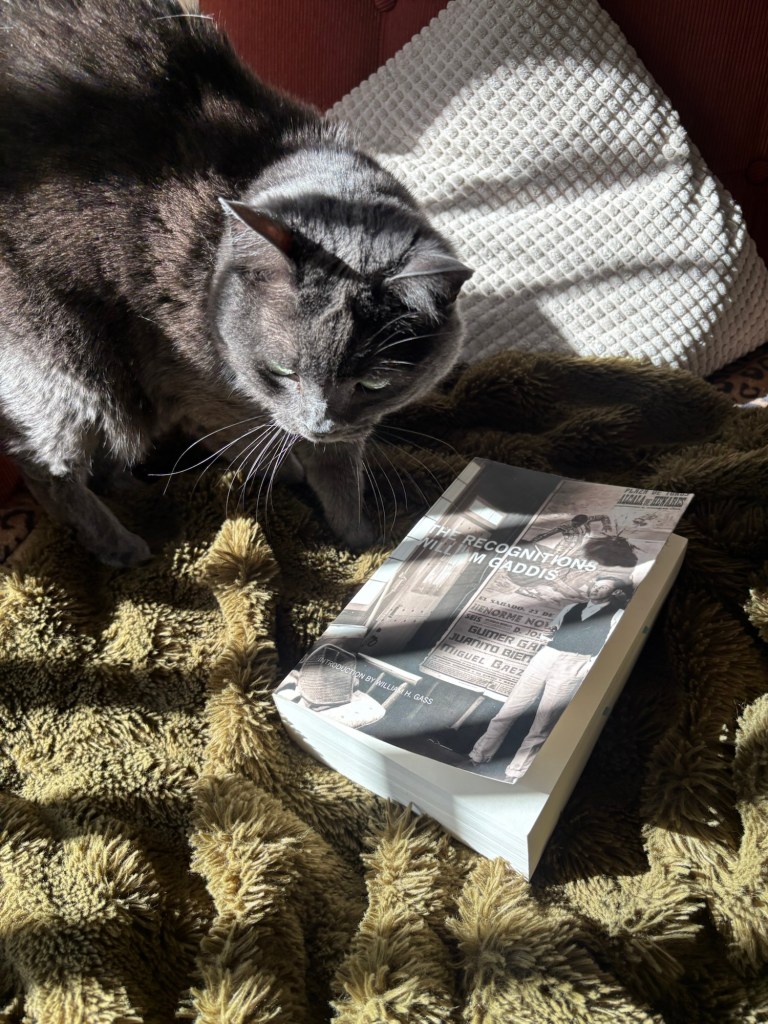
While reading this book alongside my good friend Dallan, we got talking about a scene where Gaddis is satirizing men who read self-help books, musing that they seek “the self which had ceased to exist the day they stopped seeking it alone.” Now, I’ve never been a fan of self-help, so I was here for the comedy, but it got me thinking. I asked Dallan, “Is it even possible to seek the self alone? Are we not always modelling ourselves after something? If not self-help books, then our parents and peers, characters we see on TV and read in books? What is the ‘self’ then?”
A few days later, I was at band practice, bass guitar in my hands. We had just finished playing a song, and I was staring into the far corner of the room, spacing out, as I do, and I was suddenly overcome by a feeling of falsity in my own skin. I could see my own personality as a construct of layers, a collection of defense mechanisms and mirror images, habits and tics that I could peel off one by one like the layers of a papier-mâché doll—layers that could be traced back to their original creator, who inhereted them from someone else, ad nauseam. It might be the first time I experienced something I could only describe as ego death. I felt, momentarily, like underneath my identity was a tabula rasa, a blank slate that I could reconstruct in any way that I desired. It was freeing, honestly, but it didn’t last long; my brain quickly resumed its natural processes, keeping me safe with a sense of self that allows me to move through the world without falling apart.
The Recognitions? Oh yeah, it’s a good book. Very deserving of its reputation. It is a strange beast, murky and virtuosic, full of hidden symbols, but also funny, with strong characterization and incredible dialogue. I was surprised by how much of it reads like a comedy of errors, yet other parts of it had me doubling over, scratching my head to understand the who, what, and why of it all. I guess in the world of art forgery it is common to damage the product to make it look more genuine, as if it had been weathered by centuries, and it felt like that is what Gaddis was doing with his own book, going back and scratching out faces, obscuring identities, smudging the ink so that the truth becomes a matter of interpretation. I loved that about it, even though it was challenging. I have to thank Dallan for helping me understand some scenes that I wildly misinterpreted, but I’m glad Gaddis got what he wanted out of me: a total dissolution of my reality.
There are scenes from this book that will haunt me forever, and multiple layers of metaphor and reference that will take multiple rereads for me to understand, but for now, I just want to appreciate how this book gave me a new perspective on myself, and what I am made of. I feel like I am a little bit closer to understanding what Borges meant when he said “I am all other men, any man is all men.”
They used to have rocket ships in the Playdium, I swear, or at least a pair of polyethylene moon boots and a team of holographic engineers running hamster wheels to generate an interstellar heaven, like Sagan’s beach at the end of Contact but instead of dead relatives you could have one more chance to shove a barrel up Donkey Kong’s ass. The point is, I’m not making any of this up, the arcade was another world, a metaphysical realm with poltergeists and cable rat kings piled in dark corners like the bowels of an electric demiurge grumbling with popcorn kernels and the sticky fingerprints of dopamine angels juiced off of dinosaur guts and digital TNT. There were laser tag arenas and trampolines and a funnel of nine concentric ball pits terminating in a pile of tiny collarbones from all the little late bloomers who conceded to the cannonballs of their over-developed cousins while their parents guzzled Diet Pepsi over crossword puzzles at the concession stand, arguing about the speculative value of vertical space, Oh God, it was a Darwinian paradise—vaporized by corrosive sweat and the rising cost of Red 40. What is left now but a row of slot machines and an old man where a coin car used to be, sleeping with his sleeve rolled up, snake eyes tied to an IV drip while kids pound binaural beats on rhythm mats with the arrows worn out, the friction of time serving no further function but up, down, left, right? It’s better in my memory, but when I try to reconstruct the image each floor collapses into a single slab of concrete and all I see is Snakebite Boy and Hendrix Girl in the underground parking lot popping parachutes with water cups from Starbucks, ascending escalator clouds into the ecstasy of commerce with dilated pupils and animatronic jaws screaming Help Me God, I stole a leather belt from Abercrombie and the guilt still haunts me, but kleptomania is a virtue when you’re eighteen and fucked out of your mind in Babylon. We were lucky just to make it out alive, to grow up and look back with love and not horror, yet the theatre, the food court, the quiet offices on the forth floor, the labyrinth of service corridors that swallowed us whole, they became a husk, mere tunnels for the horde of silent shoppers to slither through like the Conqueror Worm in his palace of dirt, blind but content with the sensation of progress. Metropolis had lost its promise, but the arcade! the arcade was perfect.
The boys are smoking on the balcony again, emblazoned against a blue sky, hunched under the sign of the shoemaker’s boot, adorned with a seagull, screaming for want of the sea, and a fire escape runs down the wall beside them, terminating in a twelve-foot drop into a dusty lot that holds a shipping container and a severed dragon’s head and another fully assembled mechanical dragon that breathes fire and shoots crimson beams from its eyes and two giant insect warriors who cast their rusted skeleton shadows onto the blue brick wall at night, their tattered capes billowing in the spotlight and their spears raised in a silent cry, but not now, because the sun is shining; it’s glinting off of the astronaut’s visor that sits above the recycling depot next door—he is trapped in a cryogenic stupor with a sun-bleached flag that does not flap. he has been like that for years—and now three trails of smoke are rising into the air; I can smell them from down here, across the lane in my box factory. sometimes they smoke cigarettes, sometimes something else, but they are always up there, smoking, hanging out, and it’s hard to imagine what goes on inside their blue brick building, the gated lot is secured tight with padlocks and chains and barbed wire loops with two-inch fangs, but all it seems to house is a few animatronic statues and a giant aluminum phallus, which an old man in a fisherman’s toque sometimes carts off on a flatbed truck for months at a time to god knows where, maybe a circus or a monastery, all I know is that sometimes I forget it exists until all of a sudden it is back and I catch it in my periphery, taunting me with its hot pink tip peeking over the top of the metal gate, but I try to ignore it and focus on my work, making boxes. sometimes I put things in them and ship them out; sometimes I assemble them into vacant cubes and run them over with the forklift, it doesn’t really matter what I do as long as I look busy, and I’d be lying if I said the meaninglessness of my work doesn’t exacerbate the fatigue I feel from trying to keep my body primed for the task, to stay healthy, to resist atrophy at every turn, to grow bigger and harder and not shrink into a puddle of skin, to withstand more and more pressure, I scarf down bitter greens despite the lack of empirical evidence that they make me any happier; I do it because I have to be the best box maker in the box factory, this is the only sense of meaning I can make in my meagre life, I assemble my boxes and I listen to the boys on the balcony, smoking cigarettes and spitting globs of saliva from their pedestal into the lair of metallic beasts below them. I listen to their crude jokes, I listen to their spit splashing on the rusted skulls of the insect men in a metronomic rhythm that keeps me on pace with my tasks. sometimes there is only one of them up there, smoking alone in the rain, a solitary trail of smoke extending from his fingertips, and even then I wish I were him, and not me, down here, across the lane in my box factory. I want to smoke even though I do not smoke, I want to crack jokes even though I have never laughed, I want to sit up there, free from the genetic splinter that causes me to limp through life, the talon of death forever embedded in my heel, the molten rod that prods me to behave and eat right and exercise and get to sleep on time as if somehow a healthy habit can stop the train from severing my limbs. but I assemble my boxes, and I inhale the scent of the smoke from the boys on the balcony, and I wonder why I care.
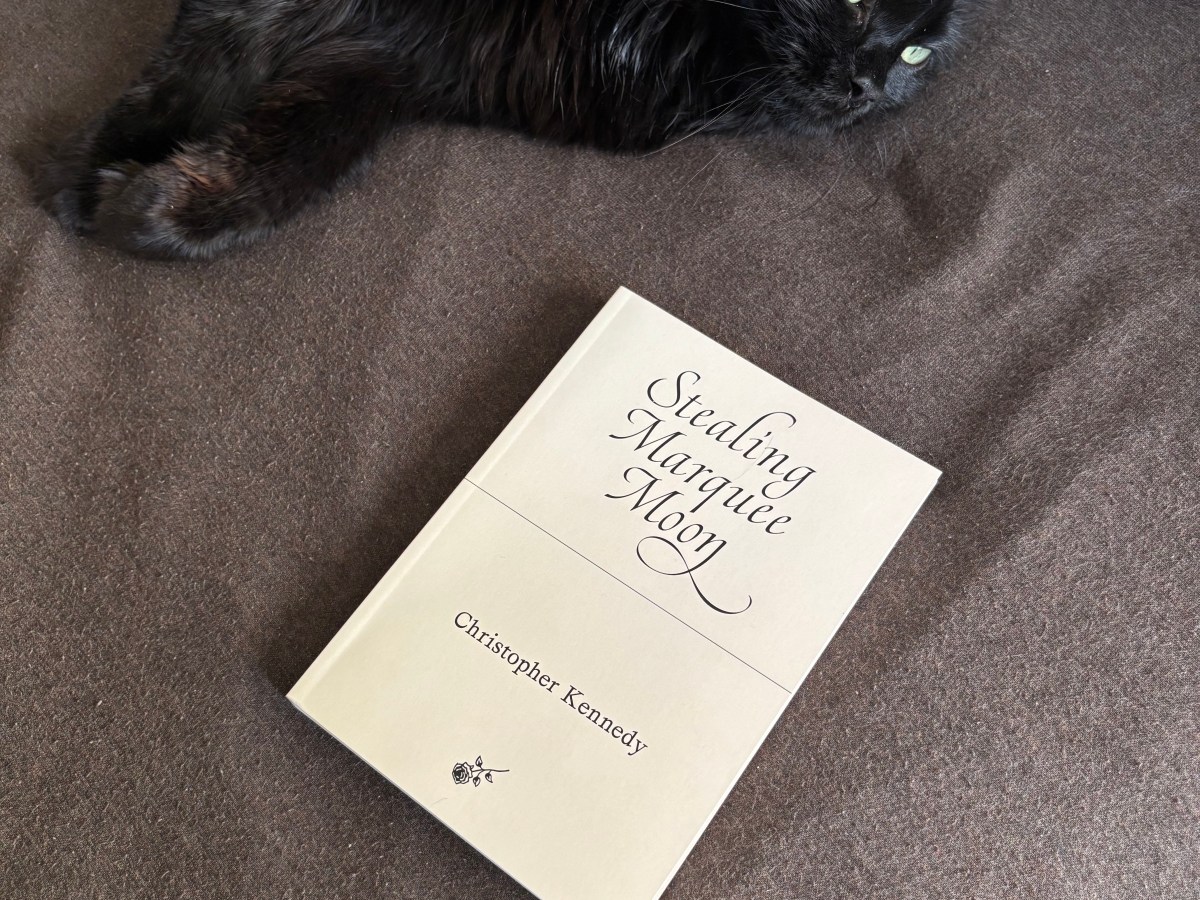
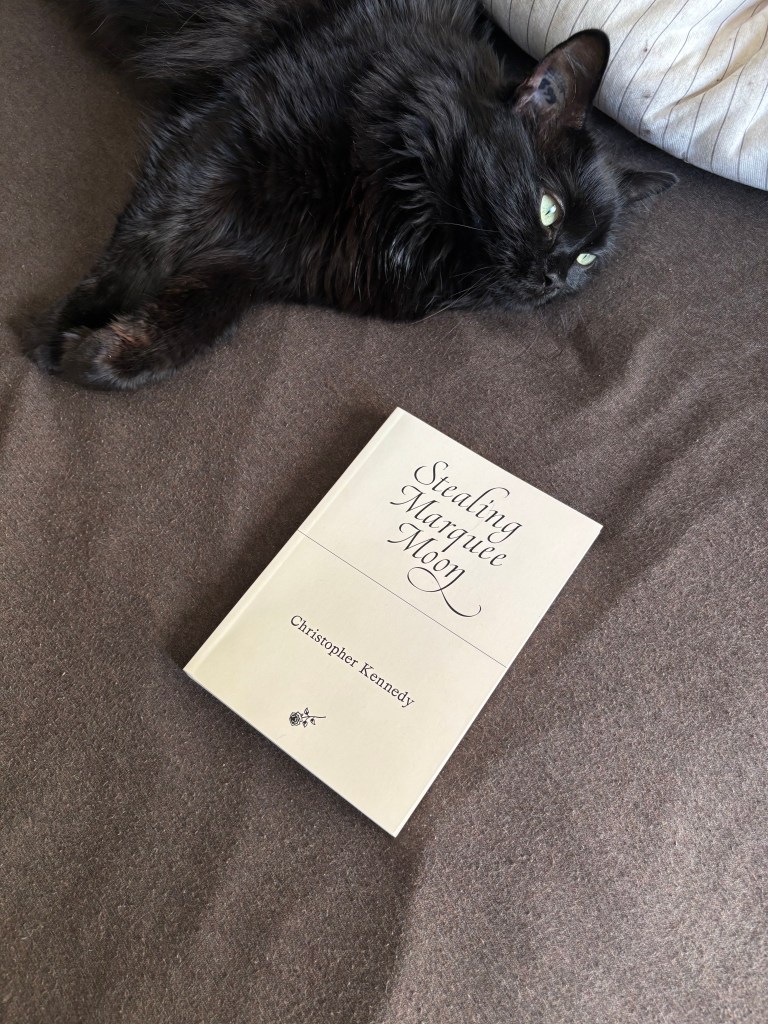
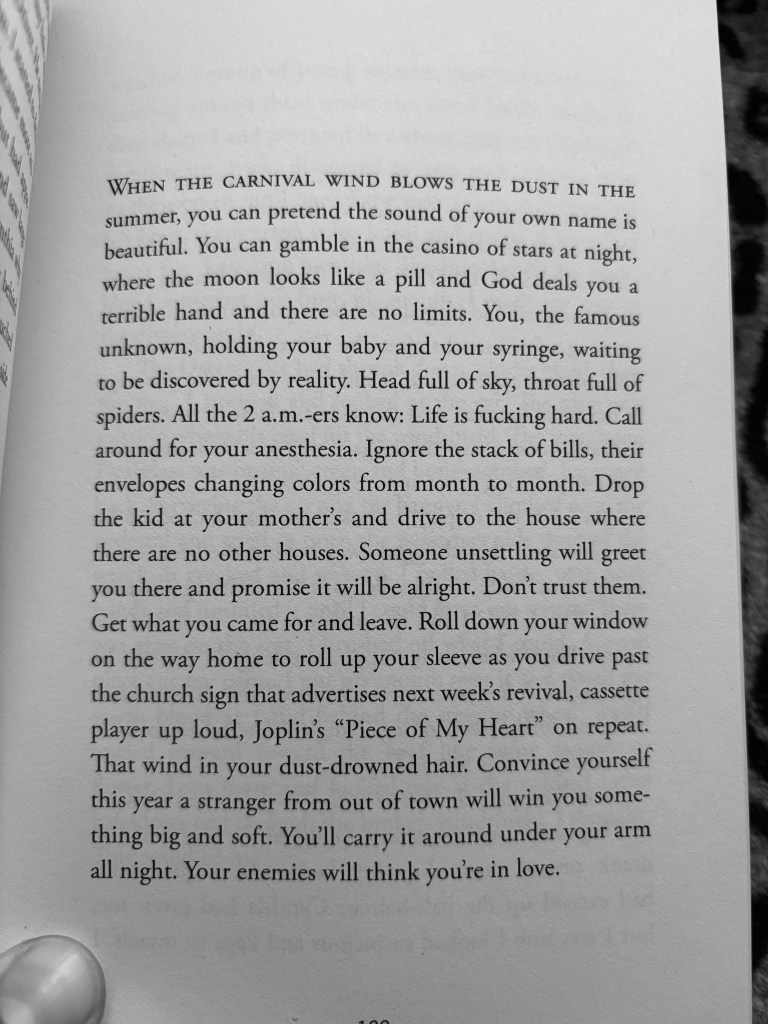
I found Stealing Marquee Moon, the debut novel from Christopher Kennedy, to be quite reminiscent of Harmony Korine’s Gummo, or the memoirs of Scott McClanahan, but simultaneously quieter and more bizarre. There are drugs and debauchery abound, but Kennedy distills these memories into brisk, dreamlike scenarios that feel both distant and fleeting. Not a lot of time is spent on building the interiority or development of characters; rather, they are given impersonal nicknames and stand as open molds, people who could be anybody, really, and maybe they are everybody. I’m sure you know someone just like The Driver from your own youth, a fucked up and circumstantial friend who you still miss, and you probably have your own Butterfly Girl, too. I know I have mine. Kennedy recounts these memories of his life with an aloof detachment, but there is clearly something he is reaching for by bringing these moments back to life. At one point he asks bluntly, “Why conjure the past? What could be accomplished by trying to explain the things that make us and haunt us?” Later he skips over two decades of odd jobs, going to school, getting married and divorced, leaving the reader with a simple “What is there to say?” It feels to me like Kennedy is grappling with the acknowledgment that sometimes life isn’t profound. Sometimes a bunch of fucked up shit just happens, and then you die, and sometimes you numb yourself to life so thoroughly that you don’t even realize how much those fucked up events shape you until you try to reconstruct them from a bird’s-eye view. Sebald once wrote that memory makes one’s head heavy and giddy, as if one were not looking back down the receding perspectives of time but rather down on the earth from a great height, and I think Stealing Marquee Moon captures that essence delightfully by embracing the distortion of time and allowing the resulting images to speak for themselves instead of trying to fabricate a meaningful story arc or moral.
If I have one recommendation for the potential reader, it is to read this book during the quiet moments of your day, perhaps in the morning with your coffee, or at the park with the grass beneath your feet, and let it sit with you. Kennedy’s strength as a poet is on full display here, and I think you’ll find a lot to enjoy with this novel despite the fact that it isn’t wrapped up with a neat bow and an explosive climax. Like I said, sometimes shit happens and then you die, but that doesn’t mean life can’t be beautiful, or at least humorous in its melancholy. I look forward to diving into some of Kennedy’s poetry now.
My first youtube video, reflecting on the 100 books milestone by going over some of the major stepping stones in my reading journey thus far, and how those books have made me view and interact with the world differently.
Finding a place to sleep for the night was always a bitch, especially under the pressure of a lowering sun, but if the last thousand miles of driving taught them anything, it was how to spot a clandestine campground. They had slept at truck stops, on remote beaches, in the brush off the side of highways, and now they were puttering around the street corners of Willits, CA, zig zagging their way toward the edge of town where the kingdom of man ended and the dominion of vagrants began. Jack spotted a dusty cattle road heading south toward the spurs of the Mendocino range and let the Subaru gravitate toward its natural element, driving past a crop of crooked estate homes with massive orbital yards and white picket fences that were caved in and stitched back together with chicken wire. Porch lights on sunken decks flickered in the fading light and eyeballs peered through the slits in window curtains as their engine rumbled by. Bobby felt a shiver crawl up his spine. The road forked in two directions and Jack kept left to maintain their orientation toward the Ridgewood Summit. Another junction presented itself, and to the right they could see a service road winding its way up into the thicket of trees. Bingo. There were no flickering porch lights now to console them with a sense of proximity to civilization, however corrupt by the influence of cartels they imagined it to be, it was just that corruption they were seeking, and they had only the broken headlights of their Subaru to guide them there.
	Corralled in tight swerves by the pitted road and the ditches that lined it, they eventually came to a padlocked yellow gate with an area just large enough to park a vehicle to the side of it. Nautical twilight was upon them now. This was as far as they could go. Past the yellow gate and through the trees, they could make out the base of an electrical tower and a clearing that looked good enough to pitch their tents.
	“Maybe we should scope it out before we settle,” Jack said, leaning into the steering wheel as his eyes scanned the clearing for signs of hostile life.
	“I don’t think we have much time for a Plan B at this point,” said Lauren, peering through the front windshield with a similarly suspicious glare, “it looks fine to me.”
	“Alright, fuck it.” Jack pulled back the e-brake and shut off the engine, “what’s the worst that can happen, some nosy local calls the cops and we get kicked out?”
	“Or we get struck by lightning,” said Bobby from the back seat, leaning forward to get a better look at the electrical tower.
	“Ah, we’ll be fine. Frankenstein turned out alright, didn’t he?” Jack paused for a moment and drummed his fingers against the dashboard. “The real question is, do we take the mushrooms now or after we set up camp?” He picked up the baggy of shrivelled grey things from the centre console and bounced an open toothed grin between Bobby and Lauren.
	Lauren laughed, “I don’t think it’ll take us that long to set up, I say we take ‘em now, that way by the time we have a fire going we’ll be cookin’.”
	“Cookin’?” Bobby raised an eyebrow at Lauren.
	“Flyin’, sailin’, whatever you wanna call it, Bob,” Lauren said as she snatched the baggy out of Jack’s hand.
	“Alright, well, I’m sticking mine in a PB and J. Those things taste like straight ass,” Jack unbuckled his seatbelt and twisted to face Bobby, “mind passing me the grocery bag, chief?”
	“I’m gonna have one too, I’m kinda hungry anyway,” Bobby said as he leaned over to dig out the peanut butter from the bag at his feet, “you want one too, Lauren?” He looked up and saw Lauren’s eyes widen at the realization that she was being addressed. She looked at Bobby and the movement of her jaw answered his question.
	“Ahhh.” She stuck out her tongue. “I’m good.”
	“You’re crazy,” Bobby said, looking down again to fish a butter knife out of the pile of trash that had accumulated next to him.
	“Used to it,” she replied, “You don’t get a lot of food to waste when you’re planting. Nor water, for that matter. God, the amount of dry caps I swallowed.”
	Jack chuckled, clearly spurred by a memory of their time up north, getting paid twenty cents per tree and partying with hippy degenerates until dawn.
	“Well, I’m gonna start unpacking our shit, you guys take your time with your little peebee and jays,” Lauren swung open the passenger door, letting a draft of cool mountain air sweep into the vehicle.
	The sudden smell of pine and geosmin made Bobby acutely aware of his isolation, but he couldn’t help feeling a sense of comfort at the sound of gravel crunching under Lauren’s boots as she walked, whistling, to the back of the vehicle. If he closed his eyes he could imagine her as a chickadee, and himself back in time, waking in the hot orange glow of a nylon tent to the clicking of a propane stove. But he didn’t close his eyes. He was too busy thinking about park rangers, bears, and skin walkers. Jack and Bobby finished making their sandwiches and scarfed them down happily, only grimacing slightly at the bitter taste of psilocybin commingling with the sweetness of strawberry jam.
* * *
Lauren and Jack had their tent set up and were already out gathering stones for a fire pit by the time Bobby was done blowing up his air mattress. He could feel the mushrooms beginning to churn in his stomach already, his body trying to reject the poison without asking the brain for consent. He was pretty sure he wanted this, he told himself, but a sense of unease began creeping into his bones and down to his fingertips as he rolled out his sleeping bag. The sound of Lauren and Jack’s bickering floated in through the still open flap of his tent, along with a mosquito, which landed behind Bobby’s ear, causing him to erupt in a flurry of jerked limbs. Exasperated, he scrambled out of his tent, zipping the flap shut behind him to stop any more from getting in.
	“God’s biggest mistake,” he muttered to himself as he stood up, massaging the welt behind his ear as he walked over to the fire pit.
	“This stuff isn’t going to light, I told you, it’s too wet,” Jack said, picking up a branch that Lauren brought over and tossing it back into the trees. A flock of sleepy warblers panicked at the commotion and shot up into the air.
	“Sorry I’m not a fucking boy scout, your majesty” said Lauren, “I’ll be sure to use my moisture hydrometer next time I bring you a twig.”
	“It’s okay. I’m sorry,” Jack sighed, “I’m just trying to get this thing going before we descend into a goddamn psychedelic purgatory for the next five hours.” He looked at Lauren and his face softened into a mischievous grin, “and I’m pretty sure that’s not what a hydrometer does.”
	“Oh fuck off, I’m going to bring you the wettest fucking log I can find now,” Lauren said, giving her middle finger a wet lick and gunning straight for Jack’s ear canal.
	Jack yelped like a puppy and ran behind Bobby for protection. “Bobby, you gotta help me man.” he said, gripping Bobby’s shoulders and positioning him before Lauren like a meat shield.
	“Alright…” Bobby chuckled through his nose and careened himself out of Jack’s grip. The sound of Lauren and Jack’s playfight diminished as he dragged his feet toward the forest’s edge. He looked lazily for anything that could catch a flame, but he wasn’t a boy scout either, frankly, and all he could see was V’s face replicated in the mossy bark of the tree in front of him. He thought about what she might be doing at that moment, so many miles away, and stood looking dumbly into the woods, imagining her standing before him in a dress the same shade as the darkness growing between the trees, smoking a Belmont cigarette. He was suddenly struck by the thought of the white barked red alders watching him like masked entities amongst the pines, and he realized that the churning in his stomach had stopped. The calm before the storm. He grabbed a handful of dry sticks and turned back to the fire pit.
	“Good enough?” Bobby dropped the wood beside Jack, who was on his knees softly blowing on an ember.
	“Yeah, that should help, thanks man.” He responded without looking. The ember began to smoulder and he was steadily flapping a leafed branch at it to feed it oxygen.
	September nights in Northern California were shockingly cold. Once the sun dropped below the horizon, so too would the clutch of chittering teeth descend like a rapture. The fire was more than a welcome sight. Jack stood up and pranced around his newborn flame. Bobby extended his hands out to feel its warmth.
	“Where’s Lauren?” Bobby asked, but he heard the snapping of twigs and looked back to see her walking from the vehicle holding an acoustic guitar by the neck, a cheap Yamaha they had picked up in Oregon.
	“You got anything?” she said, stopping in front of Bobby and holding it out toward him.
	“Hah, maybe,” Bobby said, grabbing the guitar by the body and positioning it on his lap, revealing a half torn HOPE sticker on the side panel that someone had desperately tried to pick clean. He would have laughed if it were funny.
	Bobby wasn’t a confident player, but he trusted Jack and Lauren enough to look confidently stupid in front of them, and he began quietly strumming one of his favourite songs. His fingers bent to shape the chords, D, A, Em, G… D, A, Em, G… and the words to the first verse crawled hesitantly out of his throat: “Take my word for it, I’m not worth it. I ignored you all night and you don’t deserve it,” And as he worked his way toward the chorus, the chords began to feel like rubber in his hands, gradually taking on a diminished intonation as if God himself stood on the far end of an electric piano, cynically lowering the pitch shifter. D, A, Em, G… D, A, Em, G…

  D
       A
	    Em
		   A
		         G
			        E

	Bobby dropped the guitar and shuffled back from the fire, which had begun to grow and move like a sentient creature, its tendrils of flame grasping at the air like the legs of an insect trying to right itself.
	“You good Bobby? That was beautiful sounding,” said Jack, reaching out to put a hand on Bobby’s knee. Bobby looked into Jack’s eyes and saw an alien; his cranium was distended, his eyes were pushed out to the sides of his face like a fish and his nose drooped like melted candle wax. Bobby blinked hard and the shape of Jack’s face momentarily snapped back to its usual proportions.
	“Yeah, I’m just…” he paused, “the shrooms are hitting me is all.”
	“Me too, brother, me too,” Jack said impartially as he gazed up into the night sky. His faced morphed back into something resembling an Argonian. Lauren giggled and leaned her head on Jack’s shoulder, her golden brown curls becoming indistinguishable from the fur lining of Jack’s hood, which began to glow like a halo.
	Bobby’s guts began churning again, a week’s worth of gas station food rising from the grave of his digestive tract to torture him. He clutched his stomach and groaned. “Hey, uh… we don’t have any toilet paper, do we?” he asked, leaning forward in a fetal position. “I think all of those granola bars are trying to kill me.”
	“Oh shit. You gotta go now? Talk about bad timing,” Jack looked around at the ground and leaned over, “here, use this.” He tossed Bobby the branch that he used to stoke the fire.
	“Fucking great,” Bobby grunted, grabbing the branch and pushing himself up onto his feet. “Don’t wait up for me,” he said, as he stilted his way back into the gaze of the red alders.
	His fear of cryptids came rushing back as he crouched behind a tree, but the darkness at least afforded him enough privacy to exercise whatever demonic manifestation of poor life choices was attacking him from the inside, and it was awful. The ground was shifting underneath his feet, his limbs felt like the claws of a giant crab, and he almost fell over during the process, bracing himself against the tree with his pants around his ankles. He heard the alders laughing at him. Fuck your white bark, fake ass bitches, he thought to himself as he corrected his position and finished the job, at least I’m not wearing a mask. But then a wave of euphoria hit him as soon as he stood up and refastened his jeans. He was aware of the fact that psilocybin amplifies the user’s mental state, but nobody told Bobby that his gut biome was part of that same reactive ecosystem.
	He walked back to the fire with the radiance of relief around him and was unsurprised to find Lauren and Jack had removed most of their clothing and were dancing like sprites around the open flame, giggling and waving their arms in patterns of extension and retraction. Bobby thought they looked like fire benders, and oh, what he would give to escape on a flying bison right now. He forgot why he agreed to come on this trip in the first place. Pure recklessness in lieu of self harm. Bobby sat at a safe distance from the fire, feeling the earth hum with the resonance of the electrical tower, and was awed by the spectacle of his friend’s bodies as they flickered in and out of the firelight. He looked into the trees again and saw them expand and contract like the lungs of a giant organism that had fundamentally rejected him. He was a parasite in their midst. He looked up and saw the asterism of Vega, Altair, and Deneb, glowing in the east, an astral pyramid suspended in the night sky. He thought of how far removed mankind had become from its connection to the stars and was overwhelmed at once by a feeling of unbelonging. His short lived wave of euphoria was replaced by a cascade of loneliness.
	“I think I need to lay down,” he tried speaking clearly, but Lauren and Jack couldn’t hear him, they had transcended the human condition and were howling at the moon. So he stood up and began walking to his tent. The squirming pine needles on the forest floor parted before him like the red sea, except Bobby didn’t feel like Moses—more like the angler fish who, suspended higher than it had ever been its life, was undoubtedly terrified at the sudden discontinuity between its own world and the next. He crawled into his tent, zipped the flap behind him, and crashed onto his air mattress. The cool exterior of the sleeping bag rippled under his palms and his cheek.
	He thought again about V, about the time they laid together in a two person tent which had established itself, by some unknown necessity, in the middle of her friend’s apartment. He guessed that she had been staying there, but didn’t ask why. She pulled him in, away from the party, which had by then extinguished itself into a circle of quiet confessionals, and rested her head on his shoulder. She asked him about his favourite bands, and he began rambling about Milk Music, about how their lead guitar player embodied this wild harmonic freedom that imbued their music with the feral intensity of an untamed stallion, and how he could only hope to achieve that same fluidity of will one day, but then he noticed her eyes were shut. She was asleep on his shoulder. They hardly knew each other.
* * *
“Hey buddy, you alright?” The sound of Lauren’s voice shook him back to reality, which was breaking all around him like a wave on a rock. The shine of their flashlights through the side of the tent felt like search beams for a drowned sailor.
	“Not really,” he replied, “I think I’m having a bad trip.”
	“Oh shit, is there anything we can do to help?” Lauren said before Jack butted in—
	“I know just what he needs, just give me a second.”
	Bobby could hear the sound of Jack unzipping his tent and crawling inside, and after a minute of rustling, he heard the sound of a bluetooth speaker coming to life, doodoodah, shortly followed by the intro of “My World” by the Pennsylvanian metal group Code Orange. Jack and Bobby had listened to this song countless times together, often drunk. It was a knuckle dragger's anthem—violent in a dumb, neanderthalic fashion that scratched the itch of a long repressed primalism in Bobby's mind. The sound waves of the palm muted chugs and dissonant panic chords stabbed him directly in the pineal gland and erased any other sense of conceivable pain that he was experiencing. Jack was right. This was all he needed. Bobby closed his eyes and smiled.
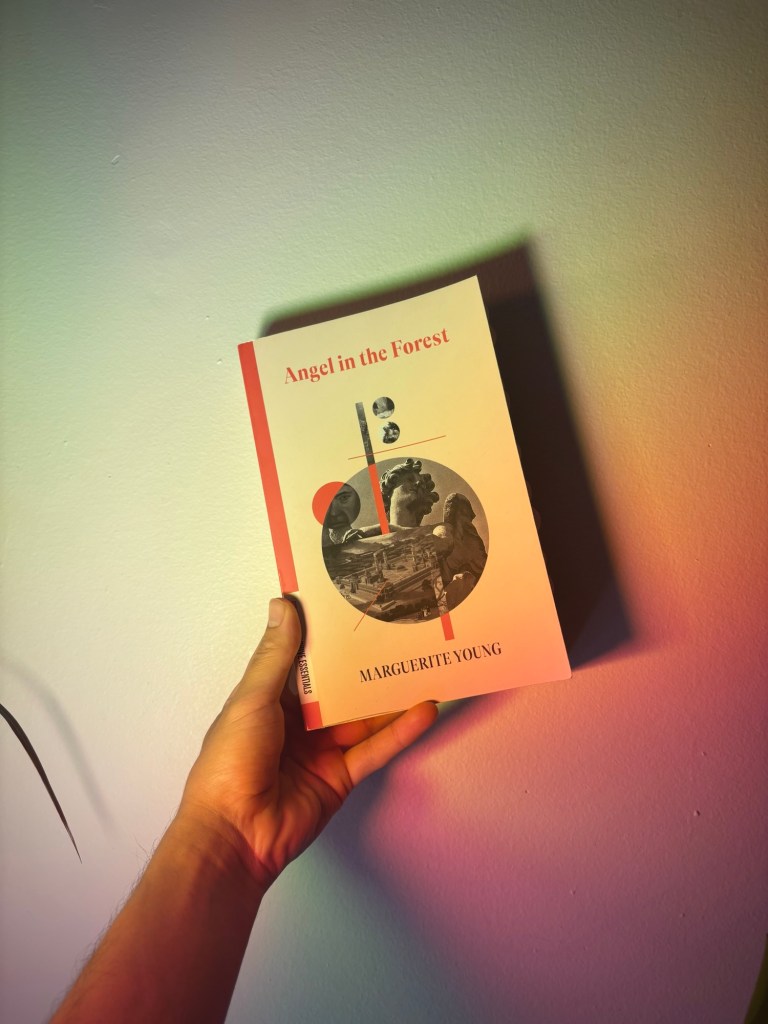
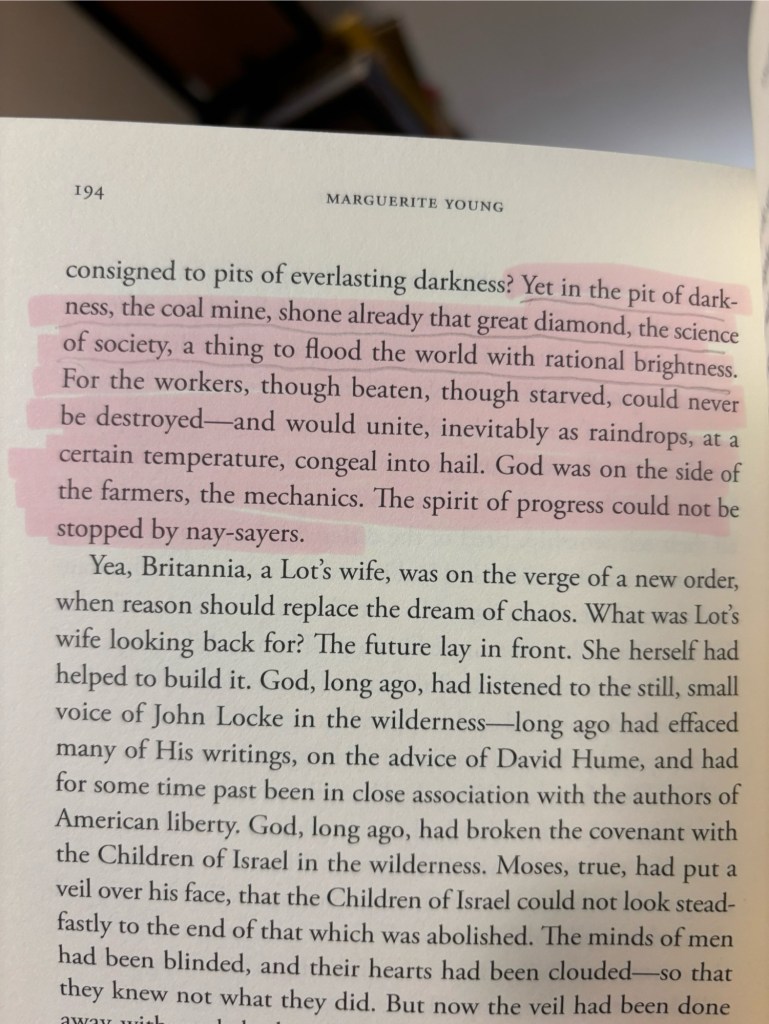
I feel so incredibly stupid trying to write a thoughtful analysis of this book because Marguerite Young is a million times smarter than I will ever be, and her ability to hold basically every facet of the human condition in her palm and roll them together with the same ease that a child plays with a ball of clay leaves me absolutely dumbstruck. So I’m going to take the easy route and opt for a simple questionnaire:
Are you interested in learning about some of the first socialist movements in 1800s America? Does the concept of “scriptural communism” intrigue you? How about celibate cults? Are you brave enough to take a really critical look at how the inextricable force of spirituality shapes and/or resists progressive movements? More so, are you interested in confronting some of your own potential biases toward rationalism and completely recalibrating how you view the function of spirituality in society as it pertains to said movements? Are you ready to recontextualize our current political crisis as a mere extension of time immemorial? Do you enjoy rich, poetic language that weaves history, philosophy, and scripture together into a map of societal consciousness?
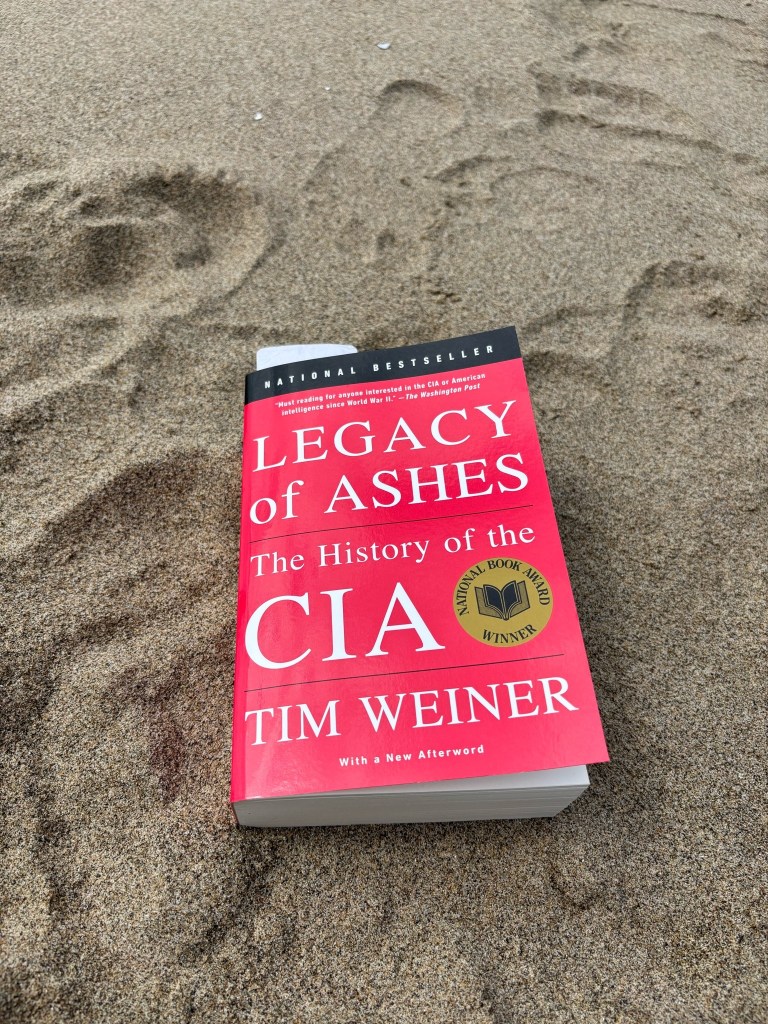
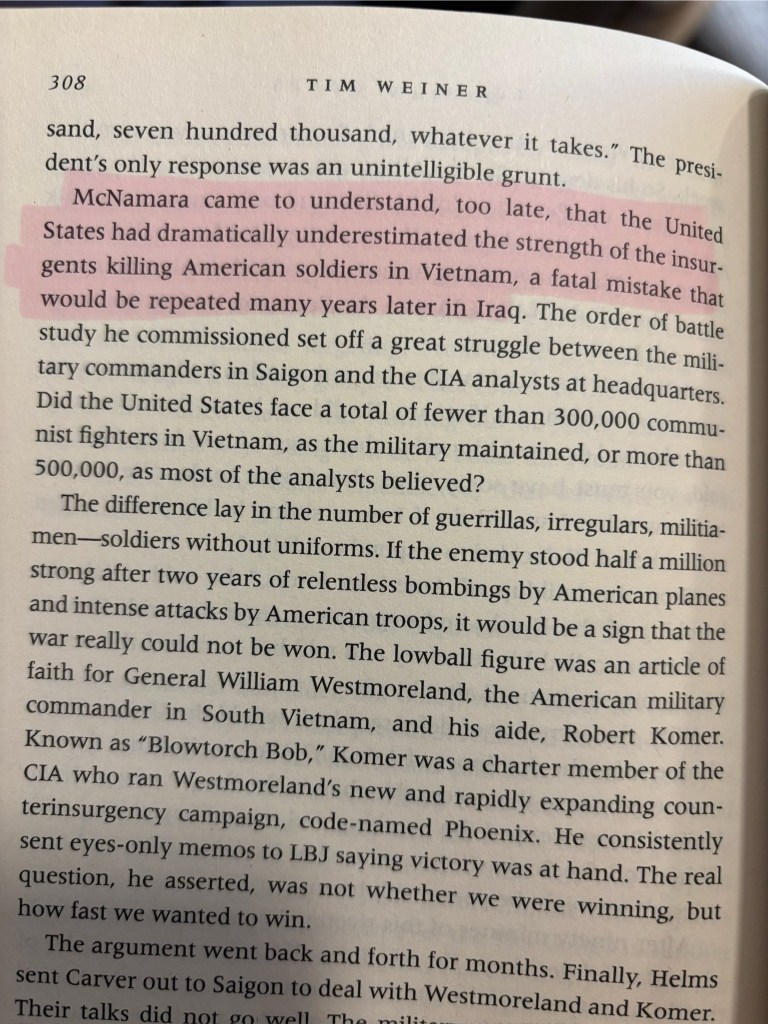
I recently finished Legacy of Ashes: The History of the CIA by Tim Weiner. I read this book in preparation for William T. Vollmann’s new four-part CIA novel, A Table For Fortune, and I figured instead of doing a formal review, it might be more interesting to the people who predominantly read fiction if I offered you the fiction reader’s case for learning about the CIA. This is my machiavellian scheme to get you all more interested in the dirty history of the United States.