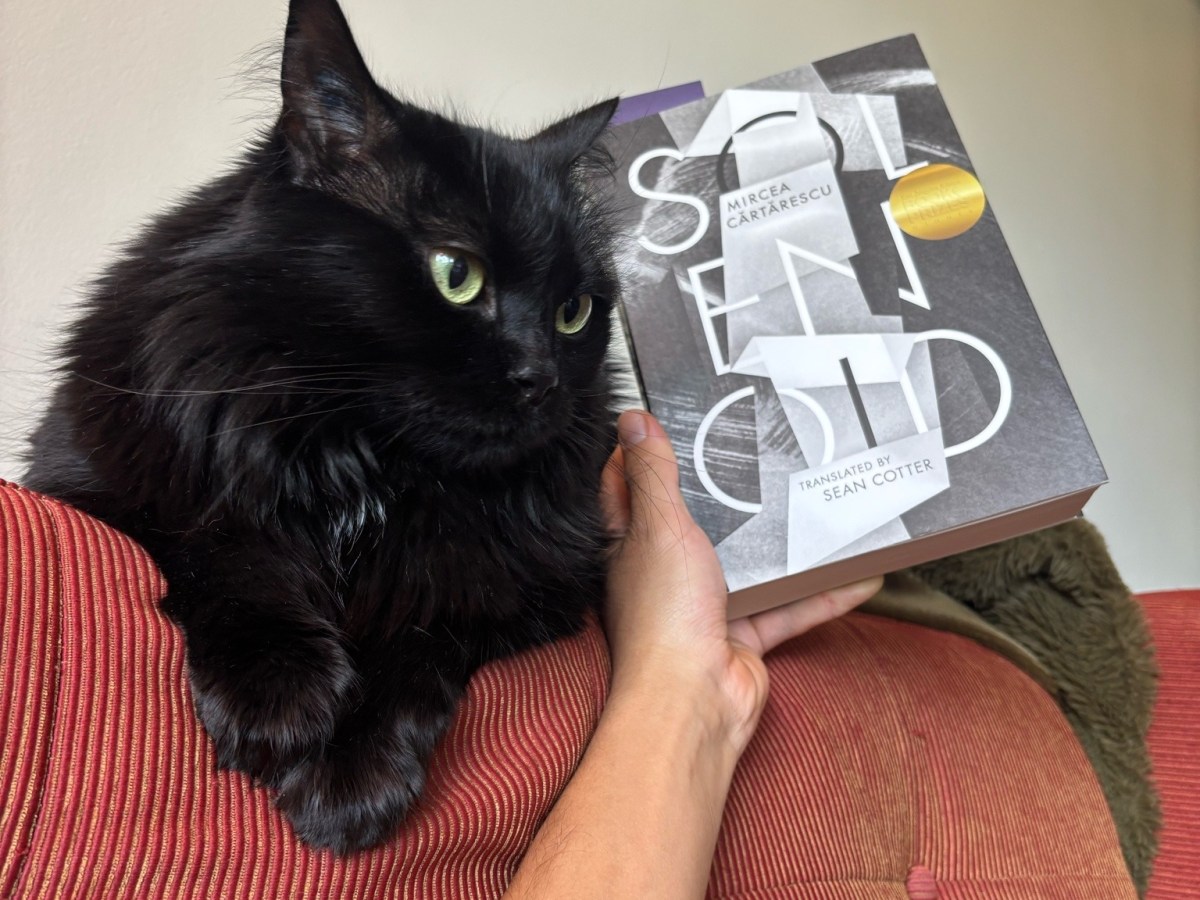

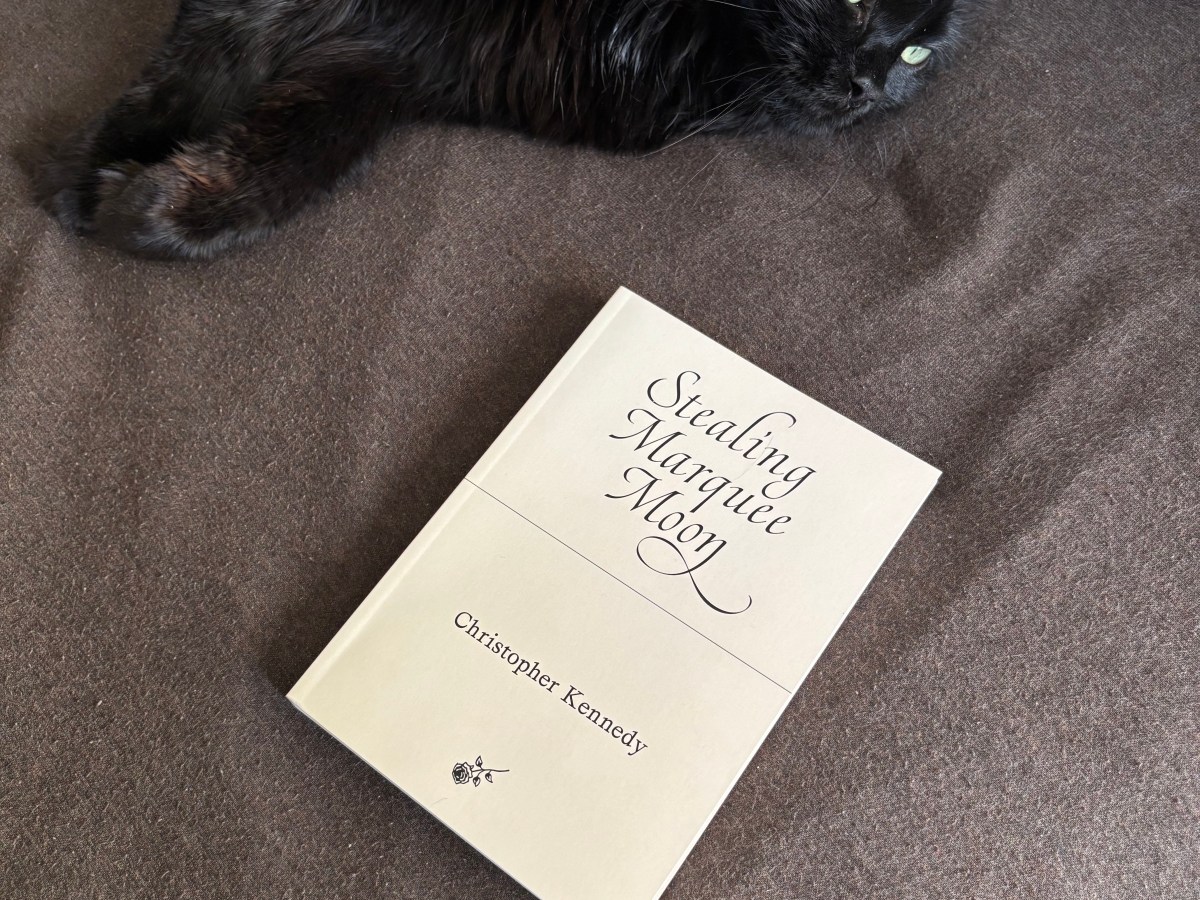


My first youtube video, reflecting on the 100 books milestone by going over some of the major stepping stones in my reading journey thus far, and how those books have made me view and interact with the world differently.
Tag: william gibson
-
On the Utility of Stoicism in William Gibson’s Neuromancer (1984)
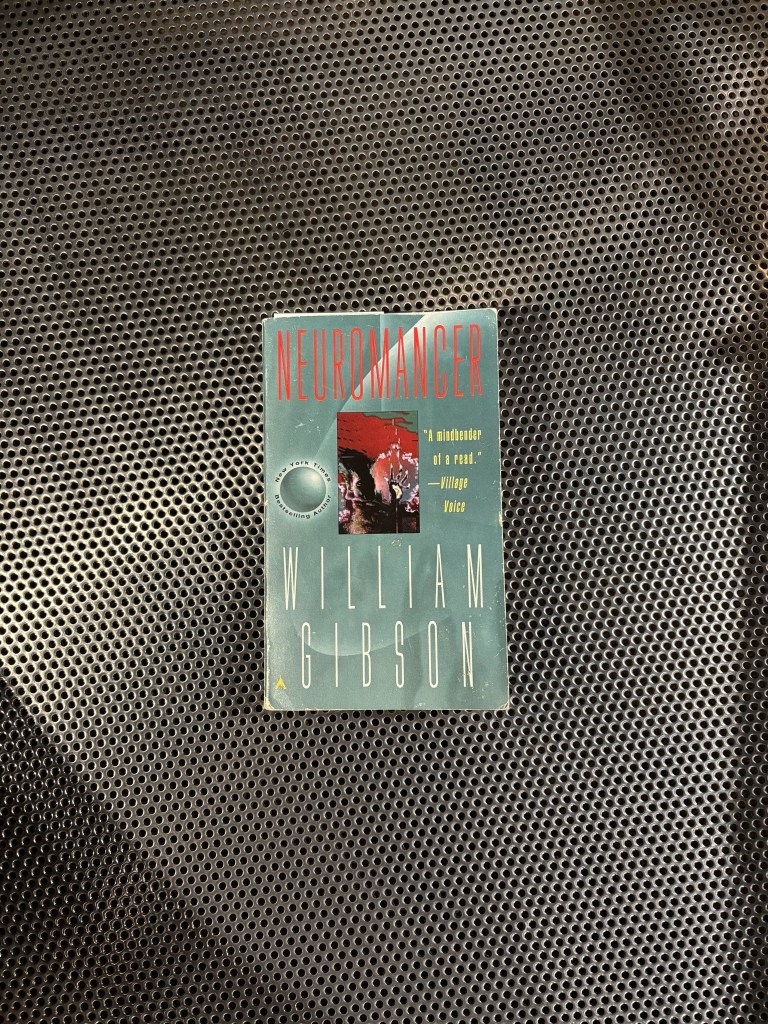

The first time I read Neuromancer, I didn’t understand it. It was thrilling, yes, visionary, even—a prophetic tale of dystopian tech drenched in degenerate psychedelia and hardcore action—but also so, so confusing. Gibson does not hold the reader’s hand. In a 1999 interview, he opines that we “live in an incomprehensible present” and that it is not his duty to explain the present but merely to illuminate the moment and make it accessible. If making incomprehensibility accessible was his goal, he achieved it.
But then I read it again a few months later, and it was like putting on a pair of glasses after a lifetime of legal blindness, or activating the windshield wipers during a storm. Johnny Nash wrote a song about this feeling once.
(more…) -
Book Review: Virtual Light by William Gibson (1993)
🌕🌕🌑🌑🌑
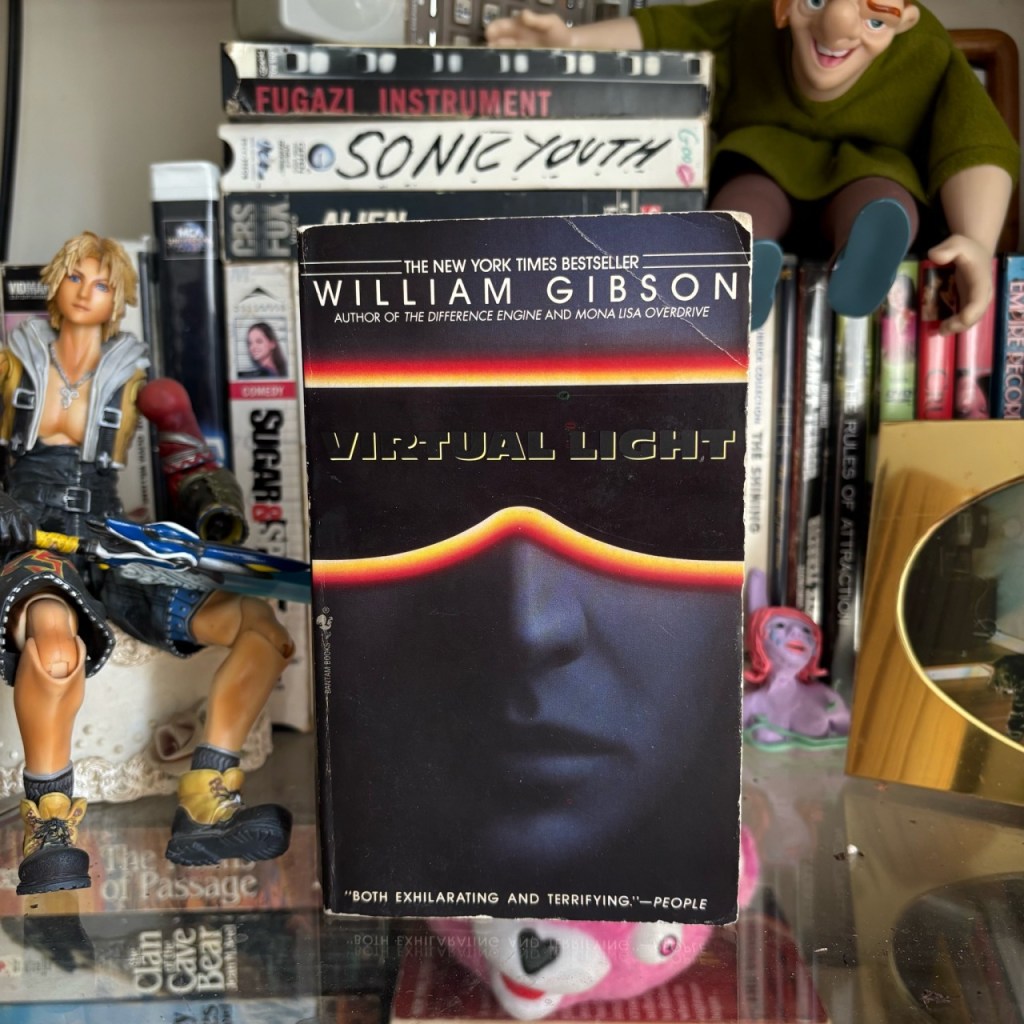
I was really excited to get back to reading some Gibson and see what he can do outside of the Sprawl setting, but this was unfortunately a bit of a disappointment. Prose-wise, this is still classic Gibson—full of janky syntax and a bad habit for narrating everything like notes on a police report, providing a ton of zoomed-in imagery but little in the way of context to tie things together. I keep underestimating how little Gibson cares about holding the reader’s hand. Just like all his other books that I’ve read, it probably took about 50-100 pages for the narrative to really become clear. Gibson likes to set up his stories like an investigation board with snapshots of suspects and scenes that slowly converge into a single lead, and it usually works as long as the stakes are high and the payoff is explosive—two things Virtual Light lacks almost completely.
(more…) -
Book Review: Neuromancer by William Gibson (1984)
🌕🌕🌕🌕🌑
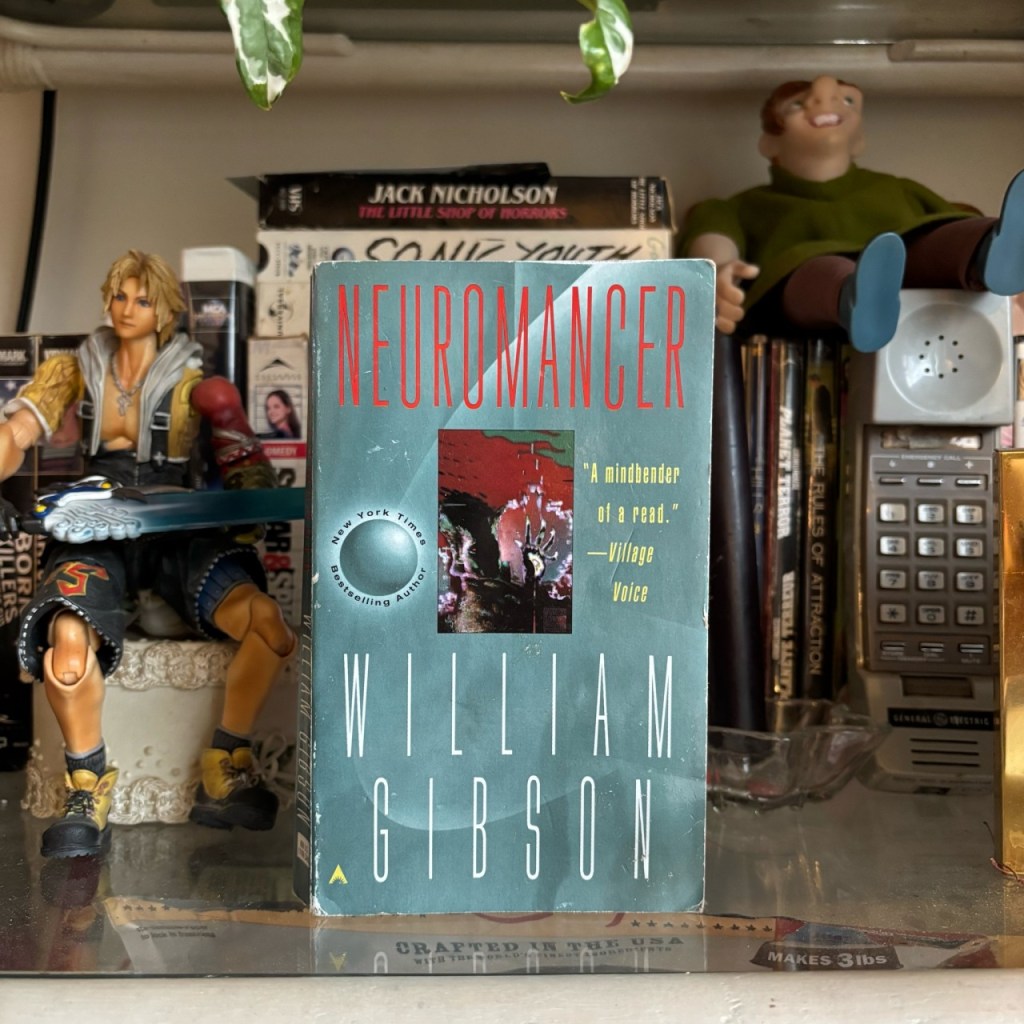
Neuromancer was the book that kickstarted my reading journey in 2023. I hadn’t read a full book for at least a decade before I first picked it up, no joke. I was just too busy being a skateboarding burnout or something. But then I played Cyberpunk 2077 (after the Phantom Liberty DLC dropped, of course), and something stirred inside of me. I adored that game to death, its narrative and world was so enthralling, and I wanted more. I found out that Neuromancer was a big influence on the cyberpunk genre as a whole, and whaddya know, I had a copy that had been collecting dust in my apartment for years! What better excuse to finally kickstart the rusty gears of my brain? ~25 sci-fi novels later and I am back, coming full circle.
(more…) -
Book Review: Burning Chrome by William Gibson (1982)
🌕🌕🌕🌕🌑
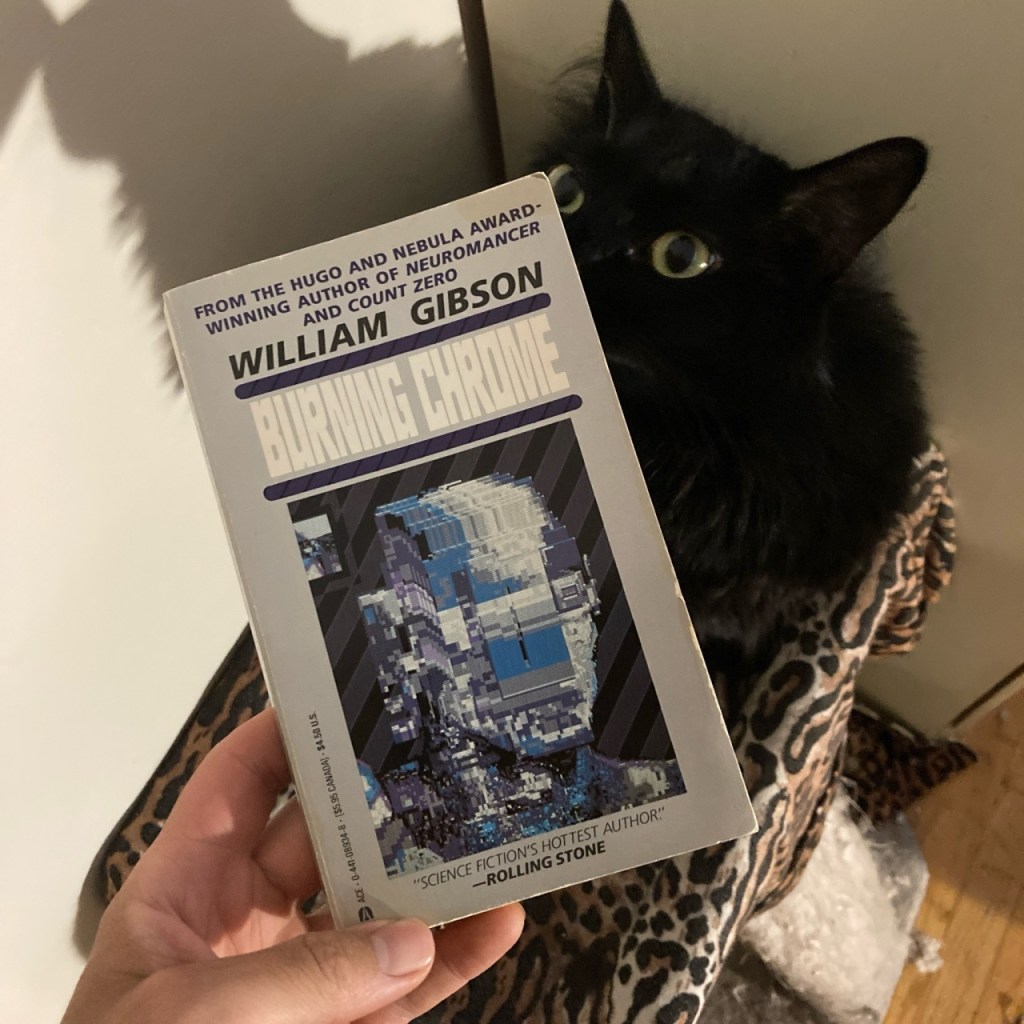
Felt nice to revisit Gibson. Neuromancer was the book that got me back into reading and made me realize how much I love sci fi, and it feels like so long ago now that I wrapped up Mona Lisa Overdrive. I didn’t know how interested I would be in reading a book of short stories, but when I saw this copy sitting on the book store shelves I couldn’t say no (1987 print, way cooler than the newer versions).
I’m really glad I decided to pick this up. These stories contain some of Gibson’s most imaginative writing, but also some of his most challenging. Just like his other books I’ve read, I found the best way to get through it was to not get caught up in the details. There is just a ton of psychedelic technobabble here that is really hard to follow or even imagine for anyone except Gibson himself. Considering how many times drugs are brought in these stories, I almost wonder if he was tripping when he wrote some of this (or maybe I’m just dumb). I mean, I had to read “Fragments of a Hologram Rose” twice and still have no fucking clue what happened. At least the short story format makes re-reading small sections a breeze, and there is plenty reward in doing so. Gibson is usually good at revealing concrete information toward the end of his stories, so going back to the start with that information can really shed a light on everything else.
“Johnny Mnemonic” and “Burning Chrome” were two of my favourites since I was already familiar with the Sprawl setting, and seeing some familiar characters make cameos was a nice touch. I also really connected with “The Winter Market” because it referenced a lot of actual locations around the city I live in. It was neat to be able to picture exactly where the characters were. Gibson’s attempts at Soviet Space Propoganda was an odd surprise but also neat cause it reminded me a lot of Omon Ra by Victor Pelevin in the way that it was simultaneously depressing and absurdly comedic. I found the three collaborations stories in this book to be some of the most narratively coherent—probably the result of having someone else keep Gibson on the rails. All of these stories were good at something though, even if that something was just pure technologic hallucinations.
Despite all of the dense, flashy, and often nonsensical sci fi imagery, a lot of these stories are actually very sad—often leaving you with a stark image of addiction, alienation and loneliness. It made me realize just how much focus and impact a short story can have (and may have inspired me to try writing my own). Getting to really zoom in close on some of Gibson’s character studies and strange thought experiments was a delight, even if it was sometimes hard to grasp. Highly recommended if you enjoyed the Sprawl trilogy. It made me really want to re-read Neuromancer and also check out some of the Bridge books.